Where to Start Reading Native American History: Choose a Period and Perspective
If you want to start reading Native American history, choose the question you want answered before choosing the biggest book. For Native life since 1890, start with David Treuer’s The Heartbeat of Wounded Knee. For a longer account of how Native nations shaped the United States, try Ned Blackhawk’s The Rediscovery of America. If you’d rather begin with one person’s experiences, Joy Harjo’s Crazy Brave offers memoir, with a different purpose from either history.
November is Native American Heritage Month, and it’s a good occasion to make room on your reading list. You don’t need to finish an entire survey before you’re allowed to get interested in a particular writer. These three starting points give you a choice of scale: a recent historical period, several centuries, or one life. None can stand in for every Native nation, community, or perspective.
Choose the kind of reading you want to do
A useful first question is whether you’re looking for a timeline, an argument, or a voice. A history can help connect events across places and generations. Reportage brings interviews and observed experience into the account. A memoir follows what one person remembers and makes of a life. Those forms can overlap, but you won’t get the same kind of answer from each.
Look at the subtitle and contents before you commit. Where does the book begin and end? Which places and communities receive attention? Is the writer explaining a broad historical change or following a personal experience? Picking a book whose scope matches your curiosity makes it easier to stay with it. You can always widen your reading afterward; your first choice doesn’t have to be a permanent reading plan.
The Heartbeat of Wounded Knee: start with Native life after 1890
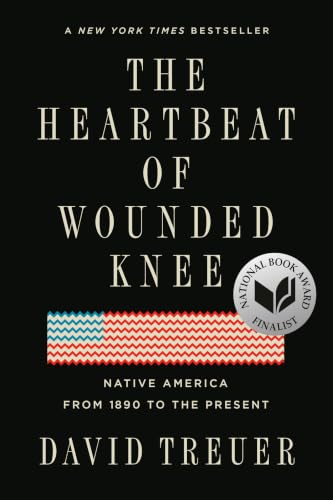
David Treuer’s The Heartbeat of Wounded Knee: Native America from 1890 to the Present is the strongest starting point here if your question is what happened beyond the nineteenth-century history you already know. Treuer is Ojibwe from the Leech Lake Reservation in Minnesota. His book combines historical writing with reportage and personal experience, keeping Native lives after Wounded Knee at the center.
The book challenges the idea that the 1890 massacre marks an ending to Native history. Its emphasis includes continuing communities, adaptation, and the work of preserving languages, families, and traditions. That makes the subtitle an especially useful guide to the reading experience: the focus is on what continued and changed. The publisher lists the 2019 paperback at 528 pages, so allow yourself time for a substantial book.
Choose this one if you like the idea of moving between a broad account and individual lives. Before starting, write down a question you have about the period after 1890. As you read, notice when the book answers it and when it gives you a better question instead. You don’t need elaborate notes; a few page references can help you return to a person, community, or subject that catches your attention.
Keep the publication date in mind, too. “The present” in a title belongs to the book’s own historical horizon; it doesn’t promise coverage of everything happening in 2026. If you want a longer chronological foundation first, Blackhawk is the more fitting choice. If you want to follow one person’s memories closely, begin with Harjo and return to a broader history later.
The Rediscovery of America: connect five centuries of history
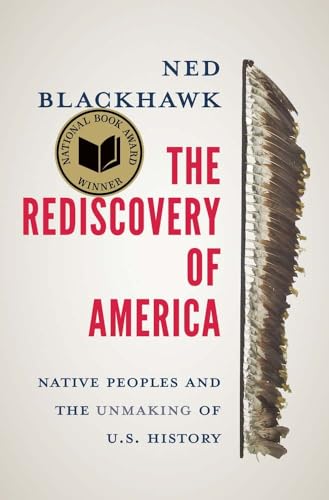
Ned Blackhawk’s The Rediscovery of America: Native Peoples and the Unmaking of U.S. History suits the reader who wants to reconsider the larger American-history timeline. Blackhawk, a Western Shoshone historian, connects Native and non-Native histories across five centuries. The account stretches from Spanish colonial exploration to Native self-determination in the late twentieth century, as Yale’s description of the book explains.
The important distinction is the scale. You’re choosing a historical synthesis that places Native peoples within the formation and development of the United States. It can be a useful choice if you remember separate units from a history class but want to understand connections between them. In an interview with Yale University Press, Blackhawk discusses the scholarship behind the book and the need to reconsider familiar ways of organizing American history.
The 2024 paperback is listed at 616 pages. That length is useful information for planning, not a reason to treat reading it as an endurance contest. Try a chapter at a time and keep a simple list of places and nations as they appear. When a familiar event returns in a different context, pause there. What has changed about your understanding of who acted, who negotiated, or whose interests were involved?
Start here if connecting periods is what interests you most. If you mainly want to spend time with more recent Native lives, Treuer offers the more focused starting question. The two books needn’t become competing choices for your entire reading year. Read the one that answers your immediate curiosity, then use the other to extend the period or perspective you want to understand.
Crazy Brave: begin with memoir and one writer’s voice
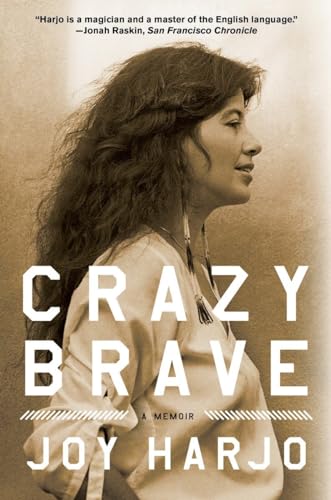
Joy Harjo’s Crazy Brave: A Memoir belongs on this list as a different kind of beginning. Harjo is a writer and performer of the Muscogee Nation. Her account follows growing up in Oklahoma, family relationships, and the path toward becoming a poet. Her own description of the memoir emphasizes imagination, ancestry, music, and poetry alongside difficult experiences at home.
Choose it when you’re drawn to how a person tells a life: what they remember, which connections they make, and how they find language for their experience. That is a different reading question from asking for an overview of federal policy or a sequence of historical events. The memoir can sit beside a history without having to perform the same job.
A useful way to read it is to follow the voice before trying to turn every passage into background information. Notice how an image or remembered moment matters within the story being told. If something makes you curious about a place or a historical event, mark it for later rather than stopping every few pages to chase a new source. You can give the book your attention and still leave yourself a path to further reading.
Harjo’s experience is her own, so resist treating a personal account as a summary of all Native lives. If your immediate goal is historical orientation, start with one of the two histories and save this memoir as a companion. If a personal narrative is what will get you reading, begin here. There isn’t a required order, and you don’t need to make your reading list resemble a course syllabus.
Let the next book answer a more specific question
After your first book, narrow the next choice. You might want more about a particular nation, a period the author passed through quickly, or another writer’s perspective. The First Nations Development Institute’s reading list organizes suggestions across subjects and identifies some as starting points. It’s a useful place to continue exploring rather than expecting a single list to settle the subject.
For now, choose the scale that fits: Treuer for Native life since 1890, Blackhawk for a longer historical account, or Harjo for memoir. Open the book’s page, check the edition, and make room for the question that brought you here.