Novella vs Novel: What the Difference Means for Your Next Read
A novella is a work of fiction that falls between a short story and a novel in length. That makes it a useful label when you’re choosing what to read, but it doesn’t tell you how easy, cheerful or quick the book will feel. A slim story can ask you to slow down. A long novel can keep you racing through chapters.
If you’re comparing two books, start with the kind of reading you want: a concentrated story you can hold in mind, or more room to settle into a world. Then check the edition and try an opening sample. The distinction matters more as a guide to expectations than as a test a book has to pass.
What does “novella” mean?
Merriam-Webster places the novella between the short story and the novel. Think of the label as a clue about scale. It can suggest a story with a compact focus, where a particular relationship, situation or decision gets sustained attention.
That doesn’t mean every novella has one character, one setting or a simple plot. Nor does a novel need a huge cast and several timelines. These are useful possibilities to look for in a description or sample, rather than rules you should impose on the story.
For example, if you want to keep returning to one difficult question, a compact narrative may suit your mood. If you want a book to accompany you through a longer stretch of daily reading, a fuller-length novel may offer that room. Either choice can be demanding, comforting, funny or unsettling. Length doesn’t choose the mood for you.
How many words are in a novella?
You’ll often see numerical boundaries, but check who is using them. The SFWA's current Nebula Awards rules define these prose categories:
| Nebula category | Word count |
|---|---|
| Short story | Fewer than 7,500 |
| Novelette | At least 7,500, but fewer than 17,500 |
| Novella | At least 17,500, but fewer than 40,000 |
| Novel | 40,000 or more |
Those are award categories with a specific purpose. They aren’t a universal agreement that every publisher, bookseller and reader must use the same boundary. They also count words, not the pages in the copy you’re holding.
Unless a reliable source supplies a book’s word count, avoid calculating its category by multiplying pages by an assumed number of words. A page with dialogue and a page of closely set description won’t give you the same result. For choosing a read, the label, publisher’s description and a sample usually tell you more than an estimated manuscript total.
Why page count can mislead you
A printed page is a layout choice as well as a container for the story. Trim size, type size, spacing, illustrations and extra material can affect how thick an edition looks. An introduction or reading-group section also contributes pages without making the story itself longer.
That matters when you’re browsing several listings for the same title. Compare the ISBN and format before treating two different page counts as conflicting descriptions. In an ebook, changing the display settings adds another reason to avoid treating a screenful as a fixed printed page.
You can still use page count to make a practical choice. Perhaps you want a book that fits easily in your bag, or you’re deciding whether to borrow the print edition or an ebook. Just keep the question concrete: “Will this edition work for me?” is more useful than “Does this thickness prove it’s a novella?”
A compact book doesn't need a small question
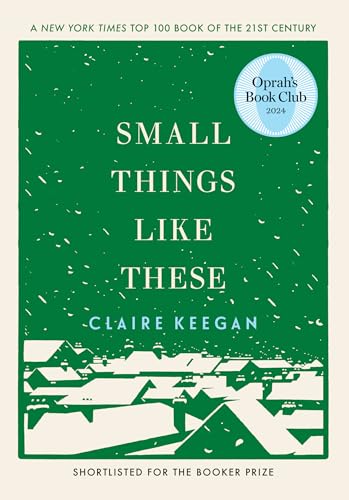
Consider Small Things Like These by Claire Keegan. Grove Atlantic lists its 2021 hardcover at 128 pages, ISBN 9780802158741, and describes it as a novel. Reviews on the publisher’s page also use “novella.” That variation is a good reason to avoid making the label do all your choosing.
The advertised premise follows coal merchant Bill Furlong in an Irish town in 1985. A delivery to a convent brings him to a difficult decision. You don’t need an ending explained to see why a short physical book might leave you with something substantial to think about.
When sampling a book like this, ask whether you want to stay with the central pressure. That is a different question from whether you can finish a certain number of pages tonight. If you’re looking for more compact books, our short-novel reading guide compares three choices by their appeal and specific editions.
Choose by the experience, then check the format
Try this small browsing exercise. Read the publisher’s description, then a few pages of an available sample. Notice whose voice you’re following, what has changed in the opening, and what makes you want the next scene.
Next, compare that response with the reading you want today. You might want a tightly held situation, or prefer to spend longer getting to know a place and its people. You might enjoy a dense paragraph that rewards rereading, or want a voice that carries you forward more readily. The label alone can’t settle those preferences.
Finally, check the format and edition details. Save the ISBN if you’re comparing listings, especially when a particular translation, introduction or print size matters to you. Browse literary fiction if that’s the kind of story you want, and let the opening help you choose the particular book.
Questions readers ask about novellas
Is a novella a complete story?
A novella is a fiction form, rather than another word for an excerpt. A particular book can still belong to a series, so check its description when you want a story you can read independently. Length and series order answer different questions.
Is a novella always easier than a novel?
No. Less text doesn’t guarantee simpler language, lighter subject matter or less to think about. Try a sample for voice and density instead of using the page count as a difficulty rating.
Is there a fixed number of pages for a novella?
There isn’t a reliable universal page boundary. The Nebula categories above use words, and a printed edition’s layout affects its page count. Compare the actual edition rather than turning a page total into a word-count claim.
Should I pick the shorter book when I'm busy?
It can be a good option if its premise appeals to you. Give yourself permission to read it over several sessions, though. A short book doesn’t come with a finishing deadline, and a longer story you want to return to can be the better companion.