Category: Study Tips

  • How to Read a College Textbook Without Wasting Hours

    How to Read a College Textbook Without Wasting Hours

    If you treat every page of a textbook like it deserves the same attention, you will waste time fast. The smarter move is triage: figure out what the chapter is trying to teach, what your instructor is likely to care about, and where you actually need slow reading. That approach turns a long assignment from an all-night slog into a repeatable workflow.

    The goal is not to read harder. It is to read with purpose, in a way that leaves you with a few ideas you understand and a few terms you can explain. Cornell’s reading strategies and Oregon State’s before-you-read guide both point to the same reality: textbooks reward structure-aware reading, not speed for its own sake.

    Open textbooks and study materials arranged for efficient college reading.
    A focused reading plan helps students get more out of assigned textbook chapters without rereading every page.

    First, make sure you are reading the right book and chapter

    Before you worry about speed, confirm the basics. If you are working from the wrong edition, the wrong chapter, or the wrong platform, your effort will be pointed in the wrong direction. That sounds obvious until you’ve spent an hour on a section that doesn’t match the syllabus.

    Use the assigned title, author, chapter number, and ISBN to verify the match. If you need to check by title, author, or ISBN, start at Textbook Nova so you are working from the exact assigned text instead of a vague bookstore listing. If you want a quick refresher on that search process, this guide to using Textbook Nova is the cleanest place to start.

    Once the book is right, check whether the chapter is actually required for this week or just listed as background.

    Preview before you commit to close reading

    A chapter gives away a lot before you read a single paragraph. Previewing tells you where to spend your time.

    Check headings, summaries, figures, bold terms, review questions

    Start with the title, headings, subheadings, summary, figures, bold terms, and end-of-chapter questions. Oregon State’s reading-process guidance recommends this kind of preview, and the University of Cincinnati’s SQ4R guide makes the same point: survey the chapter first, then work section by section.

    While previewing, ask three questions:

    • What is the chapter probably trying to explain?
    • Which terms or concepts look unfamiliar?
    • Which parts are likely to show up on homework, quizzes, or discussion?

    That last question is where triage starts. Not every paragraph deserves the same level of attention.

    Decide what deserves slow reading

    Slow down for definitions, examples, diagrams, worked problems, and concepts that connect directly to class assignments. Skim more lightly when the section repeats something you already understand. If you cannot explain what a section is doing after previewing, it probably deserves more time.

    Turn headings into questions

    This is the step that makes the chapter easier to remember. Instead of reading headings as labels, convert them into prompts your brain can answer.

    If the heading says “Types of Chemical Bonds,” turn it into “What are the types of chemical bonds, and how are they different?” If the heading says “Causes of Inflation,” turn it into “What causes inflation, and what evidence supports each cause?”

    That shift gives your reading a job. Cornell’s textbook reading systems describes SQ3R in a similar way: survey, turn headings into questions, read to answer, recite in your own words, and review what you learned. If a heading is vague, make the question more specific.

    Read in small sections, not marathon chapters

    Long chapters are where students lose time. The fix is smaller chunks.

    Read one section, pause, and say what it meant in your own words before moving on. The University of Cincinnati’s SQ4R approach recommends breaking text into reasonable sections and writing notes only after you can recall the key idea yourself.

    Aim for this rhythm:

    1. Read a short section.
    2. Stop and recall the main point.
    3. Check the book only if you blank.
    4. Move on once the idea is clear enough to explain.

    That loop is slower than skimming, but it is much faster than rereading the whole chapter later because nothing stuck.

    Annotate lightly

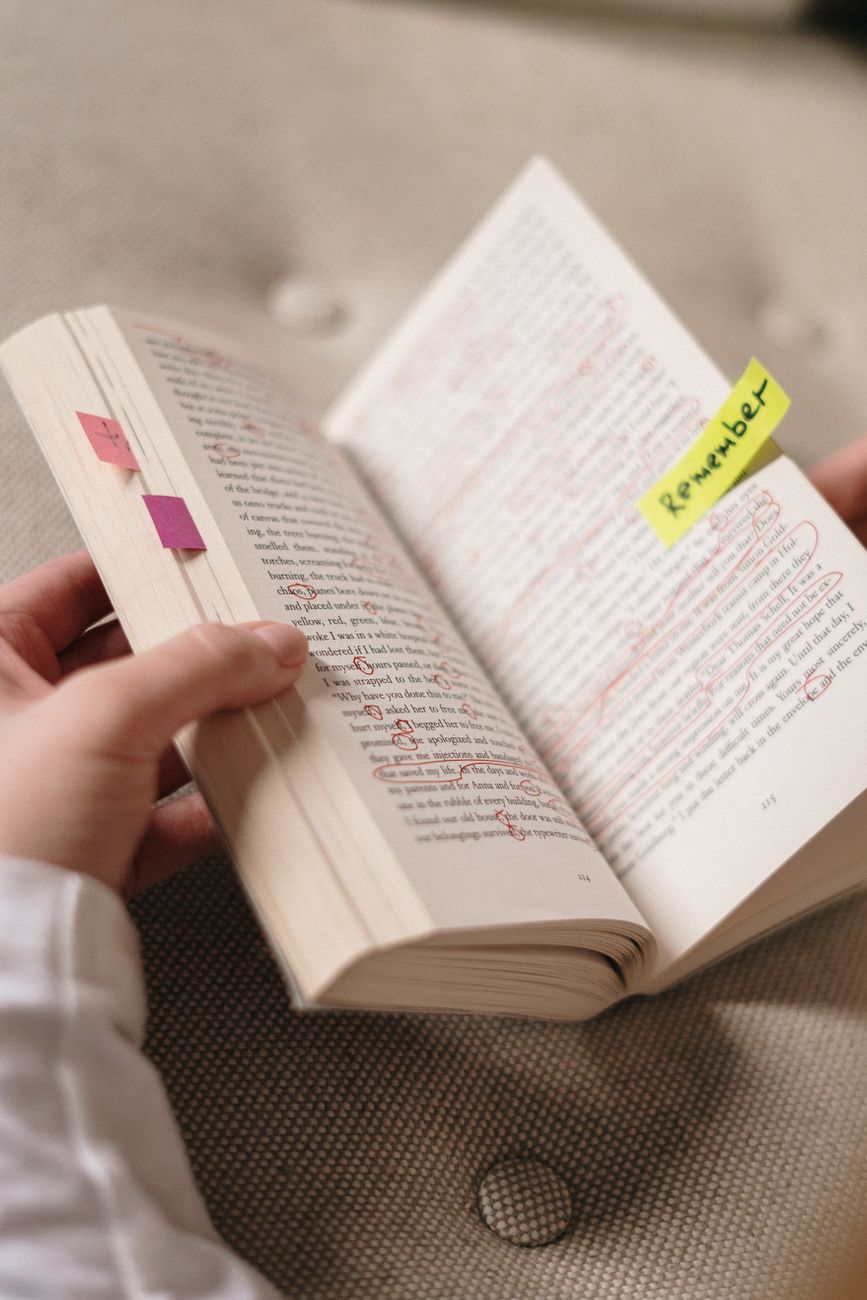
    Highlighting should be a signal, not decoration. Use it sparingly: key terms, main claims, a formula, or one sentence that really carries the section. Oregon State’s guided reading advice favors efficient annotation rather than marking everything in sight.

    Stop when you lose the thread

    If you get to the end of a paragraph and cannot say what it was for, stop. Back up one chunk, reread with the heading-question in mind, and pull out the main idea again.

    That is the moment you catch confusion before it spreads.

    Recall before you take more notes

    Most students take notes too early. A better sequence is: read, close the book, and try to explain the section in your own words first. Cornell’s reading guidance and UC’s SQ4R sequence both lean toward that kind of active recall.

    Use prompts like these:

    • What was the section trying to prove or describe?
    • What are the two or three most important terms?
    • How would I explain this to a classmate?
    • What example from the chapter actually matters?

    Only after that should you add notes. Your notes should capture what you could not already hold in working memory, not everything you saw on the page.

    A useful test is whether your notes would help you answer a real question later. If a line only repeats the textbook sentence in slightly shorter form, skip it or rewrite it as a question. If it explains a relationship, names a common mistake, or connects the chapter to lecture, keep it. That filter keeps your notes short enough to review instead of becoming a second textbook.

    Build a one-page review sheet

    You do not need a giant outline for every chapter. You need a compact review page that makes later studying easier.

    For each chapter, collect:

    • the chapter’s main purpose in one sentence
    • five to eight key terms with plain-language meanings
    • two or three major concepts or relationships
    • one example, diagram, or formula you may need to revisit
    • any questions you still cannot answer confidently

    This page becomes your quick review tool before class, before a quiz, or before exam week. It also gives you a clean place to turn messy reading into usable study material.

    When to skim, when to slow down, and when to ask for help

    Skim when the section is clearly review, background, or repetition of something you already know. Slow down when the chapter introduces a new framework, technical vocabulary, a diagram you will need later, or a process that builds on earlier sections. Ask for help when you have previewed, questioned, read, and recalled, but the chapter still feels like noise.

    Help can mean different things:

    • office hours
    • a study group
    • a tutor
    • a classmate who can translate the chapter into simpler language
    • a professor question about what to prioritize

    If the chapter is dense enough that you keep reading the same paragraph without getting anywhere, the issue may not be your attention span. It may be that you need a faster explanation before the text makes sense.

    A repeatable 30-minute textbook-reading loop:

    Here is the compact version:

    1. Confirm you have the correct book and chapter.
    2. Preview headings, summaries, figures, and questions.
    3. Turn headings into questions.
    4. Read one small section at a time.
    5. Recall the idea in your own words before taking notes.
    6. Add only the notes that help you review later.
    7. Stop where the chapter stops being useful and get help if needed.

    Do that consistently and reading stops feeling like a vague endurance test. You start each chapter with a purpose and finish with something you can actually use.

  • Top 5 Personal Finance Books Every College Or University Student Should Read

    Top 5 Personal Finance Books Every College Or University Student Should Read

    Need some help with your budgeting skills during school? Check out the best personal finance books for students!

    Ask anyone who’s been there, and they’ll surely tell you that balancing your bank accounts while in college or university can be quite the challenge.

    On average, most entry-level student jobs only pay around $7 to $10 per hour in the US.

    And with such a low average entry-level wage, it’s often hard for students to make ends meet.

    Below, we’re diving into our list of the absolute best personal finance or money management books that every student should ready.

    You’ll find money-saving and investment tips, help with your budget, and more!

    pink pig coin bank on brown wooden table

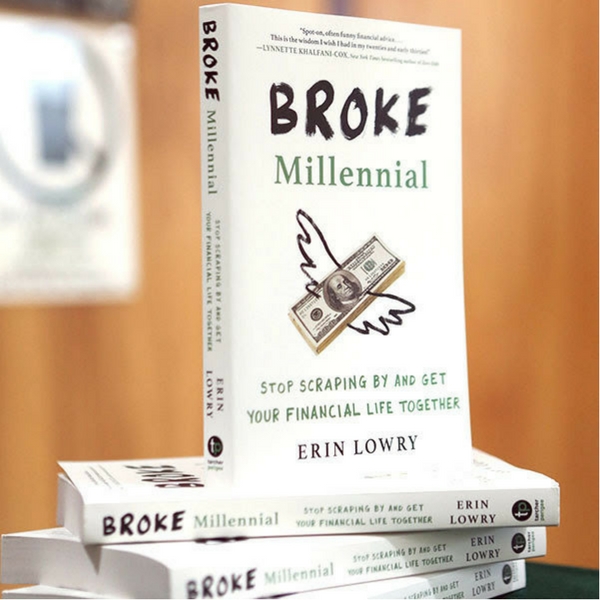
    Broke Millennial By Erin Lowry

    As a Millennial student, you must take control of your money as early as possible. Especially if you want to obtain financial independence in the future.

    And that’s precisely what Erin Lowry sets out to help you with within her personal finance book, Broke Millennial.

    In the book, you’ll learn how to gain control over your finances and create a monthly budget.

    You’ll also learn a great deal about investing your money wisely, planning for your financial future, and how to avoid high-interest credit card debt.

    Don’t let yourself fall into the same fiscal traps and pitfalls that so many people in their 20s and early 30s have.

    Check out Broke Millennial and start planning your financial future today!

    Using fun Millennial language and humour, Broke Millennial is a worthwhile read for any student struggling with their financial health.

    Broke Millennial Has Launched (And Why Erin Lowry is Awesome)!

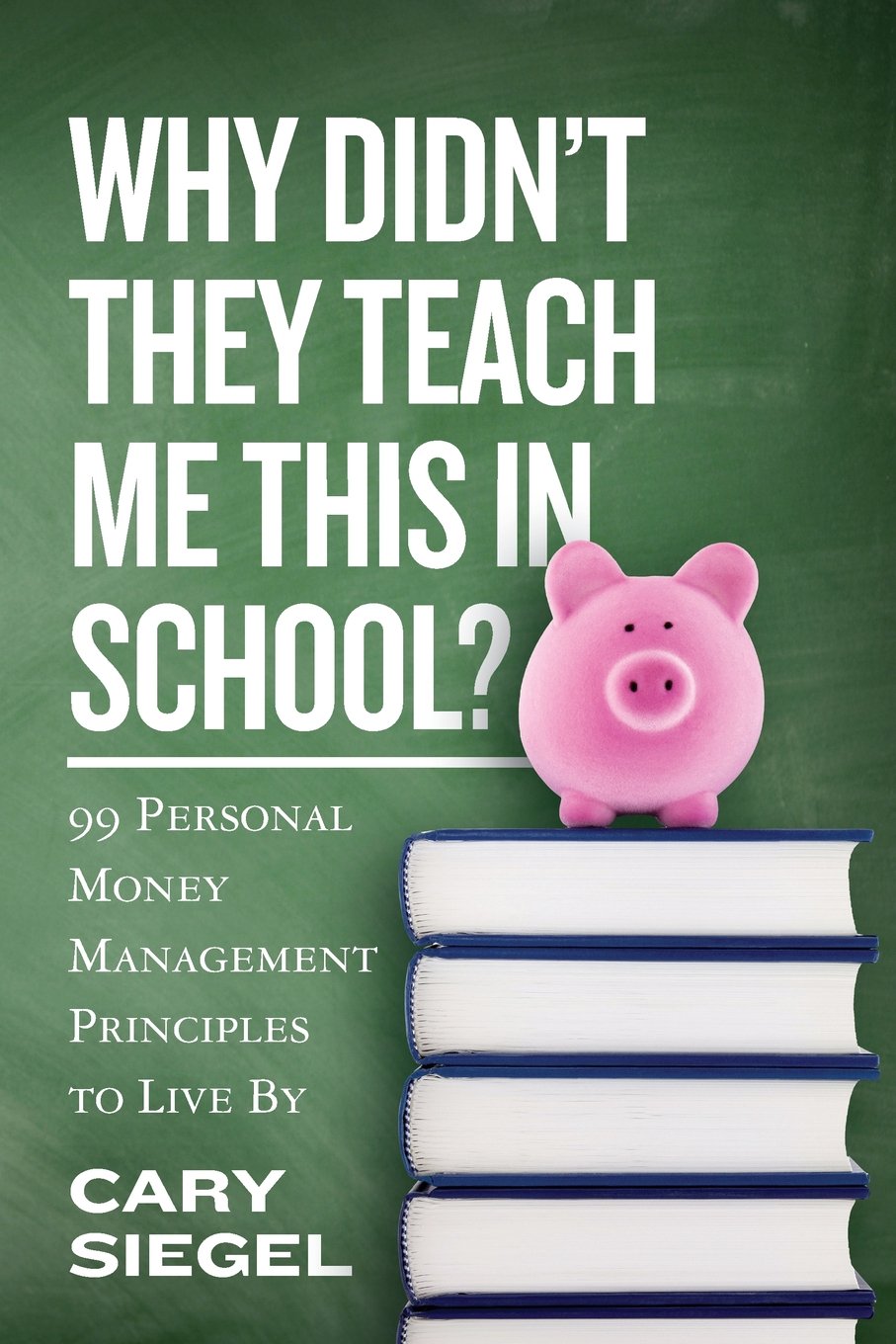
    Why Didn’t They Teach Me This In School? By Cary Siegel

    Ask any college or university graduate what they wished they’d learn more about during their time in school. They’ll often tell you it’s money and how to handle it correctly!

    In Why Didn’t They Teach Me This In School?, Cary Siegel, retired business executive, takes you through 99 financial principles that you’ll be glad to learn.

    He’ll also explain eight innovative money lessons he claims should be teaching students before they get into college or university.

    Initially, Siegel had written the book to help his children with their finances.

    But, the book eventually got so many positive reviews that it’s now made its way onto countless bookshelves of students who need help with money.

    Packed full of money lessons, advice, and first-hand lessons for a retired business professional is a must-read!

    Why Didn’t They Teach Me This In School is an excellent, easy-to-read book, ideal for anyone wanting to get their finances on the right track.

    Personal Finance Books

    Your Money Or Your Life By Vicki Robin And Joe Dominguez

    For more than two decades, Your Money Or Your Life has been a best-selling personal finance book for college and university students.

    In the book, authors Vicki Robin And Joe Dominguez detail a total of nine simple yet highly effective steps you can take today to achieve financial independence in the future.

    Your Money Or Your Life is filled with information on how you can avoid falling into un-payable debt.

    And how to incorporate intelligent financial habits into your life without restricting your budget too much!

    As a fantastic bonus, the book also takes a more eco-friendly approach to personal finance. It’ll discuss how good fiscal habits can reduce waste and help protect the environment.

    Review] Your Money or Your Life by Vicki Robin and Joe Dominguez | Personal Finance Books

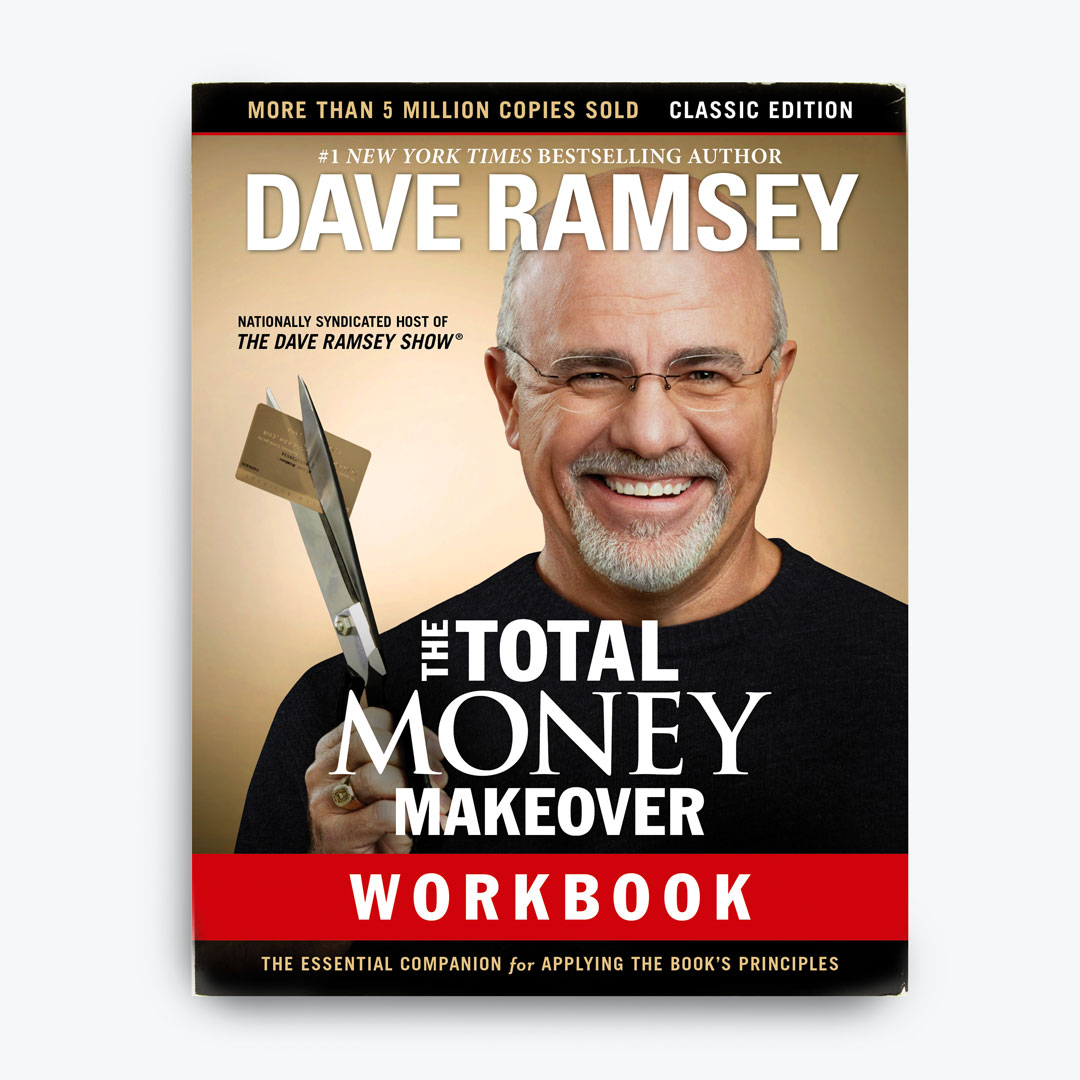
    The Total Money Makeover By Dave Ramsey

    Are you struggling with high-interest credit card debt or student loans?

    If so, then The Total Money Makeover by Dave Ramsey is most certainly worth checking out!

    As a New York Times best-seller, this book will eloquently explain how to get yourself out of debt and improve your overall financial health.

    Filled with many solid pieces of financial advice, you’ll learn how to avoid financial pitfalls like cash advances, rent-to-own schemes, and using unnecessary credit.

    Lastly, Ramsey will also explain his famous “Snowball Method” to help you pay off debt quickly. And how to save for retirement, and how to start an emergency fund.

    The Total Money Makeover + Workbook - Personal Finance Books

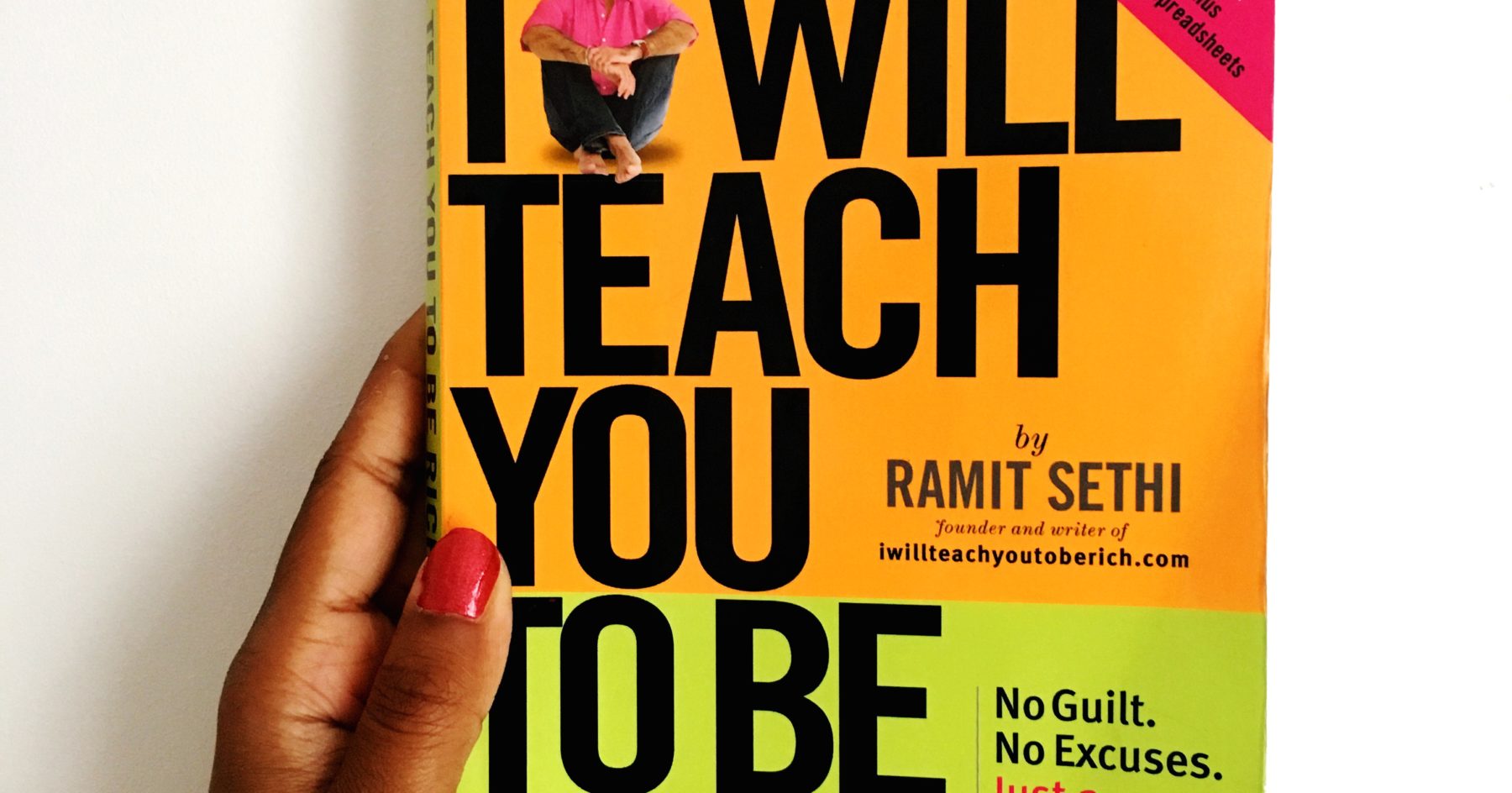
    I Will Teach You To Be Rich By Ramit Sethi

    Whether you’re in your first year, second year or you’ve already graduated, paying off debt is hard.

    Student lines of credit, loans, and other types of debt are often some of the biggest financial roadblocks you’ll ever face.

    In his book I Will Teach You To Be Rich, Ramit Sethi takes you through some of the best advice for getting ahead with your finances.

    You’ll also find a wide range of helpful advice about student finances. Including scripts you can use to save money by getting yourself out of paying late fees for missed payments.

    Sethi also provides his readers with a range of simple yet effective advice for investing, buying your first home, and making other large purchases.

    I Will Teach You To Be Rich by Ramit Sethi |

    The Best Personal Finance Books For Students

    In the end, your financial health is almost just as important as your physical and mental health.

    That’s why it’s crucial to gain control over your money as soon as possible.

    This way, you’ll avoid making the most common money mistakes students make and learn how to invest in your financial future!

  • The Worst Money Mistakes Students Make In 2021

    The Worst Money Mistakes Students Make In 2021

    Are you tired of making the same money mistakes as everyone else? Want to avoid the most common pitfalls students fall into every day?

    As a student, there’s no doubt that you’ve at least heard of the stereotypical starving student.

    You know, the student who eats nothing but Ramen noodles for breakfast, lunch, and dinner. And, who only earns enough just money to pay their bills, without their work life having a negative impact on their studies.

    Unfortunately, this stereotype is all-too-common among college and university students.

    No matter how you look at it, it can be challenging to balance your school work with financial responsibility. Especially when you’re first starting out in college or university,

    And that’s why we thought it’d be a great idea to create the following blog post on the top 5 worst money mistakes students make every semester.

    Keep reading, and below, we explore what you should avoid doing with your money while you’re in college or university.

    1 U.S.A dollar banknotes

    Eating Out Too Often

    Restaurants are a great place to gather with family, friends, and loved ones.

    Plus, they’re convenient, which makes them powerfully alluring, especially for students with their already-busy schedules.

    However, restaurants are also expensive.

    To illustrate how expensive it can be to eat at a restaurant, consider this:

    The average at-home meal only costs you about $4 or $5 in groceries, and you usually still end up with leftovers.

    On the other hand, a meal at a restaurant, on average, costs about $14, which is a staggering 325% more expensive than your $4 meal at home.

    Plus, there’s also the expectation that you should tip your server when dining at a restaurant.

    This only adds to the amount of money you’re wasting.

    Instead of wasting your money at restaurants, it’s a better idea to hit up your local library.

    Or browse a book store and find a few cookbooks that seem interesting.

    Get creative, try new foods, and in no time, you’ll learn to appreciate that eating at restaurants isn’t all as cracked up as it’s thought to be.

    dish on white ceramic plate - Money Mistakes

    Ordering Take Out Too Often

    With the handful of food delivery apps on the market today, it’s easier than ever to order your next meal. This saves you both time and effort during your already-hectic school weeks.

    But, just like eating at restaurants, ordering take out food is expensive and overpriced.

    Plus, you’re also expected to add a tip or gratuity to your delivery person, adding to the overpriced cost of take out.

    Whether you dine in or order take out, restaurant food is ALWAYS going to cost you more than a visit to the grocery store.

    And most times, what you order will only feed you for a single meal.

    Therefore, instead of opening Uber Eats and ordering delivery from the restaurant up the street, it’s a better idea to spend that money on food from the grocery store.

    clear glass bottles on gray concrete floor - Money Mistakes

    Drinking Alcohol And Partying

    Just because you’re studying in college or university doesn’t mean that you shouldn’t go out and have fun with your friends.

    However, it does mean that you should keep a watchful eye on how much you’re spending on alcohol, marijuana (if it’s legal where you live), and going out at night.

    Especially if you’re going to a local bar or club! Understand that these places serve food and drinks to make a profit.

    Meaning that they are considerably more expensive than if you were to buy and consume these things at home.

    Don’t deny yourself the ability to go out and have fun. But do make sure you’re not spending more money than you can afford.

    Whether you’re going to the campus pub to meet with friends, family, or a steamy blind date, your money can truly be spent better elsewhere.

    white and blue magnetic card

    High-Interest Credit Cards

    As soon as you came of age, you were probably offered a credit card.

    Usually from your bank explaining that it will help build your credit score for the future.

    Of course, using a credit card and paying it off immediately is a great way to help build your credit score and access more credit in the future.

    However, using credit can also be a slippery slope.

    So always remember that it’s easy to spend your credit, but much harder to pay it back!

    Especially when you’re dealing with credit cards that have interest rates ranging anywhere from 19% to 30% or more!

    Of course, having credit available is a good idea in case of emergencies.

    But if you need to use credit, it’s much more financial responsible to look into a student line of credit. Or, even a personal loan, which will usually have a much lower interest rate.

    silver round coin on white ceramic pig coin bank - Money Mistakes

    Not Saving Or Investing For The Future

    Finally, another of the biggest mistakes students make is simply spending too much and not putting anything aside for the future.

    Whether you’re in your first year of post-secondary or your last year, it’s vital that you start saving your money.

    You might want to consider investing your money in stocks, bonds, or mutual funds.

    Or, in the very least, start putting some money aside that you’ll allow yourself to touch for emergencies or once you’re graduated.

    spilled coins from the jar

    The Worst Money Mistakes For College And University Students

    Of course, there are many other things that you can waste your money on foolishly.

    However, eating overpriced food, drinking too much, using high interest credit, and not saving for the future are some of the most common expenses that are considered as wasteful.

    It might be hard to keep a watchful eye on your finances, especially when you’re busy with school.

    But, if you start taking control of your money now, I promise, you’ll thank yourself later!


  • Back To School: Moving Day Tips And Checklist

    Back To School: Moving Day Tips And Checklist

    Getting ready for back to school? Make sure to check out this week’s featured blog on back to school moving day tips and preparation checklists.

    As summer draws to a close, you’ll need to start thinking about back-to-school preparations. 

    However, as much as you’ve enjoyed your time off away from campus, it can be a daunting prospect thinking about getting organized on your return. 

    Here are some tips ahead of moving day, as well as a checklist to ensure you’ve got everything you need.

    brown wooden table and chairs

    Top Tips For Moving Day

    Whether you’re getting ready to move out of town for school, or maybe you’re just moving across town into a dorm with your friends, be sure to set aside some time to get yourself ready for September!

    Purchase School Supplies 

    No matter your degree subject, you’ll likely have a required reading and equipment list for the semester. 

    It’s a good idea to go out and buy as much of this as you can before you get back to class. This way, you’ll be as prepared as possible for the semester ahead. 

    Many professors stipulate that they want you to have gotten to grips with the reading material before you start class, so make sure you buy your books early so you can have them ready before you arrive back on campus.

    It’s not just books you’ll need; you should also consider what materials and equipment you’ll be required to bring. 

    shallow focus photography of pencils on desk rack

    Below is a checklist to give you a guide of what you’ll need to buy. 

    • Textbooks/journals
    • Binders/folders
    • Laptop
    • Stationary (pens, pencils, highlighters, erasers)
    • A planner or agenda

    Of course, this is just a rough guide, and depending on your course, you’ll need to supplement with your specific course requirements. 

    If you study maths, for example, you’ll likely need a whole lot more stationary (calculators, compasses, rulers etc.). 

    Check with your college or university for a detailed guide of what you should bring for your first week. 

    woman carrying white and green textbook

    Wardrobe 

    This might seem a little obvious, but giving your wardrobe a little thought can help the semester go more smoothly. 

    For instance, if you’re embarking on any internships, you’ll want to have some professional clothing at the ready. If you’re invited to a formal occasion on campus, you’ll want to have something a little fancier at your disposal. 

    Equally, you’ll need to plan around the season and the climate of your school. 

    If you’re in California, with its warmer climate, then you don’t have to worry about heavy-duty boots and thick coats. 

    However, if you’re in Maine, these things are a must for the colder months ahead.

    If you play for a sports team, you should also check what kit you’ll need to get hold of for training and competing. 

    Here’s a quick checklist to use as a guide:

    • Clothes for class
    • Professional/business clothing
    • Sports clothing
    • Casual clothing
    • Formal attire
    • Comfy campus shoes
    girl in black t-shirt writing on white paper

    Workspace Equipment

    Even if you plan on doing most of your studying at the library, you’ll need to set up a dorm workspace. 

    This will keep your work organized as well as give you somewhere for those late-night study sessions. 

    To create an effective work environment, you’ll probably need to get some furniture. 

    A desk and office chair is the most basic set-up. 

    You might also want to get other stuff for extra comforts, like a lamp, bookcase, or filing cabinet. 

    If you’re short on space, you’ll need to get smaller furniture items, even foldable items that can easily be stored away when you’re not using them.

    Here’s a quick list of essential workspace items:

    • Desk and Comfortable Chair
    • Lamp
    • Filing cabinets
    • Bookcase
    • White Board
    • Calendar
    aerial view of cars parked on parking lot

    Think About Transportation

    Even if you’re living on campus, you’ll still need to think about how you’re going to get around. 

    When it comes to getting to class, going on foot or a bike is healthy and cheap.

    As for getting out around town, bringing your car might seem like the easiest option. But it can get expensive quickly, and for some, driving isn’t an option. 

    So make sure to check out the public transport services around campus and assess whether they’re a good option for you. 

    Checklist:

    • Campus shuttle timetable 
    • Local bus timetable 
    • Bicycle/scooter/skateboard
    • Parking permit (if you bring your car)
    red apple fruit on four pyle books

    Making The Most Of Your Summer

    College or university are all-around great experiences, but they can also be full-on stressful at times. 

    For this reason, it’s a great idea to unwind and enjoy your vacation as much as possible while it lasts. 

    You’ll be grateful for the experiences once you’re back stuck at your desk studying. 

    However, as well as fun and relaxation, this time off from study can be an excellent opportunity to get some other stuff done. 

    If you want to get ahead financially for the coming semester, you could also look into getting a summer job. 

    This looks good on your CV, and the extra money will be a real help once you’re back at college.

    If you’re keen to make yourself as employable as possible, you could also check out internship and work experience opportunities. 

    Here are some other things you can do while you’re away from school for the summer:

    • Refresh your resume 
    • Check out jobs and internship opportunities
    • Take the time to travel
    • Visit friends and family
    empty building hallway

    Getting Back To School

    There you have it, a comprehensive list of things to start buying and packing ahead of the start of the next school year. 

    Ensure you check out your university website to double-check exactly what you’ll need for your specific course!

    And, in the meantime, spend as much time with friends and family as you can, get out on day trips, travel and have fun! 

  • The Best Resume And Cover Letter Writing Tips 2021

    The Best Resume And Cover Letter Writing Tips 2021

    Looking for some resume and cover letter tips to help you land that next job? Below, we explore all you need to know about writing the best, most engaging, and eye-catching resume imaginable!

    A customized resume is a great tactic to boost your chances of getting your dream job, with 61% of hiring managers saying they are more likely to consider a personalized resume.

    Attaching a cover letter also boosts your chances of getting a job considerably, by 49%, to be precise.

    Below, we explore some great tips and tricks for writing a resume and a cover letter that will wow those who read it.

    white printer paper on macbook pro

    What Is A Resume?

    A resume, also referred to as a CV, is a marketing document that you use to offer yourself to prospective employers.

    It should include details about you, your professional past, and your skills, abilities, and achievements.

    Finally, it should illustrate why you are the most qualified candidate for the job.

    A resume is required when applying for a job. Employers may additionally want a cover letter and a completed application form in addition to your resume.

    However, the resume is the most basic requirement for most job applications.

    In other words, your resume is crucial when it comes to job seeking.

    If you get it right, you’ll have an interview in no time; if you do it incorrectly, you’ll get rejection after rejection.

    Every resume is unique because you want to demonstrate why your set of abilities qualifies you for the job you’re applying for at the time, but they all follow a similar format.

    two men facing each other while shake hands and smiling

    What Should I Include In My Resume? 

    While a CV’s layout is adaptable to your specific skill set and experiences, there are certain areas that employers expect to see regardless.

    Professional Title, Contact Details And Name 

    The first portion of your CV, which should be at the top of the page, should include your professional title, name and contact information.

    Your contact information, email address, and phone number(s) are crucial when it comes to your contact information.

    It was once common to put your complete address on your CV. But today, the minimum requirement is your town/city and county.

    woman in teal t-shirt sitting beside woman in suit jacket

    Your Profile

    One of the essential elements of your resume is your personal profile.

    This is a brief paragraph that appears right beneath your name and contact information and gives possible employers an idea of who you are and what you’re all about.

    Every job you apply for should be tailored to your profile, with specific qualities that fit you to the role highlighted.

    Just make sure to keep your statement as brief as possible, and no more than a few sentences.

    graphing notebook

    Experience And Employment History

    In the next section, you can write about internships, volunteering, charity work and former jobs in the employment history area.

    Basically, you’ll want to highlight any experiences that are most relevant to the job you’re applying for.

    Because your most recent role is the most relevant to the employer, list your experience in reverse chronological order.

    List your job title, employer, the dates you worked, and summarize your responsibilities for each position.

    Then, to support each claim, demonstrate the result of the experience by using bullet points for essential duties, abilities, and accomplishments, and reinforce each claim using powerful verbs and numbers.

    Resume And Cover Letter Writing

    What Is A Cover Letter?

    A cover letter is a typed or written document that is sent along with your resume.

    It differs from a resume or CV in that, rather than being a written review of your talents and experience, it’s created expressly for the job you’re going for.

    This allows you to highlight specific areas you believe would make you a good fit for the position.

    The quickest and most efficient strategy to stand out from the crowd is to use your cover letter.

    When you apply for a job, it adds value by allowing the employer to learn more about you, your personality, and what you genuinely want from the position and gain insight into why you’re applying. 

    A cover letter is a required component of practically every job application.

    But even when it’s not a requirement, it’s still a good idea to create one!

    You must not only ensure that it sells your skills and qualities to recruiters, but you must also ensure that it is written clearly and simply that it persuades the reader to want to meet you.

    Find affordable textbooks at www.textbooknova.com

    Resume And Cover Letter Writing

    How To Write A Great Cover Letter? 

    It’s critical to demonstrate that you’ve done your homework about the organization so you can show that you’re the most qualified individual for the role.

    The advice on what should appear in the letter varies. But you should describe why you applied for this position, what appeals to you about the role. And why you would love to work for this company.

    Keep in mind, it’s not about you, it’s about the job.

    So don’t overuse the word “I” in your cover letter; it’s about how you meet the employer’s needs.

    The ideal method is to create an introduction that says what position you’re applying for. And why you believe you’re a good match based on the ad requirements.

    After that, give a three-point overview of why you are an excellent candidate for an interview.

    This entices them to peruse your resume more eagerly.

    Resume And Cover Letter Writing

    Landing The Job

    Obviously, even the best resume and cover letter won’t guarantee that you’ll land the job.

    However, when you have the right resume and the right cover letter, all you’ll need to do is to be yourself and answer your potential employer’s questions truthfully.

    And even if you don’t get the job, you’ll still have a stellar resume and some newfound job application experience to help you land the next one!

  • Best Summer Jobs For Students [And How To Land Them]

    Best Summer Jobs For Students [And How To Land Them]

    Wondering how to fill in your summer? Check out our list of the best summer jobs for students and a few tips on how to land them!

    Summer, for most college or university students, means earning just enough money to relax and enjoy themselves for a few months in between semesters.

    However, it can also be an excellent time to acquire job experience and to set yourself up for future career success!

    This guide will help you find a great summer job that suits your interests!

    It will also give you a few tips and tricks to help you land a summer job that you can use to improve your resumes and career outlook.

    person walking on concrete road beside brown concrete house near green high trees under white sky during daytime

    What Are Some Great Jobs For Students?

    So whether you’re looking for an internship at a big-name business or a part-time job in your hometown, we’ve got you covered!

    Below, we take a look at a few of the most common jobs that are posted and available for summer students.

    women sitting on chair watching body of water Best Summer Jobs

    Lifeguard 

    Pools and beaches are busiest throughout the summer, so plenty of summer employment is available for swimmers and water-lovers.

    There are usually several openings available at local and neighbourhood pools.

    If you live along the coast or near a lake, there are also openings at public beaches.

    These jobs offer an excellent opportunity to earn a bit of extra cash, while also improving your health and spending time outside having fun in the sun.

    Best Summer Jobs babysitting

    Babysitter Or Nanny 

    Another summer job that opens up a world of possibilities for those who qualify is being a nanny.

    If you want to travel, you may choose to look for summer jobs as an “au pair” in another country. Or, if you prefer to stick closer to home, there should be plenty of work during the summer as parents scramble to balance their work life while their children are out from school.

    But, on the other hand, if you enjoy staying busy, spending time with children, and being outside, this job won’t even feel like work!

    woman standing near monitor

    Sales Assistant 

    Do you have a talent for persuasion and a desire to support others?

    If so, then you could be successful in a sales associate position, whether at a clothing store, pop-up boutique, outdoor shop, telecommunication company, or furniture gallery.

    Some stores have commission systems to incentivize you even further.

    These jobs are popular with those interested in a future career in industry, finance, or sales/marketing.

    But they are also suited if you’re looking for a low-pressure summer job or a discount at your favourite store.

    MacBook Pro on table beside white iMac and Magic Mouse

    Freelance Web Design 

    Working as a web designer could be the perfect summer job if you have a knack for technology, know how to use website platforms like WordPress and SquareSpace, or enjoy coding.

    Rather than working a 9-to-5 job, freelances get to set their hours to accommodate a wide range of clients.

    In your role as a web designer, you may create websites, upgrade existing sites, add new widgets and apps, or advise clients on how they can make the most of their online presence.

    woman in black sleeveless top

    Online Tutor 

    Tutoring has long been a way for book-smart students to earn money over their summer breaks.

    Online tutoring options have also increased due to the Internet, especially with more student studying from due to COVID-19.

    So if you are a bright individual with access to the Internet and a computer, nothing can stop you from sharing that knowledge with others who need it most!

    Find cheap and affordable textbooks at www.textbooknova.com

    How To Land The Job

    Sure, it’s great to know that there are many opportunities out there for students during the summertime.

    But how exactly do you land the job?

    white printer paper beside silver laptop computer Best Summer Jobs

    Write A Fantastic Resume And Cover Letter 

    As a student, you’ll want to include any relevant coursework, charity work, and any groups or teams you’ve been a member of on your resume.

    Hiring managers may recognize that you lack skills relevant to the open role. But they will also be searching for evidence that you are responsible, capable of completing assignments thoroughly and on schedule, and ready to work hard.

    Therefore, applicants should customize their resumes to provide any experience that is closely relevant to the job vacancy in question.

    In your cover letter, you should note where you heard about the vacancy and then outline the given job description.

    Use the letter’s main body as a “sales pitch” to outline the skills you will bring to the job.

    Then, close your letter with a statement of interest in the position, a request to meet for a personal interview, and a heartfelt “thank you” for the employer’s time and consideration.

    five person standing while talking each other

    Networking 

    When searching for summer jobs, networking is a great way to go, and it’s not difficult to do.

    Ask teachers, family members, former employers, coaches, colleagues, friends’ parents, and everyone else you might think of for assistance with your summer work quest.

    Networking is the simplest way to find jobs, and most people are willing to provide advice, help, and career leads.

    person standing wearing red shirt

    Volunteering 

    Volunteering is a fantastic experience that will open up more doors for you than you ever imagined.

    However, we automatically equate it with giving; whether it’s to the community or a worthy cause, we want to believe it’s not about us.

    For this reason, volunteering looks great on your CV, as it shows motivation and selflessness. 

    Best Summer Jobs

    Summer Jobs And How To Land ‘Em

    After your last exam, there’s no doubt that you’ll want to kick back and forget about school until next semester.

    However, during your time off, it’s a good idea to look for jobs and relevant volunteering experiencing.

    Not only is a summer job perfect for earning a bit of extra coin during your down time. But you can also look for job opportunities that can help further your career prospects for later on down the line!

  • Binaural Beats And Studying – Are They Effective?

    Binaural Beats And Studying – Are They Effective?

    Have you heard of using binaural beats to improve cognitive function? Below, we examine binaural beats and whether or not they can be used effectively to help you study.

    The topic of binaural beats is still relatively new to the world of science. 

    In fact, most doctors consider this therapeutic treatment as semi-experimental. 

    However, studies have shown that listening to binaural beats may have a positive effect on your brain and cognitive functioning. 

    But the big question is; are binaural beats effective at helping you study? 

    In the following article, we explore the science behind binaural beats, and most importantly, whether or not binaural beats are effective at helping you study. 

    binaural beats and studying

    What Are Binaural Beats?

    Binaural beats occur when listening to two different frequencies, which your brain then interprets as a rhythm of beat made up of the difference between the two frequencies. 

    One ear receives one frequency, while the other receives a different frequency. 

    But instead of hearing two distinct sounds, the brain processes both as a single frequency. 

    What this means is, you’ll hear these two tones as one single tone, which is why these frequencies are sometimes referred to as an auditory illusion. 

    man wearing black Beats headphones - binaural beats

    Binaural Beat Tones & Patterns

    To achieve a binaural beat, each individual tone must be less than 1000 Hz. 

    Furthermore, the difference between the two tones should also be no more than 30 Hz. And only one of the two tones is played in each ear. 

    A 2018 study suggests there are 5 categories of frequency patterns produced by listening to these tones. 

    These categories include Delta, Theta, Alpha, Beta, and Gamma. 

    1. Do you suffer from sleep issues? Delta patterns (0.5 – 4 Hz) helped participants of the study enter a deeper, more peaceful sleep. 
    2. The study also showed that listening to Theta patterns (4 – 7 Hz) can help with creativity, meditation, and sleep. 
    3. Beta patterns (13 – 30 Hz) help with creativity, alertness, and concentration. However, be warned that at the higher end of the range, this pattern can increase feelings of anxiety. 
    4. For a little relaxation, try listening to Alpha patterns. The study showed that those who listened to 7 – 13 Hz felt more relaxed.
    5. According to a different study, the Gamma pattern (30 – 50 Hz) is the least understood of all these tonal patterns. However, it’s believed that these patterns can help with peak cognitive functioning. 
    grey Beats headphones - binaural beats

    Are Binaural Beats Effective At Improving Brain Function? 

    Studies on binaural beats show conflicting information. 

    For instance, some studies show that using binaural beats increase cognitive functions like memory, while others proved that binaural beats have the reverse effect.

    That being said, when it comes to attention and concentration, binaural beats have been proven to increase both.  

    In other words, there is some evidence to suggests that listening to these frequencies can help you focus and learn while you’re studying your text books.

    person in red shirt wearing black and gray headphones

    Do Binaural Beats Help You Study? 

    According to Psychology Today, you can use binaural beats to improve both your working and long-term memory. 

    In other words, binaural beats can help you to recall information that you’ve recently processed while studying. 

    Some studies show that Gamma patterns in particular can help to increase attention to detail, as well as complicated problem solving, and brainstorming. 

    So despite conflicting study results, when used correctly, binaural beats can increase some people’s ability to recall information. 

    This means using binaural beats to study might help you better recall information in time for your next test.

    woman writing on book

    How To Study With Binaural Beats

    It’s easy to study with binaural beats. 

    Set aside 15 – 30 minutes before studying. Use this time to listen to binaural beats, which will help your brain tune into the frequency and fall into synchronization. 

    Then, you should proceed to study as you normally would. 

    You won’t notice any sort of immediate effects. 

    However, the next time you try and recall information, the answer will likely come to you much faster than before. 

    black framed panto-style eyeglasses beside black ballpoint pen

    Find affordable textbooks, novels and study guides at www.textbooknova.com

    Binaural Beats – Who Should Use Them?

    It must be said that some people shouldn’t use or listen to binaural beats.

    For example, never listen to binaural beats while driving or operating heavy machinery. There’s a risk that the rhythm could put you in a trance. This puts the safety of others (and yourself) in danger. 

    • If you suffer from seizures or epilepsy, these tones can increase the risk of having a seizure. 
    • Pregnant women shouldn’t listen to these frequencies because it increases the chances of triggering labor. 
    • If you have a prescription for tranquilizers or have a diagnosed psychological disorder, avoiding listening to these tones. 
    • Young children shouldn’t listen to these frequencies as it increases the risk of seizure. 
    • Binaural beats can also affect your heartbeat. Therefore, anyone with a pacemaker or heart condition should avoid listening to binaural beats. 
    woman in black long sleeve shirt using macbook - binaural beats

    Binaural Beats And Studying

    Although evidence does suggest that listening to these frequencies can help improve your overall cognitive functioning, they’re not a magical solution for helping you pass that upcoming exam, and they’re not going to be as effective for everyone.

    In other words, some people might need to listen to binaural beats longer to achieve the same results. 

    Or, they may find that doing so increases their anxiety levels and has the opposite effect. 

    Therefore, the best advice is to experiment with what works for you.

    With any luck, binaural beats will give you a cognitive boost, and you’ll be acing that exam in no time! 

  • Springtime Fitness Tips – Getting in Shape

    Springtime Fitness Tips – Getting in Shape

    Looking for a few springtime fitness tips to help jump start the warmer months?

    For many of us, a year of quarantine and working from home has seen our activity levels plummet and our opportunities for snacking soar.

    Starting a new fitness regimen now will help you come out of the pandemic feeling your physical best. But it will also have the added benefit of improving your mental health in the meantime. 

    Below are some tips for successfully starting a springtime exercise regimen, and getting yourself in shape for the summer!

    women playing volleyball inside court -Springtime Fitness Tips

    Find An Activity That You Enjoy

    If you intend on sticking to a workout, then do yourself a favour, and choose exercises, activities or sports that you actually enjoy. 

    If you don’t like traditional indoor gym stuff, no problem! There are hoards of other options to help you break a sweat. 

    For example, you can try heading out to the tennis courts with a friend. Tennis is a great outdoor option! Plus, it allows you to remain socially distanced throughout the game.

    You can also go hiking if you’re lucky enough to live near natural terrain, or simply go for long walks around your neighbourhood. 

    If you’d rather stay at home, that’s no problem either.

    You can also exercise from home by trying online yoga tutorials or you can let off some steam by putting on some music you enjoy and dancing around for 30 minutes or more. 

    There are numerous ways to accelerate your heart rate and improve your fitness without needing to enter a gym or use any machinery.

    Find an activity you enjoy and you’ll be much more willing to incorporate it into your routine. 

    black and white typewriter on green textile - Springtime Fitness Tips

    Be Realistic With Yourself

    Sometimes, we get a little eager when planning out a new fitness plan.

    We somehow imagine our future self will be motivated enough to go out for a run at 6 am every day and happily do an ab workout five times a week.

    If you’re really able to do that, then good for you. But for most of us, these plans simply aren’t realistic.

    Instead of setting yourself up for failure, really think about what is realistic for you.

    Following along to three short YouTube workouts a week is far better than nothing at all — and it’s pretty easy to stick to.

    Aiming to do at least a small amount of physical activity every day is also a good start. And you can always increase the time you spend exercising as you get more accustomed to it. 

    When we set modest, realistic goals, we’re more likely to achieve them.

    This makes us feel accomplished and motivated to do more and push ourselves!

    woman sitting on yoga mat with in front of girl during daytime - Springtime Fitness Tips

    Search for affordable college and university textbooks and more at www.textbooknova.com

    Find a Fitness Buddy

    One way to ensure you have a good time working out is doing it with someone that you enjoy spending time with.

    The prospect of seeing your friend and catching up will probably motivate you to get out and exercise, plus other people make us accountable and much more likely to show up!

    You might even have a healthy sense of competition with your pals, which will motivate you further. 

    vegetable stand

    Don’t Neglect Your Diet 

    As we all know, getting in shape requires a combination of good diet and exercise.

    But a good diet doesn’t necessarily mean a restrictive one.

    If you want to really get a good workout in, then you need adequate fuel. And this means you need to eat enough calories, protein and other nutrients. 

    Restricting calories makes it harder to maintain a good physique in the long run as your metabolism drops. You won’t have enough energy to put in effective workouts, and your body will be reluctant to build any new muscle. 

    Try to make all your meals (and even snacks) well-balanced with protein, fat and carbs.

    Add in a good daily portion of fruit and veggies too.

    If you want to lose weight, focus on maintaining a healthy diet with a slight calorie deficit and ample exercise. 

    man holding black barbell

    Build Some Muscle

    In the past, fitness was very focused on cardio and calorie burning.

    However, now we’re seeing a shift towards weight lifting and muscle building, even among women to get into shape. 

    The more muscle you have, the more toned you will look.

    But more than that, you will have a higher metabolism which will make it much easier to lose fat.

    You’ll also feel stronger and fitter on a daily basis!

    woman standing on cliff during daytime

    Getting In Shape For Summer

    Spring is a time of new beginnings and this makes it the perfect occasion to start implementing a new fitness routine and focus on getting in shape.

    Stick to these tips and you’ll be ready for the beach in no time!

  • How To Land A Job Straight Out Of School

    How To Land A Job Straight Out Of School

    Looking to land a job straight out of college or university?

    While there are many reasons to pursue higher education, landing a decent, good-paying job in the future is probably one of them.

    After spending 4+ years investing time, money and effort into getting a degree, you don’t want to spend months struggling even to land an interview. Unfortunately, this is the reality for many new graduates.

    However, there are things you can do to prepare yourself for the job market and optimize your employability, even while you’re still studying.

    Here are five tips to landing a job straight out of college. 

    white printer paper beside silver laptop computer Land A Job

    It’s Never Too Early To Start Building Your Resume

    Once you graduate, you will be thrust into a pool of new graduates, all seeking work, often in the same industry as you. If you want to get noticed and get the job of your dreams, then you need to stand out in the crowd. 

    This means you should aim to start building your resume as soon as possible. You also need to work as building one that is not only impressive but also unique.

    Alongside good grades, internships and volunteer work, you’ll want to include any experience that might be relevant. And that might help you stand out from other new graduates.

    If possible, see if you can add more stand-out accomplishments like a cultural exchange experience, a second language, a martial arts degree, or even a stint as a sports captain throughout your time at college, which might highlight your leadership skills.

    Having a variety of accolades and experiences like these will help you catch your potential employers’ attention.

    This is especially true for students taking non-vocational majors, like philosophy, literature or history of art.

    While your degree is a valuable and worthwhile experience, it’s often unlikely that employers will hire you based on it alone.

    group of people gathering

    Networking

    Networking is not necessarily shallow people bragging about themselves and exchanging business cards. It can be about genuine interactions and bonding between people. People who subsequently decide to collaborate and help each other out career-wise.

    Just think about how many people land interviews and jobs because of a friend’s referral.

    Finding opportunities to meet people and giving off a good impression of yourself (both professionally and socially) will be immensely helpful when it comes to getting a job. Especially straight out of college or university.

    Therefore, it’s a good idea to look into all kinds of networking.

    This includes, but is not restricted to, organized networking events where you can meet people working in your industry. As well as joining community groups, clubs, social gatherings, academic societies etc.

    Show up, know your stuff and stay open-minded. You might find doors opening up that you’d never even considered.

    person typing on Apple Cordless Keyboard

    Start an Internship

    Relevant internships will accelerate you on your career path.

    Hiring personnel is expensive, and when it comes to dishing out serious salaries, employers want to be sure that a candidate is worth the investment.

    Taking on interns is relatively low risk for employers, as they don’t cost much, and there is no pressure to hire them after.

    However, if you can convince an employer during an internship that you can be an asset to the company. Then, you might well secure yourself a job after graduating. 

    Even if you don’t land a job with the company you intern for, the work experience will prove invaluable. You can earn yourself professional references to use for future job applications. 

    However, not all internships are paid, which poses a challenge for many students who rely on having an income. In this case, you can try seeking out paid opportunities or additional financial student aid to help you out. 

    Land A Job

    Choose Your Major Wisely

    Suppose your principal aim is to pay off your student debt and have a comfortable financial situation as soon as possible after school. In that case, you need to prioritize choosing a major which will ensure your employment.

    The fact is that majors like Engineering, Computer Science and Nursing yield far better employment rates than, for instance, Classics or Comparative Literature. 

    While you shouldn’t sacrifice the things you love, it’s still good to keep in mind that not all majors offer the same employment rates.

    Find affordable books at TextBookNova!

    person holding ball

    Keep Your Expectations In Check

    When you’re fresh out of college or university, the reality is that you’re probably not the best candidate for most positions. Especially when you’re up against experienced professionals, you might not always make the cut.

    With that in mind, instead of aiming for the stars from the get-go, try pursuing more obtainable jobs with entry-level positions at first. And then, aiming higher once you’ve got some experience under your belt. 

    Land A Job

    The Bottom Line

    Being at college means you’re already on the fast-track to steady employment. Therefore, it’s best to make the most of your education and take advantage of all the opportunities presented to you.

    This way, you really can’t go wrong when it comes to landing a job after your graduate.

  • Tips For Distance Learning And Remote Work

    Tips For Distance Learning And Remote Work

    Need some help being productive with your distance learning or remote work? Below, we go over some of the best tips for helping you make the most of your time working from home!

    Remote study and work are two of the most modern challenges this new decade has gifted to us.

    In fact, it’s a whole new way of life, and it’s easy to feel overwhelmed by the prospect of it, especially when you’re used to learning or working in person rather than over the internet.

    But it is possible to be productive and keep on top of everything, even from your bedroom.

    So to help you make the most of your time working or studying remotely, we’ve created the following list of tips for staying focused even when working from home!

    person using macbook pro on bed

    Maintain Routine 

    Routine and discipline will keep you sane. Without them, you’ll possibly forget that you are.

    Without a solid daily routine, it’s easy to get distracted and lose focus on what really needs to be done.

    So, do yourself a favour and plan out your day.

    Factor in time around your scheduled lectures and zoom meetings for note-taking, replying to emails, completing assignments, readings, group work and whatever else you need to do. 

    Put together a ‘to-do list’ at the start of every day.

    It can help to list everything you want to accomplish, including “eat breakfast,” brush teeth,” “cut own bangs,” etc.

    Even ticking off these small, minor tasks helps and will give you a sweet dopamine rush, keeping you on your productive, merry way!

    person using macbook pro on bed

    Cut Out Distractions

    The internet is an alluring feast of digestible garbage, and that’s a fact! 

    However, very little of that garbage will help you pass your next exam, and a whole lot of it will only hinder your success.

    If you’re struggling to stay off social media, try blocking those sites using an app during your study hours or simply keeping your phone on ‘Airplane mode.’

    You can schedule website blocks using software like Cold Turkey.

    Fret not, however; those tempting time-wasting sites will be accessible once again in your allotted free time.

    white printer paper beside silver laptop computer

    Communicate

    Remote learning can often make you feel cut off from the rest of the world and the ones you love, and feelings of isolation can easily cause us to fall into an unmotivated slump. 

    The truth is, we need others to keep us energized and motivated.

    In fact, maintaining regular contact with your school lecturers and classmates is a lifeline connecting you to the external world and a key to keeping on track while doing your work from home.

    Stay engaged and active in lectures by contributing questions and ideas instead of just putting yourself on mute and cruising along without paying any attention.

    Stay present, and I promise you, you’ll get a lot more in return.

    If you’re really struggling with your new set up and impacting your work, don’t hesitate to talk to your professors or student support teams.

    If they know what’s going on, they can offer help and suggestions on making your remote learning as seamless as possible.

    man in black leather jacket sitting on brick wall holding smartphone

    Create a designated workspace

    Your bed may feel like a soft, plump marshmallow, but reclined inertia doesn’t lead to optimal productivity. 

    In other words, ensure you’ve got an organized desk, a comfortable chair and only the relevant resources at your disposal. 

    Suppose you’re lucky enough to have a separate room to work in, even better.

    But just having an established work/study space, even in your bedroom, is going to help get you into the right state of mind for getting things done.

    turned off laptop computer on top of brown wooden table

    Do other things

    Factoring in time for other activities is essential for keeping your mind refreshed and preventing you from getting too restless. In fact, if you’re only staring at a screen from morning until night, every day of the week, it won’t be long before you start to feel like you’re losing your mind.

    Try indoor workouts, walking outside, cooking, baking, taking a bath, reading a novel, writing in your journal, painting, knitting, sewing, crotchet, playing the trumpet (while being mindful of the neighbours, of course.) 

    The key is to do anything to give yourself a break from studying or working relentlessly.

    Try to get away from a screen for portions of your day, especially in the evening time. This will help you wind down, allowing you to sleep better and simply giving your mind proper rest from all the online work or study. 

    Activities that involve using your hands can be extremely meditative too, and getting in some exercise will improve your mood immeasurably.

    Find awesome books at www.textbooknova.com

    person reading book on brown wooden table taken at daytome

    Be Kind to Yourself

    Finally, it is paramount that you treat yourself with kindness and compassion, especially when you’re isolated from the rest of the world.

    Practice self-care, try meditation or relaxing yoga poses, treat yourself to those small things you’ve earned, or even binge-watch some terrible TV from time to time, so long as it helps you unwind.

    Maybe you’re not working at 100% capacity, but that’s OK.

    It’s a challenging time for everyone, and we’re all just doing the best we can with the best we’ve got.