Nonfiction That Reads Like a Novel: Choose a Heist, an Investigation, or an Expedition
You don’t have to give up suspense when you switch from fiction to nonfiction. A strange crime, a question nobody can answer, or an expedition that disappears can pull you through a true story just as effectively as a fictional cliffhanger. The useful question is what kind of suspense you want.
For a museum heist that leads into an unexpectedly obsessive collecting world, start with The Feather Thief. If you enjoy following clues and watching an explanation take shape, try The Ghost Map. For an expedition story that moves between historical records and a reporter’s own search, choose The Lost City of Z.
These books make three different starting points. You don’t need to read them in order, know the history beforehand, or decide to become “a nonfiction reader.” Pick the question you’d most like answered, then give that book your attention.
The Feather Thief: when the motive is stranger than the crime
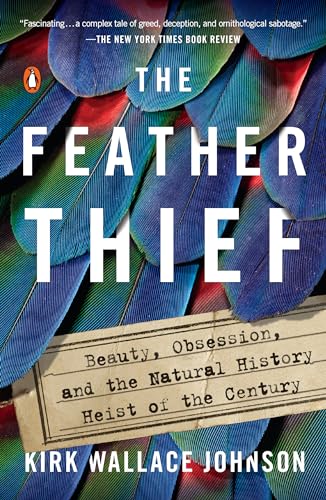
The Feather Thief, by Kirk Wallace Johnson, starts with an unusually specific theft. In 2009, a young musician named Edwin Rist stole rare bird specimens from the Natural History Museum’s collection at Tring. Their feathers were prized by people devoted to the elaborate craft of salmon-fly tying. Johnson later heard about the crime while fishing and began investigating the people and missing specimens behind it. Johnson’s account of the book establishes the heist and the questions that drew him in.
That premise offers a good route into nonfiction if you like stories about secretive communities, collecting, or an interest that takes over someone’s life. You can recognize the pull of wanting something rare without knowing anything about fishing. The appeal is learning how an unfamiliar object acquires enough value to justify an extraordinary decision.
Go in expecting the theft to open the story outward. The culprit’s identity is part of the premise; the more interesting questions concern desire, the market around it, and what happens to objects taken from a scientific collection. This is a better choice for “How did this world develop?” than for “Which suspect did it?”
The book also asks you to make room for background. Its subject connects natural history with collecting, and that context matters to understanding what was lost. If your favorite thrillers race directly from one confrontation to the next, sample the opening before choosing it for a weekend binge. If you enjoy discovering an entire community around a seemingly tiny interest, that widening view is the attraction.
Start here when you want an unusual true-crime story with a clear central incident. As you read, notice whose idea of value you’re being asked to consider: the collector’s, the investigator’s, or the museum’s. That question gives you more to discuss than whether the theft was audacious.
The Ghost Map: when following the evidence is the adventure
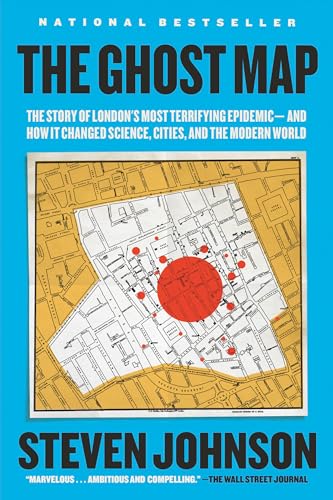
The mystery in The Ghost Map, by Steven Johnson, concerns an epidemic rather than a criminal. Set during London’s 1854 cholera outbreak, it follows the work of physician John Snow and local curate Henry Whitehead. Scientific investigation and neighborhood knowledge meet in the effort to understand what is happening. Johnson also connects the outbreak to the way a growing city functions, from its water to its waste. Those are the central subjects described by the US publisher and Penguin’s UK edition.
Choose this one if you like detective stories because of the reasoning. The pleasure of that kind of mystery is seeing a detail change meaning once someone asks a better question. Here, the stakes come from a real public crisis, and the investigation gives you a concrete way to follow a larger history of ideas.
The title can be misleading if you’re browsing quickly: this isn’t a ghost story. Its London setting belongs to a history of disease, evidence, and city life. Readers who enjoy science explained through a particular problem may find that more inviting than a broad survey of scientific discoveries.
It also makes a useful change from stories built around one person’s overpowering ambition. Pay attention to the different kinds of knowledge an investigation needs. A technical explanation and familiarity with a neighborhood can answer different questions; noticing how those perspectives interact gives you something to follow beyond the eventual conclusion.
The tradeoff is that the book’s interests extend beyond the immediate case. If you want the narrowest possible account of one event, its discussion of cities may feel like a change of pace. If you enjoy finishing a mystery with a new way to look at everyday surroundings, this is the strongest starting point of the three. Try it when curiosity about how people work something out matters more to you than a surprise ending.
The Lost City of Z: when a search keeps pulling people back
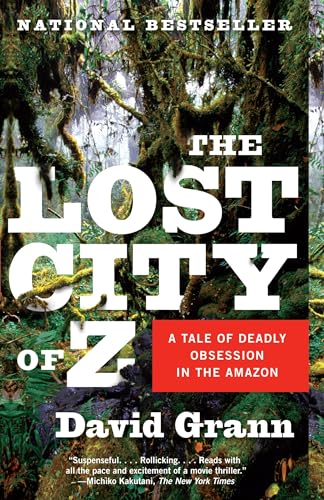
The Lost City of Z, by David Grann, begins from an enduring historical question. British explorer Percy Fawcett disappeared during a 1925 expedition into the Amazon, where he was searching for an ancient civilization. Grann follows the historical trail and undertakes a reporting journey of his own. The book brings those two searches together, as described on Grann’s book page and by Vintage.
This is the pick for readers drawn to expeditions, difficult environments, and the lure of an unanswered question. The central attraction isn’t simply finding out where someone went. It’s following the effort to reconstruct a search long after the people involved have disappeared, with the records and perspectives available to a later investigator.
The two time periods also give you a useful way to read it. Keep Fawcett’s goals separate from Grann’s questions. An explorer pursuing a conviction and a journalist investigating that pursuit don’t necessarily want the same thing, even when they travel through related territory. Watching that distinction helps the historical material feel like an active inquiry rather than a list of dates.
Choose it over The Feather Thief when the journey itself appeals to you more than a particular collecting community. Choose it over The Ghost Map when you’d rather follow an expedition and the people attracted to it than a tightly located urban investigation.
Be comfortable with uncertainty. A true disappearance doesn’t owe readers the kind of fully resolved ending a novelist can construct. It’s also worth noticing whose knowledge counts in an exploration story; a visitor’s uncertainty about a place doesn’t make that place unknown to the people who live there.
This is a good starting point when your favorite fictional adventures leave you wanting to know what evidence survives afterward. Read for the changing questions as well as the destinations.
Choose your first book by the question you keep thinking about
If you’re still deciding, set the genre labels aside for a moment. Which question would make you open the book tonight?
- Why would someone steal museum bird specimens? Pick The Feather Thief for obsession, collecting, and an unusual crime.
- How do people recognize the right explanation during a crisis? Pick The Ghost Map for evidence, collaboration, and the workings of a city.
- What keeps drawing people into a vanished expedition’s trail? Pick The Lost City of Z for travel, historical investigation, and unanswered questions.
Then check a sample in the format you actually plan to use. For print or ebooks, notice whether the movement between scenes and background keeps you interested. For audio, sample the narrator and consider how comfortable you are following names and places by ear. A promising subject and a comfortable reading format make a better starting point than choosing whichever book seems most impressive.
What “reads like a novel” should mean
Narrative nonfiction uses storytelling to organize reported events. That can include scenes, a strong sense of place, and people whose decisions have consequences. It still depends on evidence. A vivid passage isn’t permission to assume every conversation or private thought survives in a complete record.
You don’t need to turn leisure reading into homework. When a scene makes you wonder how the author knows something, look at the source notes or acknowledgments. Interviews, documents, and an author’s own reporting do different jobs; seeing those foundations can add to the interest.
These three books offer a manageable way to try that reading habit. Start with the story you’re curious about, follow its central question, and leave room for the background that makes the events matter. If one approach doesn’t suit you, the next book can offer a different kind of momentum. Your first nonfiction choice only has to make you want to keep reading.