Tag: Author Interview

  • Interview with Cara Newman

    Interview with Cara Newman

    Cara Newman

    Today on TextbookNova, we’re excited to welcome Cara Newman, author of Trail of ’98, a young adult historical adventure inspired by the Klondike Gold Rush and the dangerous journey along the historic Trail of ’98. In this interview, Cara shares how a train ride through Skagway, Alaska sparked the idea for the novel, why she built the story around Salik’s deeply personal mission to help his sick mother, and what it was like to write and publish a book at just 14 years old. She also reflects on the lessons she learned from finishing her first novel, her approach to the upcoming Shattered Trails, and her advice for other young writers hoping to bring their own stories to life.

    Textbook Nova: What inspired you to write Trail of ’98?

    Cara Newman: I was on a train ride in Skagway, Alaska, on this route called the White Pass and Yukon, and I remember just being completely in awe of everything around me. At one point I saw a sign that said “Trail of ’98,” and something about it just stuck with me. In that moment, I could almost picture a story forming around it, like everything clicked all at once. I didn’t overthink it– I actually started writing a draft right there on the train while everything was still fresh in my mind, just trying to capture everything before it faded away.


    TBN: What drew you to setting the story on the “trail of ’98” and around the search for gold?

    CN: I chose the Trail of ’98 because it represents this really intense part of history where people were willing to risk everything and push themselves to their absolute limits for the idea of gold and a better life. That kind of determination and desperation felt like a powerful foundation for a story. I didn’t just want it to be about gold itself, but about what people are willing to go through when they believe something bigger is waiting for them at the end of a dangerous journey. I wanted that same sense of urgency, struggle, and adventure to really drive the world of the book.


    TBN: Your book follows Salik as he tries to help his sick mother. Why did you choose that emotional motivation for the story?

    CN: I gave Salik that motivation because I wanted the story to have something deeply personal at its core. The Gold Rush setting is huge and chaotic, with all these external dangers and challenges, but I didn’t want the story to just be about survival on the outside. His mother gave him something emotional to hold onto– something that grounds him and explains why he keeps going even when everything is stacked against him. It turns the journey into something more than just adventure; it becomes about love, responsibility, and the idea that sometimes the strongest motivation comes from the people we care about most.


    TBN: How did you research the historical setting for the novel?

    CN: I did a mix of research and imagination. I looked into real accounts of the Klondike Gold Rush and the Trail of ’98 using sources like the National Park Service and History.com to get a sense of what the journey and conditions were actually like. Then I took that information and used it as a foundation for the story, filling in the gaps with imagination to make sure it still felt engaging while staying grounded in real history.
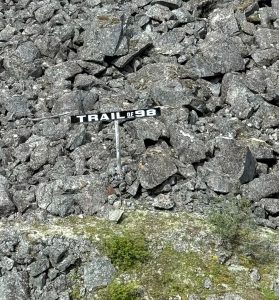
    Cara Newman trail of 98 sign
    Trail of ‘98 Sign

    TBN: What was the hardest part of writing a story focused on danger, survival, and sacrifice?

    CN: The hardest part was balancing the action with emotion and making sure the story didn’t just become nonstop intensity. With a setting like the Trail of ’98, there’s already so much built-in danger, but I didn’t want it to feel one-dimensional or like things were happening just for the sake of excitement. I wanted readers to actually care about Salik and what he was going through, which meant slowing down in certain moments and focusing more on how the challenges affected him emotionally, not just physically. It was a challenge to make those intense scenes feel meaningful and connected to his motivation instead of just being dramatic moments.


    TBN: Since you wrote Trail of ‘98 at age 14, what was the experience of publishing a novel so young?

    CN: It was honestly kind of crazy. At first it didn’t even feel real that something I wrote could actually become a book. But it was also really exciting, because it made me realize that age doesn’t really matter as much as people think if you’re willing to put in the work. I published it through Kindle Direct Publishing, which I found with the help of one of my uncles, and that made the whole thing feel a lot more possible. I had to figure a lot of stuff out along the way, which wasn’t always easy, but it made it way more rewarding when I finally saw the finished book out there.


    TBN: What did you learn about yourself as a writer while working on your first book?

    CN: I learned that I can actually stick with something long enough to finish it. Writing a book isn’t just about having an idea– it’s about continuing even when it gets hard or you lose motivation. I also learned that not everything has to be perfect. At some point, you just have to decide you’re done and stop stressing over every little detail, or you’ll never finish. That was probably the biggest thing I took away from it.


    TBN: What do you hope teen readers connect with most in Trail of ’98?

    CN: I hope they connect with Salik’s determination. Even though his situation is extreme, the idea of pushing through challenges for someone you care about is something a lot of people can relate to. I also hope they take away that strength doesn’t always look big or obvious. Sometimes it’s quiet, like choosing to keep going or being there for someone else. And even if you feel small or overlooked, that doesn’t mean what you carry isn’t heavy– or that you’re not strong enough to handle it.


    TBN: How has writing Trail of ’98 influenced the way you’re approaching Shattered Trails?

    CN: It’s made me a lot more patient with the process. With Trail of ’98, I kind of rushed myself because I wanted it published by a certain deadline– my birthday– and that made things more stressful than they needed to be. This time, I’m not doing that. I want to take my time, make sure everything flows better, and actually enjoy the process more instead of just trying to finish as fast as possible. I think that’s going to make the story stronger in the end too.
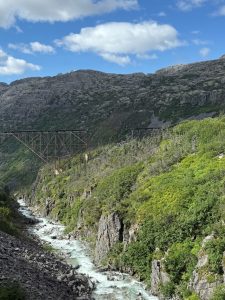
    Broken Tracks on the Trail of ‘98
    Broken Tracks on the Trail of ‘98

    TBN: What advice would you give to other young writers who want to finish and publish their own book?

    CN: Don’t wait until everything feels perfect– just start writing and stay consistent, because finishing your first book is the hardest part. Also, don’t expect everything to go smoothly, especially with publishing– finding a publisher quickly is actually really rare. If you’re writing to express yourself or tell a story you care about, I’d recommend self-publishing through something like Kindle Direct Publishing or IngramSpark since it’s more accessible and lets you get your work out there. But if your goal is traditional publishing, you have to be ready for the process– it can take weeks or even months of reaching out, and you’ll probably hear “no” a lot, which can be discouraging, but it also teaches you a lot and builds real-world skills, so it really depends on what you want and what you’re willing to go through.

  • Interview with Sara Crawford

    Interview with Sara Crawford

    Sara Crawford is an accomplished musician, poet, play-write, and the author of many books including The Muse Chronicles. Her trilogy, The Muse Chronicles, follows the protagonist Sylvia Baker and her evolving relationship with her muse Vincent. The final entry in the saga, You and the Night will be released on April 30th; and Textbook Nova had the exciting opportunity to interview Sara to learn more about her and her final chapter to her story.


    Textbook Nova: On your Youtube channel you often talk about your favorite songs and cover some that have a lot of meaning to you… If you had to pick one musician or band that has made the biggest impact on you, who would it be and why?

    Sara Crawford: This is a very hard question! My favorite albums/musicians/songs change so much. If you would have asked me this question when I was younger, I definitely would have said Radiohead, Morrissey/The Smiths, or the Smashing Pumpkins. At the moment, I think I am inspired the most by M83 and Beach House. M83 is the number one inspiration for my Muse Chronicles books, and I’ve just been in that world for so much of the past five or six years. And Beach House is a band I feel like I can listen to at any time, no matter what’s going on or what mood I’m in.


    TBN: You are a talented guitarist, vocalist and pianist; have you played any other instruments? What was the first instrument you learned to play?

    SC: Thank you! I actually went about two or three years where I hardly played guitar or keys at all. I’ve been picking them both up again, though. As far as other instruments, I did get to play bass on “Sleepwalking” in Pocket the Moon. My bass part was extremely simple, but I loved the way it felt to hold the bass. The first instrument I learned was guitar. I’ve always been a singer, and I wanted to be able to write my own songs.


    TBN: You played in a small indie band called Pocket the Moon, what do you remember most fondly from this time? Are there any specific shows that stand out to you from this time?

    SC: It was great to play venues like The Earl (where Beach House actually played once!) and the Star Bar where I saw so many Atlanta bands that I loved, but I think my favorite shows we played were at the Drunken Unicorn, especially the first show we played there as Pocket the Moon and our album release show. I have great memories of every song we played, but the one that sticks out the most was “Rooftops.” There was always a moment when I stopped singing but kept playing my acoustic, and Geoff was doing his guitar solo, and I was so grateful to be where I was and to be a part of something so magical.


    TBN: You graduated from University of New Orleans with an M.F.A in Creative Writing and an emphasis in Playwriting… what drew you towards playwriting above the other forms? Do you think your background in playwriting influences your current writing style?

    SC: I have always loved theatre and playwriting. When I was 7 or 8 years old, I used to write little plays and get the neighbors to perform them on the driveway. I also did a lot of theatre when I was in high school. There is a kind of magic that only happens in a theatrical production, and I wanted to be involved with that. There is also nothing like seeing your characters come to life. Although I mainly focus on fiction now, you can definitely tell I have that playwriting background. All of my books are very dialogue heavy.


    TBN: You’ve talked a lot about your writing style and influencers on your youtube channel, but what is you favorite fiction book or series?

    SC: Another hard one! Anne Rice’s The Vampire Chronicles will always have a special place in my heart. I remember checking out Interview With a Vampire from the library when I was 15. I always loved reading and books, but that was the first time I really fell in love with characters and a series. I pay tribute to that series in my latest vampire book, Into the Shadows.


    TBN: In The Muse Chronicles the 16-year old protagonist Sylvia Baker shares a lot of similarities with you between being a musician and having similar tastes in music… What quality do you relate to most in her? What about least?

    SC: Sylvia is a lot like me in many ways. Like Sylvia, I’ve struggled with depression and “feeling too much.” She’s also as obsessive about music as I am. In many ways, the love story between Sylvia and Vincent is a metaphor of my relationship with music. I’ve gotten some criticism for their relationship not being the healthiest, but I think that really fits with Vincent being a metaphor for art. What artist has a healthy relationship with her art?


    TBN: The third book in The Muse Chronicles will be released on April 30th, can you tell us how the main character Sylvia has evolved over the course of the saga?

    SC: Sylvia has really grown a lot throughout the trilogy. At the beginning of the first book, she’s kind of a loner. She’s very unsure of herself, and she’s not honest about what she really wants. I think Hurry Up, We’re Dreaming was the book where Sylvia changed the most. There’s a climactic scene at the end of that book where she surprises herself with what she’s able to achieve. After the second book, she’s really come to accept who she is and her unique relationship with Vincent. In You and the Night, she tries to find her place in the world with this newfound acceptance.


    TBN: You’ve talked about how this book was unusually difficult to write, specifically the first 100 pages. What made you feel like you needed to rewrite the beginning?

    SC: This is pretty much how it’s gone with all three books in this trilogy, and I think it’s because I start editing before I get a full draft out. I definitely do not recommend doing like this! But I’m a pantser (a writer who flies by the seat of her pants). I really discovered what story I was telling in the first 100 pages which is why I rewrote them so many times.


    TBN: Will you be sad to leave this world behind after the release of this final book? Do you ever expect to return to the universe you created?

    SC: This might have been why I was having so much trouble with this. Perhaps I was a little sad to say goodbye to these characters. The Muse characters of Vincent and Izabella came from a play I wrote in 2006 so some of these characters have been with me for over a decade.


    TBN: You are currently a creative writing professor in graduate program… What is one important thing you would want a prospective student to know before taking your class?

    SC: I think the most important thing any writer can learn is how important it is to sit down and do the work. Some people are naturally talented, but I’ll take dedication over talent any day. If you’re willing to actually do the work of writing, and you’re able to listen to feedback, you will do well. Not just in my class, but as a writer in general.