A campus novel can make you want to disappear into a library—or feel relieved that your own classmates are merely annoying. Dark academia often does both. Its appeal lies in the collision between the things we want from education—knowledge, friendship, a place to belong—and the damage people can do in pursuit of them.
If you want to try dark academia books, start with the kind of story you already enjoy. These three novels offer different entrances: a classics circle, a theater conservatory, and an Oxford where translation carries extraordinary power. Here is how to choose, without spoiling the endings.
What makes a book dark academia?
Dark academia connects intellectual life with danger. A school or university gives the characters a shared world; ambition, exclusion, secrecy, or obsession put that world under pressure. The subject they study matters, too. Literature, theater, and language shape what these characters value and how they understand each other.
The label covers different kinds of fiction. You can find realistic stories as well as fantasy, and a beautiful campus does not promise a comforting read. Think of it as a useful way to explore your reading interests, rather than a strict checklist every novel must satisfy.
Choose your starting point
| If you are drawn to… | Start with… | The academic world |
|---|---|---|
| Intellectual obsession and a tightly closed social circle | The Secret History | Classics at a New England college |
| Theater, shifting loyalties, and a mystery | If We Were Villains | A Shakespeare-focused conservatory |
| Historical fantasy and questions about language and power | Babel | Oxford’s fictional Royal Institute of Translation |
The Secret History: for the pull of an exclusive circle

In The Secret History, Donna Tartt brings together a group of classics students at a New England college under the influence of a charismatic professor. Their intellectual pursuits lead them toward increasingly dangerous ideas about what they can justify.
This is the starting point we would suggest if the social side of academic life interests you: who gets welcomed into a group, what makes that group seem special, and what belonging might cost. The attraction is the tension between admiration and unease. You can be curious about these students without wanting to become one of them.
Choose it for: a literary campus story centered on obsession and moral boundaries.
If We Were Villains: for theater and divided loyalties
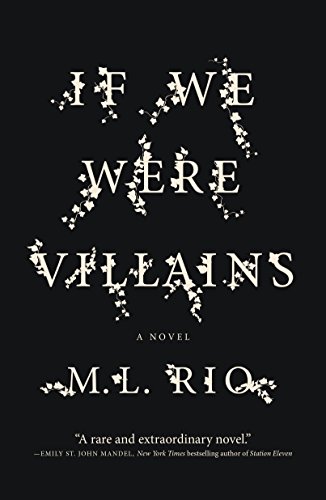
If We Were Villains by M. L. Rio follows seven young Shakespearean actors at Dellecher Classical Conservatory. As their final year unfolds, rivalry turns violent, and the roles they play become entangled with their lives away from the stage.
The story is framed by Oliver Marks’s release from prison and a detective’s desire to learn what happened. That gives you a clear reason to keep questioning the group’s relationships. If you have ever spent a semester working intensely with the same small set of people, the setting offers an especially interesting premise—taken to a much darker extreme.
Choose it for: performance, friendship, and the question of whom to trust. Expect Shakespeare to be central to the experience.
Babel: for language, fantasy, and institutional power
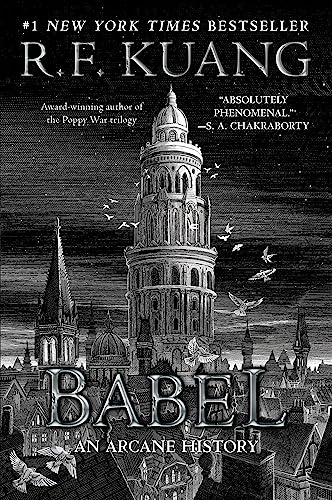
In Babel, R. F. Kuang imagines an Oxford where the Royal Institute of Translation sits at the center of imperial power. Robin Swift’s place in that world brings the promise of scholarship into conflict with the violence of colonialism.
We would choose this one if you want the university itself to be part of the argument. The premise invites you to consider who benefits from knowledge, whose work supports prestigious institutions, and what resistance might demand. It also gives fantasy readers a way into dark academia through an imagined history.
Choose it for: a story that connects language and education with larger questions about empire.
Pick one that fits your reading mood
You do not need to read these in a particular order. Start with the subject that makes you curious: classics, Shakespeare, or translation. If a sample catches your attention, that is a better reason to continue than feeling you ought to finish a popular book.
For a book-club conversation, try one question across all three: what does this institution offer its students, and what does it ask them to accept in return?
When you are ready to branch out, browse TextbookNova’s dark academia collection. Check individual descriptions as you go: books sharing this label can differ substantially in subject, tone, and intensity.