Category: Reading Tips

  • Abridged vs Unabridged Audiobooks: How to Check What You’re Getting

    Abridged vs Unabridged Audiobooks: How to Check What You’re Getting

    You’ve found the audiobook you want, but there are two listings. One is several hours shorter. Is it a faster narrator, a shorter version of the book, or just part one? Before you spend a credit or use up a library hold, open the full listing and look for the edition label.

    Unabridged means the recording reads the complete text of the edition it’s based on. Abridged means the text was edited down for a shorter listening experience. And dramatized adaptation tells you the story was adapted for performance. Those labels answer different questions from “Who reads it?” or “How long is it?” Here’s how to put the details together.

    What the labels mean

    Kobo and Libro.fm both distinguish an abridged audiobook from a complete reading. An abridgment might trim description, condense a scene, or leave out a subplot. The label alone won’t tell you which passages changed. If you’re listening for class, following along in print, or catching up for a book club, start with an unabridged recording of the same text or translation. That last detail matters: “unabridged” doesn’t mean it matches every print edition.

    A shorter reading can still make sense if you’d rather revisit the main story on a trip than hear every passage. Choose it knowingly, especially if you plan to switch between listening and reading. Finding your place is a lot easier when the words on the page are the ones you just heard.

    A dramatization is a different kind of choice. It might have actors playing individual characters, along with music or sound effects. If you want the prose as printed, check whether the listing is for a complete reading of the book or for a performed script based on it. A cast list describes the performance; by itself, it doesn’t tell you whether the text was shortened.

    Two listings that show why the details matter

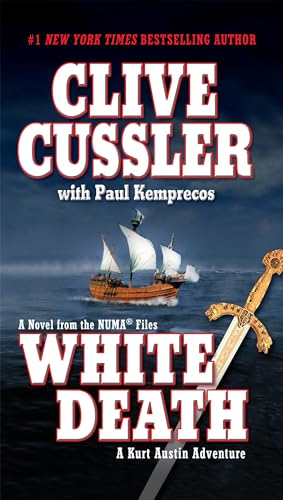
    Print cover of White Death by Clive Cussler and Paul Kemprecos

    On the publisher’s audio listing for White Death, Penguin Random House identifies James Naughton as the reader of the abridged version and Scott Brick as the reader of the unabridged one. If your library search shows two covers and the same title, the narrator name is a quick way to tell those specific recordings apart. Still check the edition field: a different narrator doesn’t mean a different text for every book.

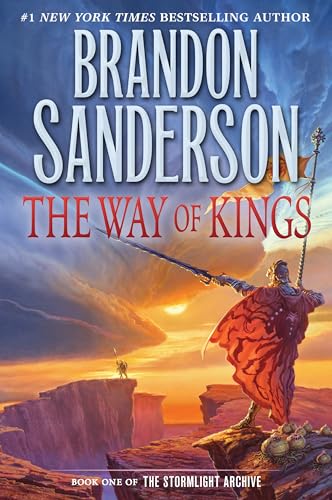
    Print cover of The Way of Kings by Brandon Sanderson

    For Brandon Sanderson’s The Way of Kings, Wake County Public Libraries lists the Macmillan Audio recording with Michael Kramer and Kate Reading as unabridged. GraphicAudio’s listing identifies its production as a dramatized adaptation and marks that listing “1 of 5.” If you’re comparing runtimes, that part number matters. The length of one installment tells you little about how the complete productions compare.

    Check these details before you borrow or buy

    1. Find the edition label. Open the full details. Look for “unabridged,” “abridged,” “adapted,” or “dramatized.” A search result may only show the title and cover.
    2. Match the publisher and narrator. If the details are vague, search for the title plus the narrator or audio publisher. Use the audio ISBN if one is listed; a print ISBN identifies a different format.
    3. Read past the runtime. A big difference is a reason to look closer. Check whether one listing is only a part, whether the editions match, and whether you’re looking at the listed duration or a playback estimate at a different speed.
    4. Use the sample for the right job. A sample helps you decide if you like the voice, pace, or sound effects. A few minutes won’t tell you whether a chapter halfway through the book was cut.

    If the library only has the abridged version and your class uses the full text, check another format of the same edition before placing the hold. A print or ebook copy can give you the pages you need while you wait for the right recording. If you plan to switch between them, compare the opening of a chapter rather than the chapter number alone: an audio track may begin with an introduction or combine several short sections.

    If the listing never says, treat the edition as unknown. A librarian or the audio publisher can help you match the narrator and edition before you commit. If you’re pairing audio with a print copy, note the translator or edition on both records. For more ways to use your library and other legal reading options, see our guide to reading books for free.

  • The Coworker or The Teacher: Which Freida McFadden Thriller Fits Your Mood?

    The Coworker or The Teacher: Which Freida McFadden Thriller Fits Your Mood?

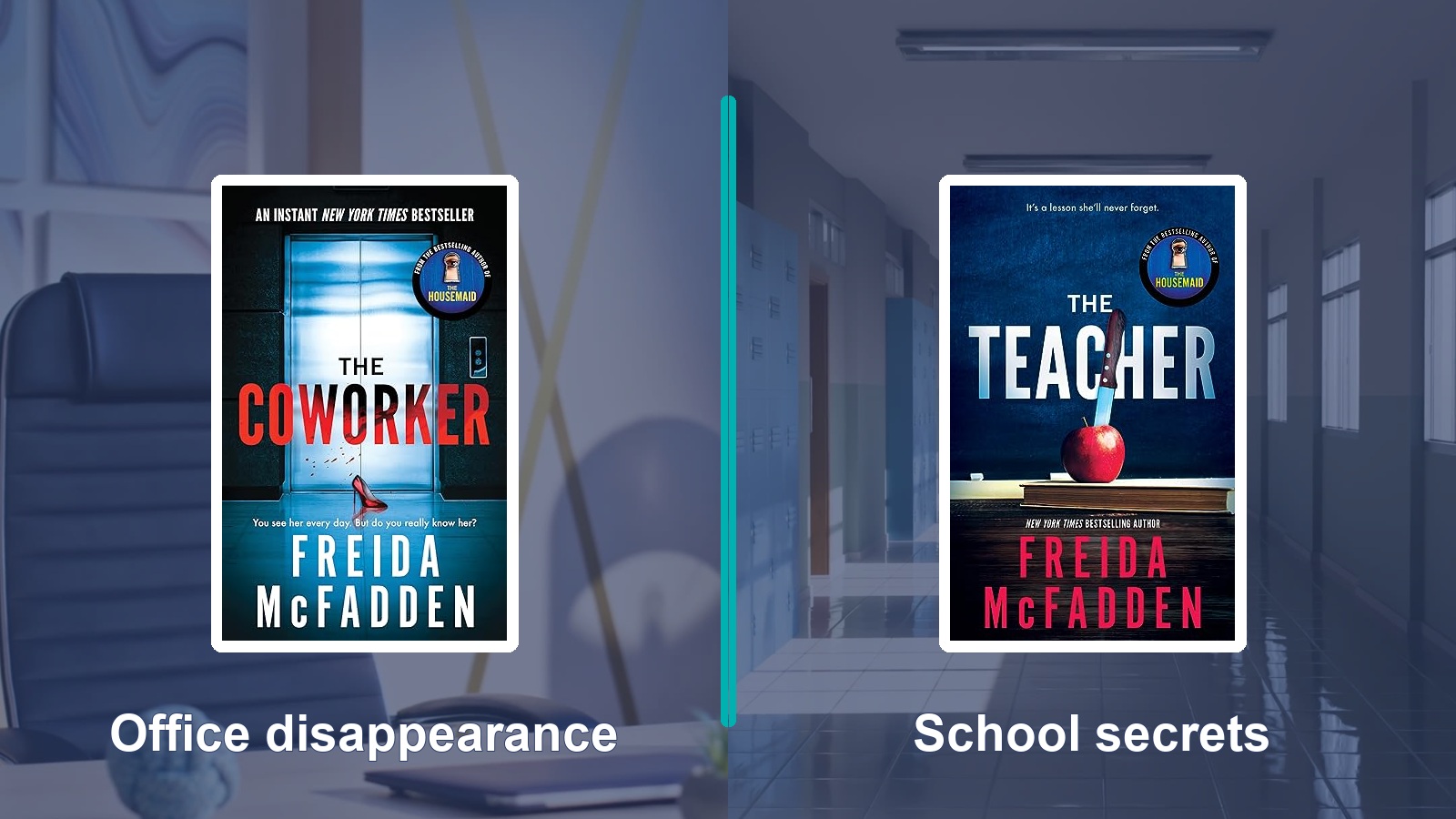
    Pick The Coworker if an empty desk and a phone call are enough to make you suspect everyone in the office. Pick The Teacher if you'd rather walk into a classroom where last year's scandal is still shaping who gets believed. Both are standalone Freida McFadden thrillers. You can start with either, and you don't need to read The Housemaid first.

    The difference is what you'll be trying to figure out. In one book, a person breaks a habit and someone notices. In the other, a reputation has already hardened into a story, and a teacher has to decide how much of it to trust. Here's how to choose without hearing what happens next.

    The Coworker: When the empty desk is the first clue

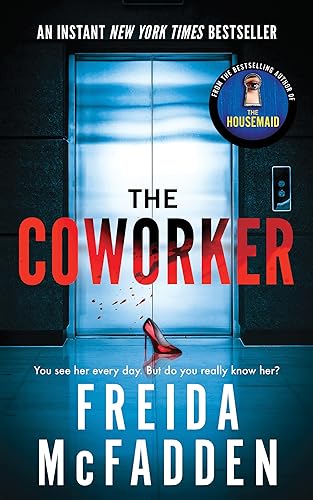
    Paperback cover of The Coworker by Freida McFadden

    Dawn Schiff is an accountant at a supplements company. Her coworkers can count on seeing her at her desk by 8:45. One morning she doesn't show up. Natalie Farrell, a sales rep at the company, notices, and an anonymous phone call turns a quiet morning into something worth worrying about. That's the setup in McFadden's description of The Coworker.

    That everyday detail is the draw. An empty desk could mean a dentist appointment or a late bus. It feels different when the person who sits there is the one you could set your watch by. You'll have a concrete question from the start: what happened to Dawn? Alongside it is a more uncomfortable one: how well did the people who saw her every day know her?

    Choose The Coworker if you like mysteries that begin with a small thing you could plausibly notice yourself. The office is familiar enough that a change in the routine stands out. If you like to make a guess early, you can start with the missed arrival and reconsider your theory as you go. You don't need to read the full jacket copy to know whether that sounds like your kind of book.

    The Teacher: When everybody has a version of what happened

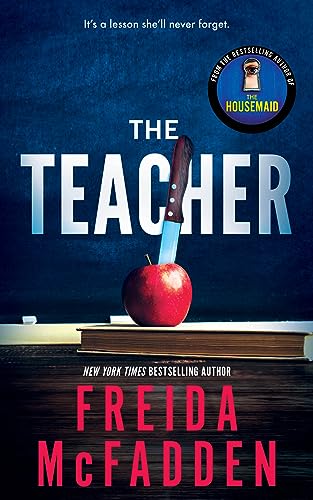
    Paperback cover of The Teacher by Freida McFadden

    Eve teaches math at Caseham High, where a scandal the previous year left a student named Addie with a reputation. Now Addie is in Eve's class. McFadden's description of The Teacher sets up a question that feels different from a disappearance: how much of what Eve has heard about Addie should she believe?

    If the thing you love about a thriller is changing your mind about a person, this premise gives you something to work with right away. A teacher and a student come into the same room with very different stakes. The rumor is already there before either of them says a word. As a reader, you can keep track of what's been seen, what's been said, and who had the authority to turn their version into the one everyone repeats.

    Choose The Teacher if that question about credibility sounds more absorbing than tracing an absence. The high school is the setting for a psychological thriller, so go in for the school secrets and the adults' choices. If you'd rather know whether either book touches a subject you avoid, McFadden keeps content advisories for both books on a separate page that can contain spoilers.

    Still tied? Try the first question, or choose by listening time

    Would you rather be the person who notices that someone hasn't shown up, or the person who hears the same story from three people and wonders whether any of them saw it happen? Go with the book whose question you'd keep thinking about after putting it down. For a buddy read, that also gives you something to compare before either of you finishes: what would count as enough evidence to change your first guess?

    If you're choosing for a trip, the author lists the unabridged audiobooks at 7 hours 46 minutes for The Coworker and 9 hours 35 minutes for The Teacher. That's a useful difference if you have a particular stretch of driving or walking time to fill. It says nothing about which story will feel faster to you.

    Already have one on your shelf? Start there. You're choosing where to spend an evening, and there's no series sequence to get wrong. If what you actually want is the sequence for the Housemaid books, the Freida McFadden reading order guide has that list.

  • How to Start a Low-Cost Book Club Without Buying New Books

    How to Start a Low-Cost Book Club Without Buying New Books

    A good book club does not need matching new hardcovers, a paid app, or a host who turns every meeting into a literature seminar. It needs three things: a book most people can access, a meeting plan that does not punish busy readers, and a simple way to choose the next pick.

    If your group includes students, coworkers, parents, roommates, or friends with different budgets, start by making cost part of the design. The best low-cost book club is not the cheapest possible version for one person. It is the version where almost everyone can join without feeling awkward about money.

    Start with the cost rule, not the book title

    Before anyone nominates a book, agree on a cost ceiling. You might set it at “free if possible, under $10 if not,” or “no pick unless at least three formats are available.” This one rule prevents the classic book club problem: someone picks a buzzy new release, half the group buys it immediately, and the other half quietly drops out because the library hold list is twelve weeks long.

    The cost rule should cover more than the sticker price. Ask whether the book is available as a library copy, ebook, audiobook, used paperback, older edition, or public-domain text. A flexible format policy matters because readers do not all read the same way. Pew Research Center’s recent reading-format data shows that print remains important while ebook and audiobook use has grown, which is a good reminder that a group can be more inclusive when it treats listening, borrowing, and used copies as normal options rather than backups.

    A simple first rule works well: “We only choose books with at least two affordable access paths.” Those paths could be library copies plus used paperbacks, Libby ebook holds plus audiobooks, or a free public-domain edition plus an inexpensive print copy.

    Choose books that have more than one affordable path

    The easiest low-cost picks usually fall into five buckets.

    First, check whether your local library has multiple copies or a book club kit. Some library systems, such as Tacoma Public Library’s book club kit program, lend multiple copies of the same title for groups. Your library may use a different name — “book club in a bag,” “discussion kit,” or “book group kit” — so search the catalog or ask a librarian before assuming every member has to hunt separately.

    Second, look at digital library access. The Libby quick-start guide explains how readers can add a library card and borrow ebooks or audiobooks through their library’s collection. That does not guarantee every title will be instantly available, but it gives members another no-purchase route.

    Third, consider public-domain classics when the group is open to older books. Project Gutenberg offers free ebooks that are generally public domain in the United States, which makes classics a strong option for groups that want zero-cost reading. The trick is to choose a classic people are genuinely curious about, not a book everyone feels they “should” read.

    Fourth, use used-copy availability as a tie-breaker. Before finalizing a book, search Textbook Nova and other used-book marketplaces by title or ISBN to see whether affordable copies exist. Used paperbacks are especially helpful for members who prefer print but do not want to buy new.

    Fifth, keep an eye on length. A 650-page novel might be a great book, but it is a risky first pick for a new group. For the first two meetings, choose something short enough that a busy person can realistically finish it in two to four weeks.

    Books and notebooks arranged for planning an affordable book club reading schedule

    Keep the first meeting simple

    The first meeting should answer three questions: what are we reading, when are we meeting, and how serious do we want the discussion to be?

    Do not overbuild it. A low-cost book club can meet at a library, campus lounge, coffee shop, park, apartment, Discord call, or video chat. The best location is the one people will actually use. If members are spread out or transportation is a problem, alternate between in-person and online meetings.

    For discussion, start with a light structure. The American Library Association’s book discussion guidance emphasizes preparing questions, but that does not mean you need a worksheet. Three prompts are enough:

    • What moment, line, or idea stayed with you?
    • Where did the book lose you or surprise you?
    • Who would you recommend this to, and who should skip it?

    Those questions work for fiction, memoir, nonfiction, romance, fantasy, classics, and even course-adjacent books. They also keep the meeting from turning into a quiz. The goal is conversation, not proving who read most carefully.

    Use a rotating format so nobody gets stuck hosting forever

    A budget-friendly club should also be labor-friendly. If one person always chooses the book, finds copies, writes questions, hosts, brings snacks, and sends reminders, the group will eventually depend on that person’s energy. Rotate the easy jobs instead.

    Try this four-role setup:

    • Picker: suggests two or three books that meet the cost rule.
    • Access checker: confirms library, ebook, audiobook, public-domain, or used-copy options.
    • Host: chooses the meeting place or call link.
    • Question starter: brings three discussion prompts.

    For a small group, one person can hold two roles. For a larger group, rotating roles keeps the club from feeling like unpaid project management.

    A voting system helps too. Ask each member to vote for one book they are excited about and one book they can access cheaply. Pick the title with the best mix of enthusiasm and availability. That second vote matters; it catches books that sound great but are expensive or impossible to borrow in time.

    Make a backup plan for people who cannot finish

    Every book club needs a humane policy for unfinished books. People get busy. Holds arrive late. Audiobooks expire. A student gets slammed with exams. A parent has a chaotic week. If the club treats unfinished reading as failure, members will skip the meeting and may not come back.

    Instead, decide what “still welcome” looks like. You might say:

    • Come even if you read the first third.
    • Spoilers are allowed after the first 15 minutes.
    • Members can listen to the audiobook, skim, or read a summary before joining.
    • If fewer than half the group finishes, extend the same book one more cycle.

    This is especially useful for student groups and friend groups where schedules change fast. A book club that survives real life is better than one that sounds perfect and collapses after two meetings.

    A reader choosing a book from a library shelf for a budget-friendly book club

    Low-cost book club checklist

    Use this checklist before each pick becomes official:

    • Cost: Can most members read it free or under the group’s agreed limit?
    • Formats: Is it available in at least two of these: print, ebook, audiobook, used copy, library copy, public-domain edition?
    • Timing: Can an average member finish it before the meeting without rushing?
    • Access: Are library holds, book club kits, or used copies realistic right now?
    • Interest: Did people vote for it because they actually want to read it?
    • Discussion: Does it give the group something to talk about beyond “I liked it” or “I didn’t”?

    If a book fails one item, it might still be fine. If it fails cost, access, and timing, save it for later.

    A simple first-month plan

    Here is a low-pressure launch plan that works for most groups.

    Week one: invite a small group and agree on the cost rule. Keep the first group to four to eight people if possible. That is large enough for discussion but small enough to schedule.

    Week two: nominate three books that meet the rule. The access checker looks for library copies, Libby availability, used copies, public-domain editions, or book club kits. If a book is expensive everywhere, remove it before the vote.

    Week three: announce the pick, meeting date, and spoiler policy. Share links to library/catalog pages, Project Gutenberg when relevant, and used-copy search options. If ISBN matters for a specific edition, tell people which edition you mean.

    Week four or five: meet for 60 to 90 minutes. Spend the first few minutes catching up, then move to the three prompts. End by choosing the next picker and access checker.

    That is enough. You can add themes, snacks, playlists, shared notes, or movie-adaptation nights later. Start with access and consistency.

    The bottom line

    A low-cost book club works when the group chooses for access before aesthetics. Pick books people can borrow, listen to, find used, or read free. Keep the meeting friendly to unfinished readers. Rotate the small jobs. Most of all, make it easy for someone to say yes without wondering whether the club is secretly another expense.

    If the book is affordable, available, and interesting enough to discuss, it is a good book club pick — even if nobody bought it new.
  • Where to Start Reading Native American History: Choose a Period and Perspective

    Where to Start Reading Native American History: Choose a Period and Perspective

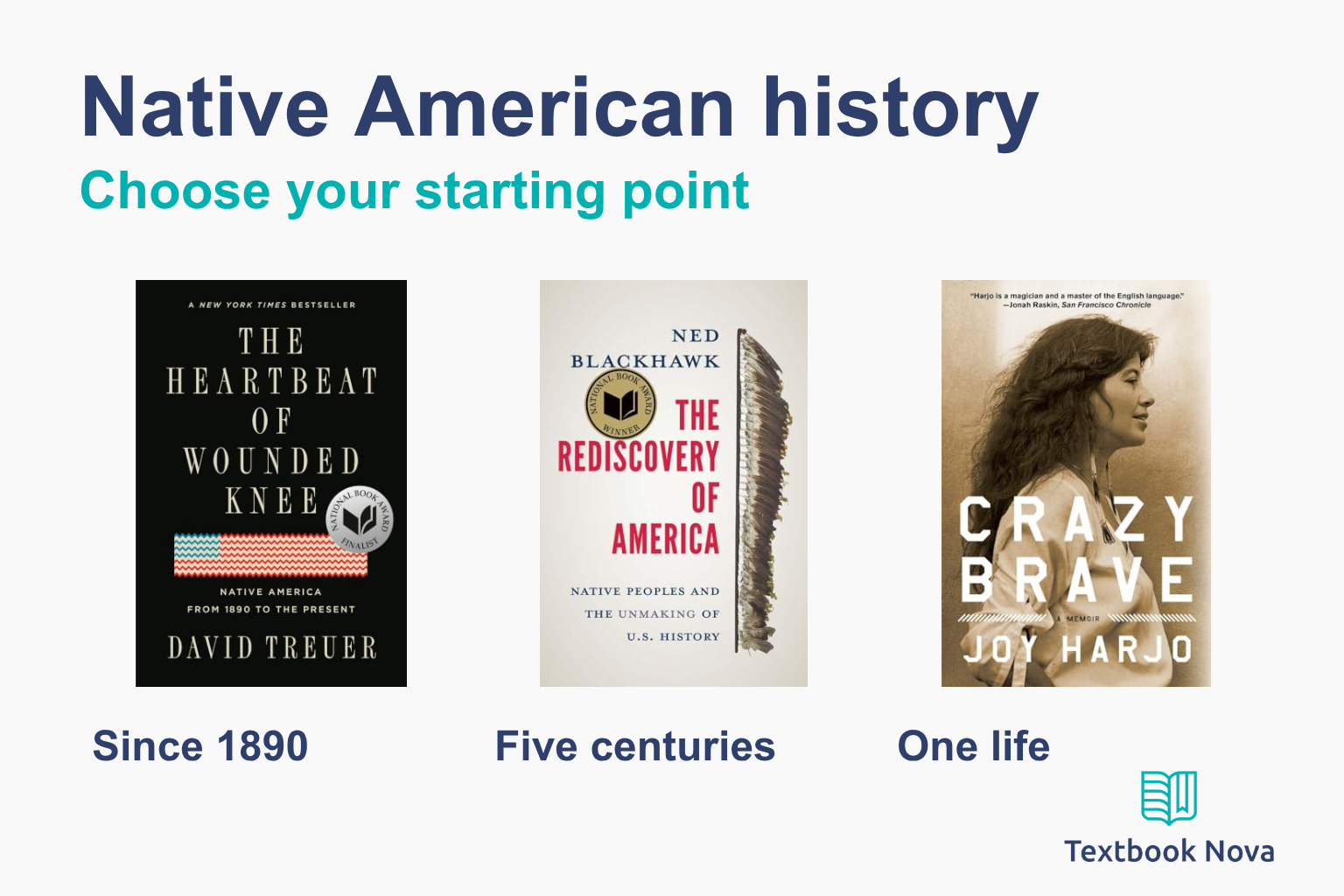
    If you want to start reading Native American history, choose the question you want answered before choosing the biggest book. For Native life since 1890, start with David Treuer’s The Heartbeat of Wounded Knee. For a longer account of how Native nations shaped the United States, try Ned Blackhawk’s The Rediscovery of America. If you’d rather begin with one person’s experiences, Joy Harjo’s Crazy Brave offers memoir, with a different purpose from either history.

    November is Native American Heritage Month, and it’s a good occasion to make room on your reading list. You don’t need to finish an entire survey before you’re allowed to get interested in a particular writer. These three starting points give you a choice of scale: a recent historical period, several centuries, or one life. None can stand in for every Native nation, community, or perspective.

    Choose the kind of reading you want to do

    A useful first question is whether you’re looking for a timeline, an argument, or a voice. A history can help connect events across places and generations. Reportage brings interviews and observed experience into the account. A memoir follows what one person remembers and makes of a life. Those forms can overlap, but you won’t get the same kind of answer from each.

    Look at the subtitle and contents before you commit. Where does the book begin and end? Which places and communities receive attention? Is the writer explaining a broad historical change or following a personal experience? Picking a book whose scope matches your curiosity makes it easier to stay with it. You can always widen your reading afterward; your first choice doesn’t have to be a permanent reading plan.

    The Heartbeat of Wounded Knee: start with Native life after 1890

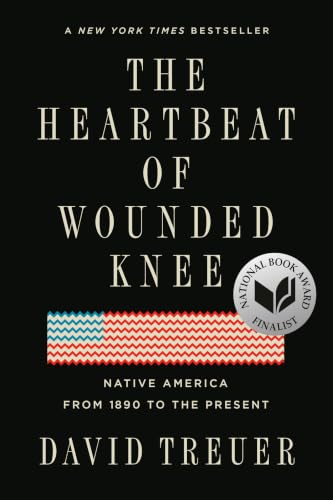
    Cover of The Heartbeat of Wounded Knee by David Treuer

    David Treuer’s The Heartbeat of Wounded Knee: Native America from 1890 to the Present is the strongest starting point here if your question is what happened beyond the nineteenth-century history you already know. Treuer is Ojibwe from the Leech Lake Reservation in Minnesota. His book combines historical writing with reportage and personal experience, keeping Native lives after Wounded Knee at the center.

    The book challenges the idea that the 1890 massacre marks an ending to Native history. Its emphasis includes continuing communities, adaptation, and the work of preserving languages, families, and traditions. That makes the subtitle an especially useful guide to the reading experience: the focus is on what continued and changed. The publisher lists the 2019 paperback at 528 pages, so allow yourself time for a substantial book.

    Choose this one if you like the idea of moving between a broad account and individual lives. Before starting, write down a question you have about the period after 1890. As you read, notice when the book answers it and when it gives you a better question instead. You don’t need elaborate notes; a few page references can help you return to a person, community, or subject that catches your attention.

    Keep the publication date in mind, too. “The present” in a title belongs to the book’s own historical horizon; it doesn’t promise coverage of everything happening in 2026. If you want a longer chronological foundation first, Blackhawk is the more fitting choice. If you want to follow one person’s memories closely, begin with Harjo and return to a broader history later.

    The Rediscovery of America: connect five centuries of history

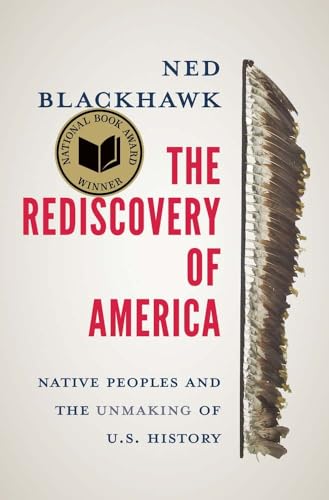
    Cover of The Rediscovery of America by Ned Blackhawk

    Ned Blackhawk’s The Rediscovery of America: Native Peoples and the Unmaking of U.S. History suits the reader who wants to reconsider the larger American-history timeline. Blackhawk, a Western Shoshone historian, connects Native and non-Native histories across five centuries. The account stretches from Spanish colonial exploration to Native self-determination in the late twentieth century, as Yale’s description of the book explains.

    The important distinction is the scale. You’re choosing a historical synthesis that places Native peoples within the formation and development of the United States. It can be a useful choice if you remember separate units from a history class but want to understand connections between them. In an interview with Yale University Press, Blackhawk discusses the scholarship behind the book and the need to reconsider familiar ways of organizing American history.

    The 2024 paperback is listed at 616 pages. That length is useful information for planning, not a reason to treat reading it as an endurance contest. Try a chapter at a time and keep a simple list of places and nations as they appear. When a familiar event returns in a different context, pause there. What has changed about your understanding of who acted, who negotiated, or whose interests were involved?

    Start here if connecting periods is what interests you most. If you mainly want to spend time with more recent Native lives, Treuer offers the more focused starting question. The two books needn’t become competing choices for your entire reading year. Read the one that answers your immediate curiosity, then use the other to extend the period or perspective you want to understand.

    Crazy Brave: begin with memoir and one writer’s voice

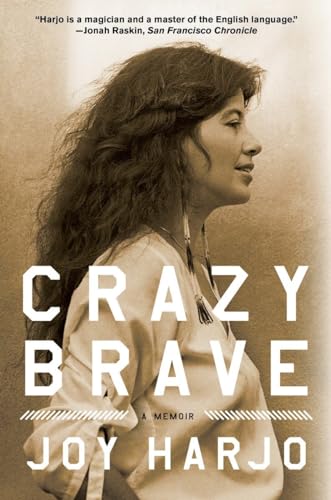
    Cover of Crazy Brave by Joy Harjo

    Joy Harjo’s Crazy Brave: A Memoir belongs on this list as a different kind of beginning. Harjo is a writer and performer of the Muscogee Nation. Her account follows growing up in Oklahoma, family relationships, and the path toward becoming a poet. Her own description of the memoir emphasizes imagination, ancestry, music, and poetry alongside difficult experiences at home.

    Choose it when you’re drawn to how a person tells a life: what they remember, which connections they make, and how they find language for their experience. That is a different reading question from asking for an overview of federal policy or a sequence of historical events. The memoir can sit beside a history without having to perform the same job.

    A useful way to read it is to follow the voice before trying to turn every passage into background information. Notice how an image or remembered moment matters within the story being told. If something makes you curious about a place or a historical event, mark it for later rather than stopping every few pages to chase a new source. You can give the book your attention and still leave yourself a path to further reading.

    Harjo’s experience is her own, so resist treating a personal account as a summary of all Native lives. If your immediate goal is historical orientation, start with one of the two histories and save this memoir as a companion. If a personal narrative is what will get you reading, begin here. There isn’t a required order, and you don’t need to make your reading list resemble a course syllabus.

    Let the next book answer a more specific question

    After your first book, narrow the next choice. You might want more about a particular nation, a period the author passed through quickly, or another writer’s perspective. The First Nations Development Institute’s reading list organizes suggestions across subjects and identifies some as starting points. It’s a useful place to continue exploring rather than expecting a single list to settle the subject.

    For now, choose the scale that fits: Treuer for Native life since 1890, Blackhawk for a longer historical account, or Harjo for memoir. Open the book’s page, check the edition, and make room for the question that brought you here.

  • Three Short Novels Under 200 Pages for a Busy Reading Week

    Three Short Novels Under 200 Pages for a Busy Reading Week

    A short novel is a useful choice when you want to start a story without carrying it through a month of deadlines. But page count only gets you so far. A funny, uncomfortable account of working in a convenience store feels very different from a winter story about a difficult decision, even when both fit comfortably in a small bag. Start with the kind of company you want from a book, then check its length.

    These three novels offer quite different evenings: the offbeat perspective of Convenience Store Woman, the gathering moral pressure of Small Things Like These, and the small island adventures of The Summer Book. Each has a verified English-language print edition under 200 pages. That makes them manageable choices for a busy week, without promising that everyone will finish them at the same speed—or that a short book must be emotionally light.

    November also brings Novellas in November, a reading event running from November 1–30. You can use that as a nudge to pick one, but there's no need to turn these into a three-book assignment. One that suits your mood is a better starting point than a stack you feel obliged to finish.

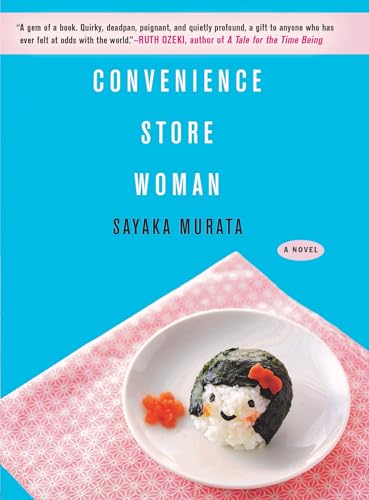
    Convenience Store Woman: for an offbeat voice and uncomfortable humor

    Convenience Store Woman by Sayaka Murata, Grove paperback cover.

    Convenience Store Woman by Sayaka Murata follows Keiko Furukura, who finds a reassuring set of rules in the convenience store where she works. At 36, she has spent eighteen years there. The routine that makes sense to her looks like a problem to the people around her, who expect a different job, a relationship, and a more recognizable version of adult life. Ginny Tapley Takemori translates the novel from Japanese.

    The appeal is that gap between Keiko's satisfaction and everyone else's concern. Store procedures give her something clear to follow; outside work, the rules are harder to pin down. She observes other people's behavior and borrows ways of speaking and dressing. When a disaffected new coworker arrives, the arrangement becomes less stable. Grove's description establishes this as a story about conformity, with humor coming from the mismatch between Keiko's thinking and other people's assumptions.

    Try this one if a distinctive narrator is usually what keeps you reading. A useful question to carry into it is whose idea of a successful life you're accepting in a scene. When someone offers Keiko advice, pause over whether the advice answers a need she has actually expressed. You don't have to agree with her to find that question interesting. It gives you something to follow beyond waiting for a big event or a conventional romantic resolution.

    For a busy week, you might read until one interaction changes how you understand Keiko, then stop there. That is a more satisfying stopping point than meeting an arbitrary page target. If you mainly want landscape, companionship, and a softer pace, consider Jansson instead. The edition linked here is Grove's 2019 paperback, ISBN 9780802129628, listed at 192 pages; other editions have different counts.

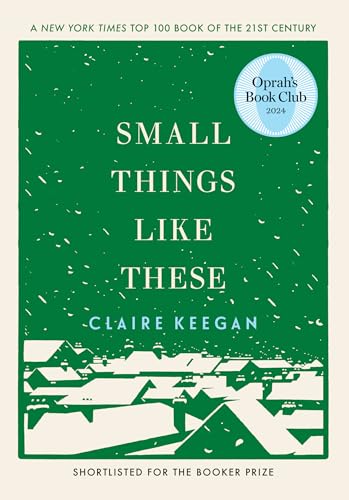
    Small Things Like These: for a concentrated moral dilemma

    Small Things Like These by Claire Keegan, Grove hardcover cover.

    Small Things Like These by Claire Keegan takes place in an Irish town in 1985, during the weeks before Christmas. Bill Furlong is a coal merchant and a father, working through his busiest season. A delivery to the local convent leads to a discovery that makes it harder for him to continue with everyday life as before. His own past and his town's willingness to remain silent both matter to the decision ahead of him.

    That premise, described by Grove Atlantic, gives the book a clear point of pressure. The question isn't simply whether Bill recognizes that something is wrong. It's what recognition will ask of him when he has a family, a livelihood, and a place in the community to consider. The Christmas setting belongs to that story; it isn't a promise of an uncomplicated seasonal comfort read. Choose it when you want a short book with a serious question at its center.

    It could also be the strongest option here for reading alongside a friend. Before you begin, agree to leave the ending out of your messages until you're both finished. Then compare the moment when you felt Bill's position become difficult. Did practical responsibilities make his hesitation more understandable to you, or more frustrating? Those are questions you can discuss without turning the conversation into a test of who noticed the most details.

    Although this is the shortest listed edition, give yourself room to read without hurrying. You could reserve a quiet stretch for it, or mark a pause and return when you can hold the central question in mind. If you're choosing primarily for dry humor, Murata is the better starting point. Grove's 2021 hardcover, ISBN 9780802158741, is 128 pages. Check that edition information if you're comparing it with a different printing or format.

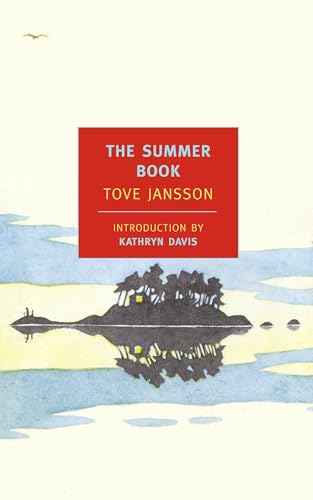
    The Summer Book: for island life, dry humor, and small adventures

    The Summer Book by Tove Jansson, NYRB Classics paperback cover.

    The Summer Book by Tove Jansson brings you to a small island in the Gulf of Finland with six-year-old Sophia and her grandmother. Thomas Teal translates it from Swedish. Its twenty-two vignettes make room for exploring, making things, talking, and disagreeing. Rather than building your reading around one urgent problem, you spend time with two people whose ages and temperaments give them different ways of seeing the same place.

    The island is more than scenery. NYRB's description points to coastline walks, bark boats, and an imagined miniature Venice. Sophia's mother has died, and the publisher's reading-group guide explains how grief and the grandmother's aging sit beneath the adventures. That combination is useful to know before choosing it: the natural setting and humor coexist with loss. You needn't wait for summer to want that particular kind of company.

    Of these three, its vignette structure offers the clearest places to pause between small sections. Try a vignette at a time if your week is fragmented. Before closing the book, notice one detail of the island and one thing the pair disagreed about. That small habit may help you return to their company without treating every reading session as an exercise in remembering plot. If you prefer a central decision pulling you toward an ending, Keegan may suit you better.

    This is also a choice for readers who like a book to leave space around what its characters say. You can pay attention to how a conversation changes when you imagine it from the child's side, then the older person's. There is no need to choose a permanently wiser character. The NYRB Classics paperback, ISBN 9781590172681, has 184 pages. Its size is modest; you can still give individual scenes as much time as you like.

    Pick your mood first, then check the edition

    If you're choosing tonight, make the decision small. Pick Murata for a narrator whose idea of normal unsettles the people around her. Pick Keegan for a working man's difficult choice. Pick Jansson for the rhythm of an island summer and a prickly, affectionate relationship. You can change your mind after sampling the opening; the page count doesn't create an obligation to keep going.

    Before buying or borrowing, compare the ISBN and format with the editions above. A hardcover, paperback, ebook display, or large-print edition can give a different number. The counts here describe specific books, not universal measures of difficulty or reading time. If your week allows only a few reading sessions, choose the experience you most want to return to. A short novel earns its place by making you want the next page, not by helping you clear a quota.

  • How to Read Books for Free Legally Without Piracy

    How to Read Books for Free Legally Without Piracy

    If you want books for free, start with the library, then public-domain sources, then campus and community options. If none of those fit, check nearly free legal fallbacks before you drift toward piracy sites that create more trouble than they solve.

    The good news is that there are plenty of legitimate ways to read without paying full price. The trick is matching the source to the book. A bestseller is usually a library-app problem. A classic is often a public-domain problem. An audiobook can be a library or volunteer-narration problem. And if you still want your own copy, a used-copy price check can keep the budget sane. If you want to compare that fallback quickly, Textbook Nova is a useful place to search alongside other marketplaces.

    Start with your library card, not a download site

    For most readers, the safest free option is the one hiding in plain sight: your public library.

    Apps like Libby make it easy to borrow ebooks and audiobooks with a library card, and Hoopla gives many libraries another way to stream or borrow digital titles. The catch is simple: availability depends on your library, your region, and the title itself. Popular books can have holds. Some libraries offer more audiobooks than ebooks, and some do the reverse.

    That does not make library borrowing inconvenient. It just means it works best when you treat it like a queue, not a vending machine.

    A good library habit looks like this:

    • put the book on hold early;
    • borrow the ebook or audiobook if the print copy is checked out;
    • keep a backup title in mind;
    • renew when possible instead of letting the loan expire;
    • use library discovery tools before you buy anything.

    If you are a student, a library card can do a lot of the heavy lifting before you spend a dollar.

    Rows of library bookshelves, representing library and public-domain discovery paths.
    Photo by Polina Zimmerman on Pexels

    Use public-domain sources for classics and older books

    When a book is old enough to be out of copyright, it may be legally free to read in ebook form.

    That is where Project Gutenberg shines. It is one of the best-known sources for public-domain ebooks, and it is especially useful for classics, older novels, and foundational nonfiction. If you care about nicer formatting, Standard Ebooks is a good follow-up because it focuses on polished editions rather than bare-bones scans.

    This is the right lane for readers who want Austen, Dickens, Twain, Frankenstein, or other books whose legal status is no longer tied to a publisher’s current sales cycle. It is also the right lane for readers who simply want a book file they can keep without worrying about an expiration date.

    A quick rule: if the book is famous, old, and widely studied, check whether there is a legal public-domain edition before you search sketchier sites. The U.S. Copyright Office explains why copyright status matters in plain language, and that is the line to remember: free is fine when the rights are clear.

    Try legal free audiobooks when reading time is scarce

    If you are too busy to sit down with a book, audio may be the easiest way to keep reading alive.

    LibriVox offers volunteer-read public-domain audiobooks, which makes it a strong option for classics and older titles. Library apps can also be great here, because many libraries lend audiobooks through Libby or Hoopla just like they lend ebooks.

    Audio is worth considering when:

    • you commute;
    • you walk or exercise regularly;
    • your eyes are tired after screen-heavy work;
    • you want a second format for a book that is already available in print.

    The main tradeoff is that audio is format-dependent. Not every book has an audiobook version, and volunteer narration quality can vary. But when you want the story more than the page layout, audio can be the simplest legal free option.

    Check campus, classroom, and community options

    Libraries are not the only legitimate free-reading route.

    College students can often borrow books through campus libraries, interlibrary loan, reserve desks, or department libraries. Some instructors place copies on reserve for short-term checkout. Community centers, local literacy programs, and neighborhood book exchanges can also help when you need something temporary rather than permanent.

    If your local library does not have what you want, WorldCat can help you locate nearby library copies through the broader library network. That is especially handy for nonfiction, older editions, or books that are uncommon in your immediate area.

    This is also where the “free” question gets practical. Sometimes the best option is not a perfect free copy of the exact title. Sometimes it is a nearby library, a reserve copy, or a legal borrowed version that gets you 90% of the way there with zero drama.

    When free is not realistic, go nearly free safely

    Sometimes the honest answer is that the book you want is not free right now.

    That is fine. The goal is not to force a free option at any cost. The goal is to avoid overpaying or doing something risky.

    A smart fallback looks like this:

    • compare used copies before buying new;
    • check whether the ebook is cheaper than the print edition;
    • look for older editions if the content still works for you;
    • use price checks before buying from the first seller you see;
    • confirm whether the book is still easier to borrow than own.

    If you decide the book is worth keeping, Textbook Nova can help you compare used-copy options without making the hunt feel random. That matters because “free” is not always the best value if a used copy is only a few dollars.

    The point is to stay legal and keep the decision intentional. A good fallback is still a win.

    Reader checking a phone in a bookstore, representing library apps and used-copy price checks.
    Photo by cottonbro studio on Pexels

    Quick decision guide: the safest free-book path

    Use this as the fast version.

    • Need a current bestseller or popular new release? Start with Libby or Hoopla and place a hold.
    • Need a classic or older book? Check Project Gutenberg first, then Standard Ebooks for a cleaner edition.
    • Need an audiobook? Try your library app first, then LibriVox for public-domain titles.
    • Need a book for class or a local search? Check your campus library, WorldCat, or interlibrary loan.
    • Need a copy to keep and free is not realistic? Price-check a used copy, ebook, or older edition before buying new.

    That order works because it starts with the lowest-friction legal option and only moves toward spending money if free access is not practical.

    The bottom line

    You do not need shady download sites to read more for less. For most readers, the safest path is library borrowing first, public-domain sources second, campus and community access third, and used-copy price checks when free is not a realistic fit.

    That sequence keeps you legal, saves money, and usually gets you reading faster than the sketchy alternatives ever would. If you want the smartest next step, make it simple: search your library, check the copyright status, and only pay when the free path truly runs out.

  • Nonfiction That Reads Like a Novel: Choose a Heist, an Investigation, or an Expedition

    Nonfiction That Reads Like a Novel: Choose a Heist, an Investigation, or an Expedition

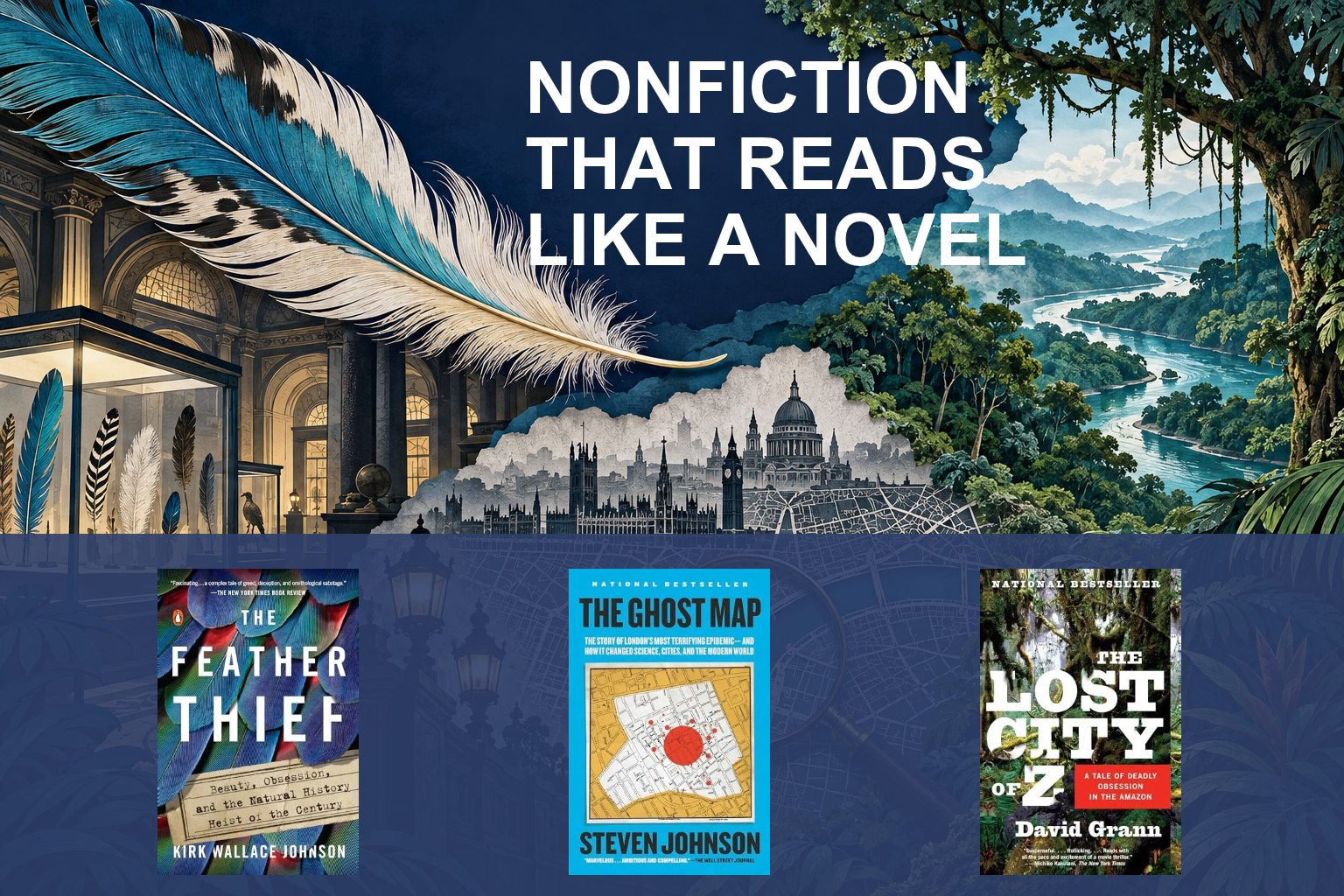
    You don’t have to give up suspense when you switch from fiction to nonfiction. A strange crime, a question nobody can answer, or an expedition that disappears can pull you through a true story just as effectively as a fictional cliffhanger. The useful question is what kind of suspense you want.

    For a museum heist that leads into an unexpectedly obsessive collecting world, start with The Feather Thief. If you enjoy following clues and watching an explanation take shape, try The Ghost Map. For an expedition story that moves between historical records and a reporter’s own search, choose The Lost City of Z.

    These books make three different starting points. You don’t need to read them in order, know the history beforehand, or decide to become “a nonfiction reader.” Pick the question you’d most like answered, then give that book your attention.

    The Feather Thief: when the motive is stranger than the crime

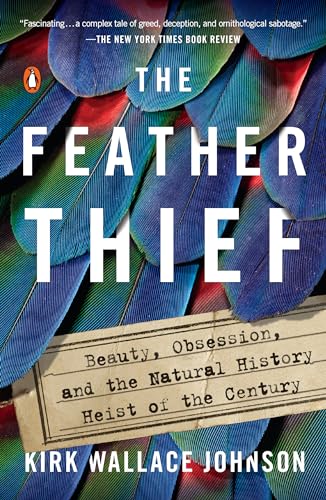
    The Feather Thief, by Kirk Wallace Johnson, starts with an unusually specific theft. In 2009, a young musician named Edwin Rist stole rare bird specimens from the Natural History Museum’s collection at Tring. Their feathers were prized by people devoted to the elaborate craft of salmon-fly tying. Johnson later heard about the crime while fishing and began investigating the people and missing specimens behind it. Johnson’s account of the book establishes the heist and the questions that drew him in.

    That premise offers a good route into nonfiction if you like stories about secretive communities, collecting, or an interest that takes over someone’s life. You can recognize the pull of wanting something rare without knowing anything about fishing. The appeal is learning how an unfamiliar object acquires enough value to justify an extraordinary decision.

    Go in expecting the theft to open the story outward. The culprit’s identity is part of the premise; the more interesting questions concern desire, the market around it, and what happens to objects taken from a scientific collection. This is a better choice for “How did this world develop?” than for “Which suspect did it?”

    The book also asks you to make room for background. Its subject connects natural history with collecting, and that context matters to understanding what was lost. If your favorite thrillers race directly from one confrontation to the next, sample the opening before choosing it for a weekend binge. If you enjoy discovering an entire community around a seemingly tiny interest, that widening view is the attraction.

    Start here when you want an unusual true-crime story with a clear central incident. As you read, notice whose idea of value you’re being asked to consider: the collector’s, the investigator’s, or the museum’s. That question gives you more to discuss than whether the theft was audacious.

    The Feather Thief by Kirk Wallace Johnson, Penguin paperback cover

    The Ghost Map: when following the evidence is the adventure

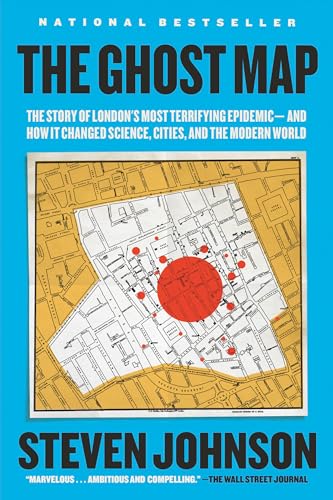
    The mystery in The Ghost Map, by Steven Johnson, concerns an epidemic rather than a criminal. Set during London’s 1854 cholera outbreak, it follows the work of physician John Snow and local curate Henry Whitehead. Scientific investigation and neighborhood knowledge meet in the effort to understand what is happening. Johnson also connects the outbreak to the way a growing city functions, from its water to its waste. Those are the central subjects described by the US publisher and Penguin’s UK edition.

    Choose this one if you like detective stories because of the reasoning. The pleasure of that kind of mystery is seeing a detail change meaning once someone asks a better question. Here, the stakes come from a real public crisis, and the investigation gives you a concrete way to follow a larger history of ideas.

    The title can be misleading if you’re browsing quickly: this isn’t a ghost story. Its London setting belongs to a history of disease, evidence, and city life. Readers who enjoy science explained through a particular problem may find that more inviting than a broad survey of scientific discoveries.

    It also makes a useful change from stories built around one person’s overpowering ambition. Pay attention to the different kinds of knowledge an investigation needs. A technical explanation and familiarity with a neighborhood can answer different questions; noticing how those perspectives interact gives you something to follow beyond the eventual conclusion.

    The tradeoff is that the book’s interests extend beyond the immediate case. If you want the narrowest possible account of one event, its discussion of cities may feel like a change of pace. If you enjoy finishing a mystery with a new way to look at everyday surroundings, this is the strongest starting point of the three. Try it when curiosity about how people work something out matters more to you than a surprise ending.

    The Ghost Map by Steven Johnson, Riverhead paperback cover

    The Lost City of Z: when a search keeps pulling people back

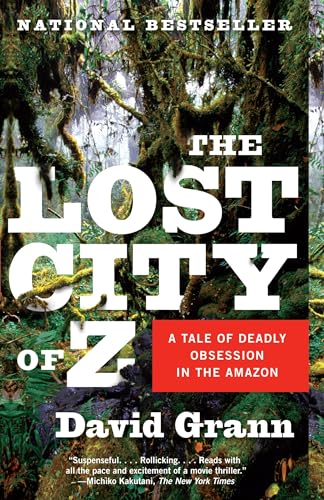
    The Lost City of Z, by David Grann, begins from an enduring historical question. British explorer Percy Fawcett disappeared during a 1925 expedition into the Amazon, where he was searching for an ancient civilization. Grann follows the historical trail and undertakes a reporting journey of his own. The book brings those two searches together, as described on Grann’s book page and by Vintage.

    This is the pick for readers drawn to expeditions, difficult environments, and the lure of an unanswered question. The central attraction isn’t simply finding out where someone went. It’s following the effort to reconstruct a search long after the people involved have disappeared, with the records and perspectives available to a later investigator.

    The two time periods also give you a useful way to read it. Keep Fawcett’s goals separate from Grann’s questions. An explorer pursuing a conviction and a journalist investigating that pursuit don’t necessarily want the same thing, even when they travel through related territory. Watching that distinction helps the historical material feel like an active inquiry rather than a list of dates.

    Choose it over The Feather Thief when the journey itself appeals to you more than a particular collecting community. Choose it over The Ghost Map when you’d rather follow an expedition and the people attracted to it than a tightly located urban investigation.

    Be comfortable with uncertainty. A true disappearance doesn’t owe readers the kind of fully resolved ending a novelist can construct. It’s also worth noticing whose knowledge counts in an exploration story; a visitor’s uncertainty about a place doesn’t make that place unknown to the people who live there.

    This is a good starting point when your favorite fictional adventures leave you wanting to know what evidence survives afterward. Read for the changing questions as well as the destinations.

    The Lost City of Z by David Grann, Vintage paperback cover

    Choose your first book by the question you keep thinking about

    If you’re still deciding, set the genre labels aside for a moment. Which question would make you open the book tonight?

    • Why would someone steal museum bird specimens? Pick The Feather Thief for obsession, collecting, and an unusual crime.
    • How do people recognize the right explanation during a crisis? Pick The Ghost Map for evidence, collaboration, and the workings of a city.
    • What keeps drawing people into a vanished expedition’s trail? Pick The Lost City of Z for travel, historical investigation, and unanswered questions.

    Then check a sample in the format you actually plan to use. For print or ebooks, notice whether the movement between scenes and background keeps you interested. For audio, sample the narrator and consider how comfortable you are following names and places by ear. A promising subject and a comfortable reading format make a better starting point than choosing whichever book seems most impressive.

    What “reads like a novel” should mean

    Narrative nonfiction uses storytelling to organize reported events. That can include scenes, a strong sense of place, and people whose decisions have consequences. It still depends on evidence. A vivid passage isn’t permission to assume every conversation or private thought survives in a complete record.

    You don’t need to turn leisure reading into homework. When a scene makes you wonder how the author knows something, look at the source notes or acknowledgments. Interviews, documents, and an author’s own reporting do different jobs; seeing those foundations can add to the interest.

    These three books offer a manageable way to try that reading habit. Start with the story you’re curious about, follow its central question, and leave room for the background that makes the events matter. If one approach doesn’t suit you, the next book can offer a different kind of momentum. Your first nonfiction choice only has to make you want to keep reading.

  • Agatha Christie Books in Order: Poirot, Marple, and Where to Start

    Agatha Christie Books in Order: Poirot, Marple, and Where to Start

    You don't have to read every Agatha Christie book in order. Most cases give you a new mystery to solve, so you can choose a detective or setting that appeals to you. Publication order is useful if you want to follow a series carefully, though: characters return, and a few later books discuss earlier cases.

    For a straightforward first pick, start with The Mysterious Affair at Styles for Hercule Poirot, The Murder at the Vicarage for Miss Marple, or And Then There Were None for a standalone. Those three choices let you try different kinds of Christie without turning your reading into a completion challenge.

    Below, you'll find all 33 of Christie's Poirot novels and all 12 of her Marple novels in publication order, followed by guidance on short stories, alternate titles, and a few exceptions worth knowing. These are Christie's own books; adaptations and later novels by other authors are separate reading projects.

    Choose your first Christie by the kind of mystery you want

    Poirot: start with The Mysterious Affair at Styles

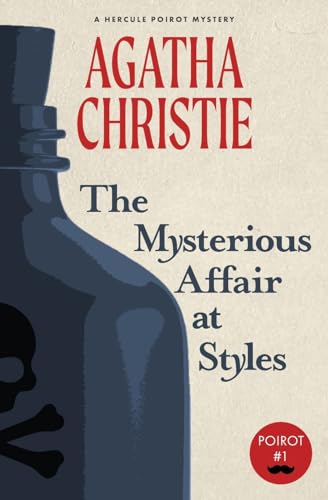
    The Mysterious Affair at Styles by Agatha Christie, Warbler Classics edition

    If you'd like to meet the detective at the beginning, choose The Mysterious Affair at Styles. Published in 1920, Christie's first novel introduces Poirot through Hastings, who is recovering from a wartime injury at an English country house. A poisoning turns the household into a collection of suspects. The official story page confirms that starting point and premise.

    This is a useful route if your favorite part of a mystery is comparing accounts, noticing details, and wondering which apparently ordinary fact will matter later. You get a contained setting and an introduction to Poirot's approach before following him into other cases. Keep a short list of names if you enjoy solving along; you don't need a notebook full of theory to enjoy the reveal.

    Starting here also removes the familiar hesitation of wondering whether you're missing an introduction. Afterward, continue with The Murder on the Links, or use the list below to plan a longer Poirot read. You can take breaks between cases without needing to remember an unfinished central plot.

    Miss Marple: start with The Murder at the Vicarage

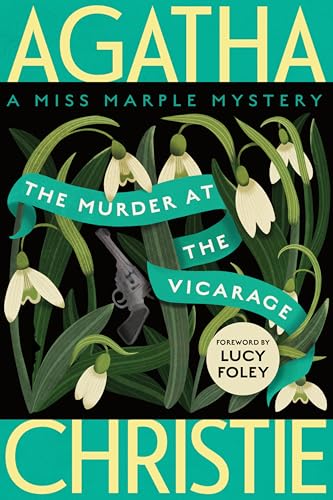
    The Murder at the Vicarage by Agatha Christie, William Morrow paperback

    The Murder at the Vicarage, published in 1930, is Miss Marple's first novel. Colonel Protheroe is found dead in the vicar's study, and the village supplies plenty of people who might have wanted him gone. Marple's attention to people's behavior makes everyday conversation worth watching closely. See the official introduction to the novel for its place in the series.

    Pick this route if you like a mystery woven through a community: people know one another, reputations carry weight, and a polite exchange can have more going on beneath it. St Mary Mead is an appealing place to begin because it introduces Marple's surroundings as well as her investigative instincts. Her experience of ordinary human behavior is part of the attraction.

    The village setting doesn't make the crime trivial or guarantee a cuddly story. It gives you a smaller social world to examine. If you prefer watching relationships and motives emerge to following a famous professional detective, Marple may be the better first choice. Her short stories are another option for busy weeks, discussed below.

    A standalone: start with And Then There Were None

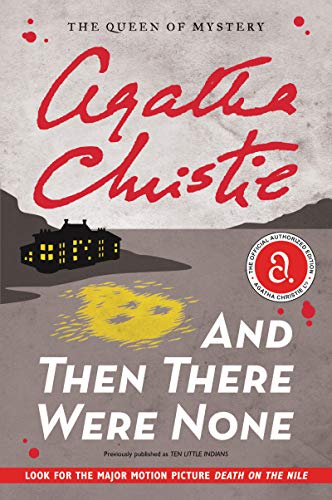
    And Then There Were None by Agatha Christie, paperback edition

    Choose And Then There Were None if you want to try Christie without committing to a returning sleuth. Ten strangers arrive on an isolated island, their hosts are absent, and a death makes the invitation feel very different. The official synopsis establishes the 1939 novel's enclosed setting and growing suspicion.

    Here, your attention goes to the group and its predicament rather than a familiar detective's method. That makes it a strong option for readers drawn to isolation, distrust, and the pressure of being unable to leave. If you're choosing a book-club read, the standalone structure also means nobody has to catch up on a series first.

    You can read this before, between, or after either detective series. There is no Poirot or Marple prerequisite. Go in with the premise rather than a detailed plot summary; a recommendation that tells you every turn has taken away part of the reason to read it.

    Hercule Poirot novels in publication order

    Use this list for a sustained Poirot read. It includes novels, not short-story collections. Years refer to the earliest UK or US book publication, so a UK-only list can show a later year for some titles. The official Poirot reading guide also provides an optional order based on Poirot's lifetime; that is a different organizing choice.

    1. The Mysterious Affair at Styles — 1920
    2. The Murder on the Links — 1923
    3. The Murder of Roger Ackroyd — 1926
    4. The Big Four — 1927
    5. The Mystery of the Blue Train — 1928
    6. Peril at End House — 1932
    7. Lord Edgware Dies — 1933
    8. Murder on the Orient Express — 1934
    9. Three Act Tragedy — 1934
    10. Death in the Clouds — 1935
    11. The ABC Murders — 1936
    12. Murder in Mesopotamia — 1936
    13. Cards on the Table — 1936
    14. Dumb Witness — 1937
    15. Death on the Nile — 1937
    16. Appointment with Death — 1938
    17. Hercule Poirot's Christmas — 1938
    18. Sad Cypress — 1940
    19. One, Two, Buckle My Shoe — 1940
    20. Evil Under the Sun — 1941
    21. Five Little Pigs — 1942
    22. The Hollow — 1946
    23. Taken at the Flood — 1948
    24. Mrs McGinty's Dead — 1952
    25. After the Funeral — 1953
    26. Hickory Dickory Dock — 1955
    27. Dead Man's Folly — 1956
    28. Cat Among the Pigeons — 1959
    29. The Clocks — 1963
    30. Third Girl — 1966
    31. Hallowe'en Party — 1969
    32. Elephants Can Remember — 1972
    33. Curtain: Poirot's Last Case — 1975

    Two dates often cause confusion. Three Act Tragedy first appeared in the US in 1934 and in the UK in 1935. Five Little Pigs first appeared in the US in 1942 as Murder in Retrospect. And Taken at the Flood belongs in 1948, as confirmed by its individual story entry.

    Which Poirot books should wait?

    Save Curtain until the end of your Poirot reading. For other known references, the official guide recommends these pairs and groups:

    • Murder on the Orient Express before Cards on the Table.
    • Three Act Tragedy before Hercule Poirot's Christmas.
    • Mrs McGinty's Dead before Hallowe'en Party.
    • Five Little Pigs, Mrs McGinty's Dead, and Hallowe'en Party before Elephants Can Remember.

    These are useful precautions from the official checklist, not a promise that every other book contains no references. The Dumb Witness entry, for example, also notes references to earlier cases. If even a passing reference bothers you, publication order is the practical default.

    Miss Marple novels in publication order

    Marple offers a shorter novel sequence. The official Marple reading list mixes novels and short stories in its suggested lifetime order. For publication order of the novels alone, use this list:

    1. The Murder at the Vicarage — 1930
    2. The Body in the Library — 1942
    3. The Moving Finger — 1942
    4. A Murder Is Announced — 1950
    5. They Do It with Mirrors — 1952
    6. A Pocket Full of Rye — 1953
    7. 4.50 from Paddington — 1957
    8. The Mirror Crack'd from Side to Side — 1962
    9. A Caribbean Mystery — 1964
    10. At Bertram's Hotel — 1965
    11. Nemesis — 1971
    12. Sleeping Murder — 1976

    The Moving Finger uses its earliest publication year here; UK editions followed in 1943. Read A Caribbean Mystery before Nemesis if you'd like to meet a returning character in the earlier book. The official Nemesis page explains that connection without making the two a conventional continuous story.

    Sleeping Murder was the last Marple novel published, but that doesn't make it the last event in Marple's life. The official reading list places it earlier in its suggested chronology. Its writing history is debated, so publication order is a clearer system than trying to reconstruct exactly when every manuscript was written.

    Where short stories and Tommy and Tuppence fit

    You don't need to buy every collection before beginning the novels. Poirot Investigates and Marple's The Thirteen Problems are useful choices when you'd prefer a complete case in a shorter sitting. Check a collection's contents before buying another edition: UK and US volumes can group the same stories differently. The official publication checklist identifies collections and their contents.

    Tommy and Tuppence are a different proposition. The official character guide emphasizes that they age across their adventures. If that continuing relationship appeals to you, follow this sequence: The Secret Adversary (1922), Partners in Crime (1929, short stories), N or M? (1941), By the Pricking of My Thumbs (1968), and Postern of Fate (1973).

    Check alternate titles before buying a second copy

    An unfamiliar title may be a book you already own. Lord Edgware Dies also appeared as Thirteen at Dinner, as its official page explains. Five Little Pigs is also Murder in Retrospect, and Taken at the Flood is also There Is a Tide. The publication checklist above records further regional titles, including The Tuesday Club Murders for The Thirteen Problems.

    Compare author, contents, format, and ISBN rather than assuming a new cover means a new story. A play, graphic adaptation, abridgment, and original novel can share a title. Later continuation novels can feature familiar detectives while being written by someone else; keep those separate if your aim is to read Christie's own work first.

    Make the next choice small

    Start with the route that sounds most enjoyable this week: Poirot's country-house debut, Marple's village investigation, or the standalone island mystery. Read one book before deciding whether you want a complete series. A checklist is useful when it helps you choose; it doesn't have to become an obligation.

    You can explore Agatha Christie's books on Textbook Nova or browse classic mysteries when you're ready for another case.

  • What to Read After Project Hail Mary: Choose by Science, Survival, or First Contact

    What to Read After Project Hail Mary: Choose by Science, Survival, or First Contact

    The best book to read after Project Hail Mary depends on the part you want more of. For practical problems solved with science and a stubborn sense of humor, start with The Martian. For the engineering challenge of keeping humanity alive, try Seveneves. For the possibility of understanding a very different civilization, choose Children of Time.

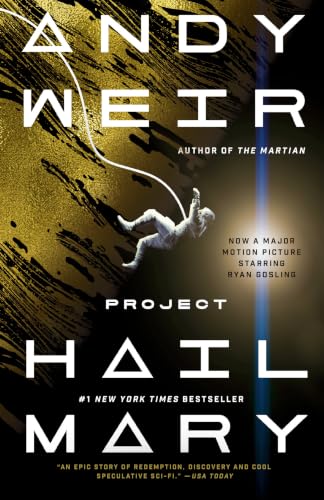
    Those are three different recommendations, even though all three belong on a science-fiction shelf. Andy Weir’s Project Hail Mary brings several pleasures together: Ryland Grace wakes with gaps in his memory, has a mission tied to Earth’s survival, and must learn enough about an unfamiliar situation to act. The publisher’s reading guide establishes that premise; the discoveries are better left to the novel.

    Project Hail Mary by Andy Weir cover

    Think about what kept you turning pages. Was it watching someone test an idea? The pressure of having no safe backup plan? Or the challenge of meeting an intelligence with different assumptions? Use that answer to pick your next book. None of these needs to reproduce every part of Weir’s novel to be a good follow-up.

    For practical science: The Martian by Andy Weir

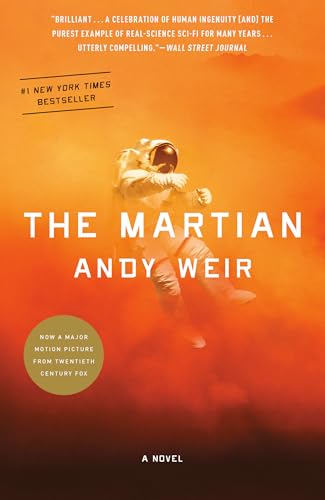
    The Martian by Andy Weir cover

    The Martian is the most straightforward choice if you want another Andy Weir novel built around an extremely difficult problem. Astronaut Mark Watney is stranded on Mars after a storm leaves his crew believing he is dead. He has limited supplies and no easy way to announce that he is still alive. The publisher’s description makes the central appeal clear: scientific knowledge and improvisation become everyday survival tools.

    The useful comparison is the scale of the immediate task. You can approach this book looking for the satisfaction of turning a terrifying situation into something that can be worked on. What is available? What is missing? What might fail next? The stakes are enormous for Watney, but his predicament gives the reader a concrete person and place to follow. That makes it a strong pick when the process of finding an answer mattered as much as the answer itself in Project Hail Mary.

    Weir also talks about breaking large problems into smaller pieces in his publisher Q&A. That provides a helpful way to choose between these recommendations. If you want a story where reasoning can feel like forward motion, keep this one at the top of your list. You don’t need to turn your reading into homework; the pleasure is following the effort and seeing why the next attempt matters.

    The tradeoff is the kind of connection you’re seeking. Watney’s predicament is human survival on Mars. Choose it for ingenuity, pressure and the author’s comic sensibility, rather than expecting the same first-contact relationship as Project Hail Mary. If the unfamiliar intelligence was your favorite element, skip ahead to Children of Time. If you’ve already read The Martian, that preference still helps: move toward Seveneves for a bigger engineering problem, or toward Tchaikovsky for a different perspective.

    For humanity’s survival: Seveneves by Neal Stephenson

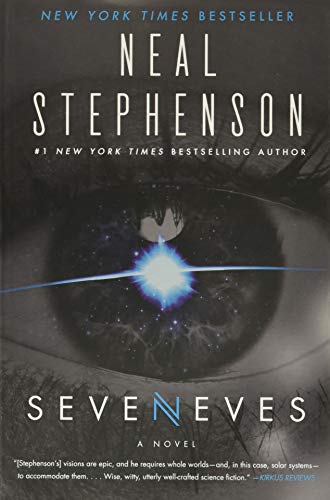
    Seveneves by Neal Stephenson cover

    Seveneves starts with the destruction of the moon. Its debris threatens to make Earth uninhabitable, and people must work out how a human future could continue. One response involves habitats around the International Space Station. That opening situation, described by publisher Subterranean Press, turns survival into a question of infrastructure and collective decisions.

    This is the recommendation for the reader who finishes a space survival story and wants to keep asking practical questions. How would you expand a refuge? How would you organize the people who depend on it? What happens when a technical plan also needs agreement among people under extraordinary pressure? Those are useful interests to bring to this book. You’re moving from the appeal of one person solving the next urgent problem toward the challenge of building something many people must live with.

    Stephenson’s account of the novel’s origins is revealing. He began with the space-debris problem and wanted to keep the story within the solar system, avoiding faster-than-light travel and technologies without a known physical basis. That doesn’t make fiction a scientific prediction. It does explain why the engineering premise is a good reason to choose this particular follow-up.

    The main tradeoff is breadth. Seveneves includes political and social tensions, and its story eventually stretches across millennia. Go in wanting that widening view. If you mostly want an intimate companionship story, or a tight focus on one familiar voice, this is a less direct match than the phrase “books like Project Hail Mary” might suggest.

    For a reading group, it offers a useful discussion angle: which challenge interests you more, designing a system or persuading people to cooperate within it? You don’t have to decide in advance. But being curious about both makes Seveneves an easier recommendation. Choose it when you want the survival problem to grow beyond the next repair and into the shape of a future society.

    For first contact: Children of Time by Adrian Tchaikovsky

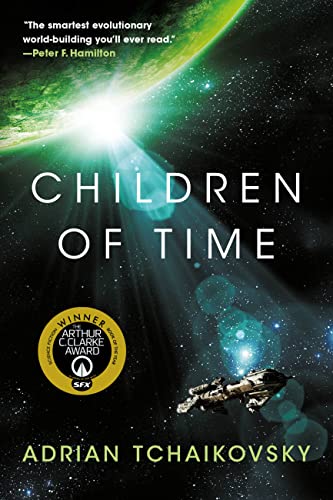
    Children of Time by Adrian Tchaikovsky cover

    Children of Time follows human survivors searching for a home beyond a dying Earth. They find a planet prepared for human life, but it already has inhabitants and a civilization of its own. The publisher’s synopsis frames the resulting encounter around two civilizations with competing needs for survival.

    That makes it the most promising choice here if your favorite part of Project Hail Mary was the need to understand an intelligence with a different view of the world. The attraction is more specific than simply having aliens in the story. A shared problem doesn’t automatically produce a shared interpretation of it. When both sides have reasons to fear losing their future, understanding becomes something consequential.

    Bring your curiosity about perspective to this one. Instead of looking only for the clever solution a character can calculate, consider what each civilization thinks it is protecting. That shift gives you a different way to follow the tension. You can ask how a situation looks from each side before deciding what a reasonable response would be. It’s a useful next step for readers who want science fiction to make their familiar assumptions feel less automatic.

    The tradeoff is intimacy and scale. A collision between civilizations is a different starting point from a close partnership between individuals. Don’t choose Children of Time solely because you want the same friendship or the same humor again. Choose it because you want the question of coexistence to occupy more of the story. The sense of discovery can be the connection even when the reading experience changes.

    It is also the first book in Tchaikovsky’s Children of Time series, so start here rather than jumping to a later title. There’s no need to commit to the whole series now. Let the premise of this first encounter decide whether it belongs on your immediate reading list.

    Pick the part you want to carry forward

    If you’re still torn, imagine choosing tonight’s first chapter. Reach for The Martian when you want a concrete predicament and the pleasure of working through it. Reach for Seveneves when you want to think about how people could build a future under extreme constraints. Reach for Children of Time when you want human survival considered alongside another civilization’s claim to a home.

    All three can suit a reader who loved Project Hail Mary, but for different reasons. You can also change your answer with your mood. After a week of complicated decisions, a familiar author and a clear central predicament might sound appealing. With more room for a longer conversation, the social questions in a civilization-scale story might be what you want.

    The book pages linked above let you check each title and edition before choosing. Start with the appeal you most want to revisit, then leave room for the next author to surprise you. Finding a satisfying follow-up doesn’t require finding the same novel twice.

  • Loved Legends & Lattes? Is The Spellshop Your Next Cozy Fantasy?

    Loved Legends & Lattes? Is The Spellshop Your Next Cozy Fantasy?

    If the best part of Legends & Lattes was watching a small business become a place people belong, The Spellshop deserves a spot on your list. Sarah Beth Durst swaps the coffee counter for an island cottage, a garden and some decidedly unauthorized magic. The pleasure of starting over is familiar. The person doing it, and what she has to risk, are different.

    The most useful question is what you want to take with you from Travis Baldree's novel. More shopkeeping? More friendship? A romance with a seaside setting? Here's how to decide whether this is your next read, without spoiling either story's ending.

    What made the coffee shop matter?

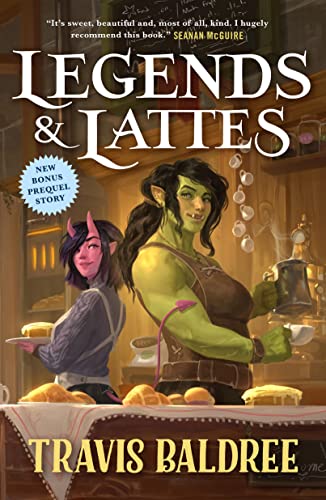
    Legends & Lattes by Travis Baldree, verified book cover

    Legends & Lattes follows Viv, an orc who leaves adventuring behind to open a coffee shop in Thune. Her first challenge is wonderfully specific: the city doesn't know what coffee is. She needs to build a business and find people who can help her make this unfamiliar idea work.

    That setup changes what counts as a satisfying fantasy achievement. Instead of asking how much stronger the hero can become, you can root for a place to take shape and for its owner to learn a different way of living. The fantasy is partly the chance to use your energy on something you actually want to make.

    Baldree has described the novel's beginnings in terms of missing cafés, human connection and hope during the pandemic. That author perspective offers a useful clue to its appeal: the company matters as much as the coffee. If you finished the book wanting another welcoming place to spend time, rather than another adventure with the same characters, Durst's island is a promising next stop.

    The Spellshop trades a chosen retirement for a hurried escape

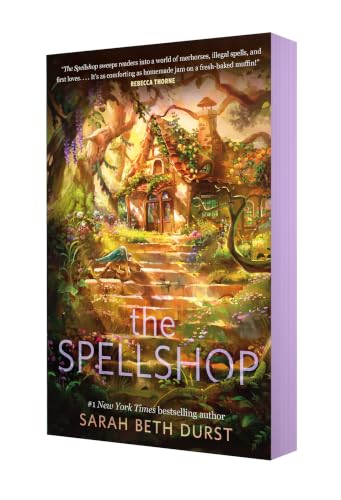
    The Spellshop by Sarah Beth Durst, verified book cover

    The Spellshop starts with Kiela, a librarian whose comfortable world revolves around books. When revolution reaches the Great Library of Alyssium, she flees with rescued spellbooks and Caz, her assistant and a magically sentient spider plant. They take shelter on the island where she grew up.

    Kiela needs a living, so she begins making jam. The spellbooks can help her garden grow, but using their knowledge comes with consequences: this magic isn't freely available for anyone to practice. A small enterprise becomes a question about what she can offer the people around her, and what it costs to keep those abilities hidden. The publisher's description and opening excerpt establish both the cottage setting and the danger behind her arrival.

    The distinction matters when choosing your next book. Viv has a project she wants to begin. Kiela first needs somewhere to land. If the idea of making a home after an unwanted upheaval speaks to you, the island premise may be especially appealing. If you're mainly looking for the pleasure of a business plan becoming real, expect that interest to share space with recovery and getting to know the neighbors.

    Coffee and jam give the community a reason to gather

    Both premises give friendship something practical to grow around. A shop makes repeated encounters possible: people can offer help, become familiar faces and gradually stop feeling like strangers. That can be more inviting than a story in which everyone is immediately declared a found family.

    The settings offer different versions of that invitation. Thune gives you a new café inside an existing city. Kiela's island brings the prospect of a cottage garden and a smaller circle of neighbors. You might choose between them the way you'd choose an afternoon out: a lively counter with something warm to drink, or a place where you can notice what's growing outside.

    In a 2024 interview, Durst describes kindness and starting over as central to the book she wanted to write. She also connects its cottagecore appeal with a seaside retreat. That's a stronger reason to try it than simply putting both novels under the same genre label. You're following a particular pleasure: ordinary work becoming a way to connect.

    Romance is part of the comparison, too

    If Viv and Tandri's relationship was a major reason you loved Legends & Lattes, be specific about what you hope to find again. Publishers Weekly's review describes their growing affection alongside Viv's business. The warmth of that relationship and its sapphic pairing may matter to you for different reasons.

    The Spellshop pairs Kiela with a helpful male neighbor, Larran. Its publisher presents the book as a standalone romance as well as a small-town fantasy. That makes it a reasonable choice if you're drawn to a love story growing alongside a new home and community. It doesn't make it an equivalent choice if you specifically want another sapphic romance.

    You don't have to treat those preferences as interchangeable. Wanting familiar emotional warmth is one reading mood; wanting a particular kind of romantic relationship is another. Name the part you're looking for before choosing from a shelf of similarly inviting covers.

    Cozy still leaves room for something to go wrong

    Neither premise promises an entirely uneventful life. Viv has rivals and a past that can interfere with her plans. Kiela escapes a burning library, and her use of magic is illegal. Those are meaningful pressures even when a story is centered on a smaller, gentler life.

    If you want absolutely no danger tonight, the label alone won't settle the decision. Read the opening sample first. It can tell you more about your response to the voice and immediate tension than a list of pastries, plants or charming side characters can.

    For readers comfortable with some trouble on the way to connection, The Spellshop offers a clear reason to leave the café: a bookish heroine has to turn knowledge into something useful outside the library. Try it if the garden, the island neighbors and the possibility of belonging sound like the parts you'd linger over. You can explore The Spellshop on TextbookNova and decide whether that's the fresh start you want next.