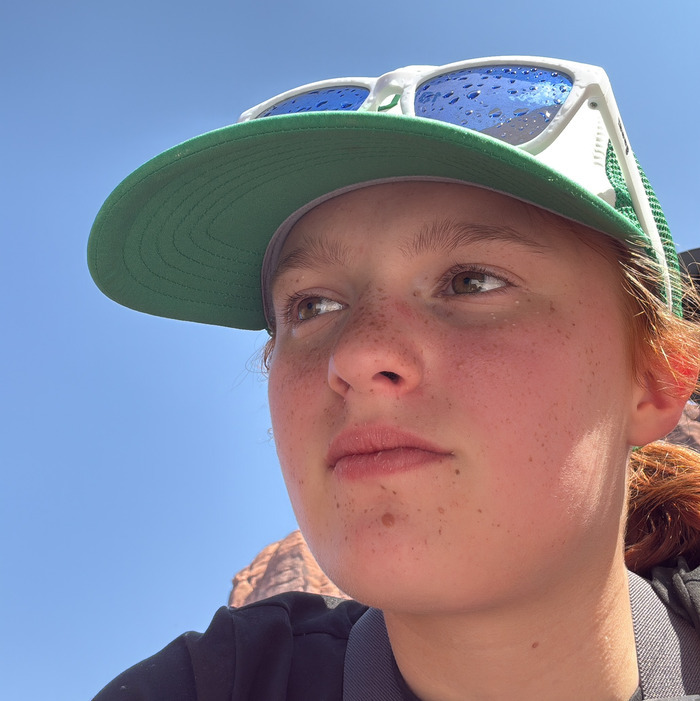
Today on TextbookNova, we’re excited to welcome Cara Newman, author of Trail of ’98, a young adult historical adventure inspired by the Klondike Gold Rush and the dangerous journey along the historic Trail of ’98. In this interview, Cara shares how a train ride through Skagway, Alaska sparked the idea for the novel, why she built the story around Salik’s deeply personal mission to help his sick mother, and what it was like to write and publish a book at just 14 years old. She also reflects on the lessons she learned from finishing her first novel, her approach to the upcoming Shattered Trails, and her advice for other young writers hoping to bring their own stories to life.
Textbook Nova: What inspired you to write Trail of ’98?
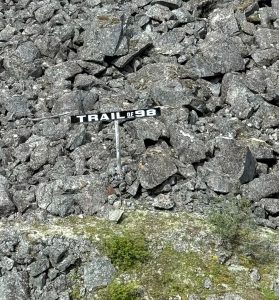
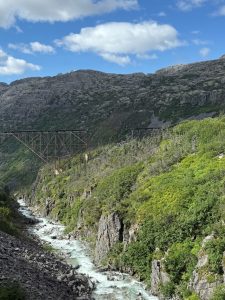
Cara Newman: I was on a train ride in Skagway, Alaska, on this route called the White Pass and Yukon, and I remember just being completely in awe of everything around me. At one point I saw a sign that said “Trail of ’98,” and something about it just stuck with me. In that moment, I could almost picture a story forming around it, like everything clicked all at once. I didn’t overthink it– I actually started writing a draft right there on the train while everything was still fresh in my mind, just trying to capture everything before it faded away.
TBN: What drew you to setting the story on the “trail of ’98” and around the search for gold?
CN: I chose the Trail of ’98 because it represents this really intense part of history where people were willing to risk everything and push themselves to their absolute limits for the idea of gold and a better life. That kind of determination and desperation felt like a powerful foundation for a story. I didn’t just want it to be about gold itself, but about what people are willing to go through when they believe something bigger is waiting for them at the end of a dangerous journey. I wanted that same sense of urgency, struggle, and adventure to really drive the world of the book.
TBN: Your book follows Salik as he tries to help his sick mother. Why did you choose that emotional motivation for the story?
CN: I gave Salik that motivation because I wanted the story to have something deeply personal at its core. The Gold Rush setting is huge and chaotic, with all these external dangers and challenges, but I didn’t want the story to just be about survival on the outside. His mother gave him something emotional to hold onto– something that grounds him and explains why he keeps going even when everything is stacked against him. It turns the journey into something more than just adventure; it becomes about love, responsibility, and the idea that sometimes the strongest motivation comes from the people we care about most.
TBN: How did you research the historical setting for the novel?
CN: I did a mix of research and imagination. I looked into real accounts of the Klondike Gold Rush and the Trail of ’98 using sources like the National Park Service and History.com to get a sense of what the journey and conditions were actually like. Then I took that information and used it as a foundation for the story, filling in the gaps with imagination to make sure it still felt engaging while staying grounded in real history.
TBN: What was the hardest part of writing a story focused on danger, survival, and sacrifice?
CN: The hardest part was balancing the action with emotion and making sure the story didn’t just become nonstop intensity. With a setting like the Trail of ’98, there’s already so much built-in danger, but I didn’t want it to feel one-dimensional or like things were happening just for the sake of excitement. I wanted readers to actually care about Salik and what he was going through, which meant slowing down in certain moments and focusing more on how the challenges affected him emotionally, not just physically. It was a challenge to make those intense scenes feel meaningful and connected to his motivation instead of just being dramatic moments.
TBN: Since you wrote Trail of ‘98 at age 14, what was the experience of publishing a novel so young?
CN: It was honestly kind of crazy. At first it didn’t even feel real that something I wrote could actually become a book. But it was also really exciting, because it made me realize that age doesn’t really matter as much as people think if you’re willing to put in the work. I published it through Kindle Direct Publishing, which I found with the help of one of my uncles, and that made the whole thing feel a lot more possible. I had to figure a lot of stuff out along the way, which wasn’t always easy, but it made it way more rewarding when I finally saw the finished book out there.
TBN: What did you learn about yourself as a writer while working on your first book?
CN: I learned that I can actually stick with something long enough to finish it. Writing a book isn’t just about having an idea– it’s about continuing even when it gets hard or you lose motivation. I also learned that not everything has to be perfect. At some point, you just have to decide you’re done and stop stressing over every little detail, or you’ll never finish. That was probably the biggest thing I took away from it.
TBN: What do you hope teen readers connect with most in Trail of ’98?
CN: I hope they connect with Salik’s determination. Even though his situation is extreme, the idea of pushing through challenges for someone you care about is something a lot of people can relate to. I also hope they take away that strength doesn’t always look big or obvious. Sometimes it’s quiet, like choosing to keep going or being there for someone else. And even if you feel small or overlooked, that doesn’t mean what you carry isn’t heavy– or that you’re not strong enough to handle it.
TBN: How has writing Trail of ’98 influenced the way you’re approaching Shattered Trails?
CN: It’s made me a lot more patient with the process. With Trail of ’98, I kind of rushed myself because I wanted it published by a certain deadline– my birthday– and that made things more stressful than they needed to be. This time, I’m not doing that. I want to take my time, make sure everything flows better, and actually enjoy the process more instead of just trying to finish as fast as possible. I think that’s going to make the story stronger in the end too.
TBN: What advice would you give to other young writers who want to finish and publish their own book?
CN: Don’t wait until everything feels perfect– just start writing and stay consistent, because finishing your first book is the hardest part. Also, don’t expect everything to go smoothly, especially with publishing– finding a publisher quickly is actually really rare. If you’re writing to express yourself or tell a story you care about, I’d recommend self-publishing through something like Kindle Direct Publishing or IngramSpark since it’s more accessible and lets you get your work out there. But if your goal is traditional publishing, you have to be ready for the process– it can take weeks or even months of reaching out, and you’ll probably hear “no” a lot, which can be discouraging, but it also teaches you a lot and builds real-world skills, so it really depends on what you want and what you’re willing to go through.

 Sara Crawford