Loved Legends & Lattes? Is The Spellshop Your Next Cozy Fantasy?
If the best part of Legends & Lattes was watching a small business become a place people belong, The Spellshop deserves a spot on your list. Sarah Beth Durst swaps the coffee counter for an island cottage, a garden and some decidedly unauthorized magic. The pleasure of starting over is familiar. The person doing it, and what she has to risk, are different.
The most useful question is what you want to take with you from Travis Baldree's novel. More shopkeeping? More friendship? A romance with a seaside setting? Here's how to decide whether this is your next read, without spoiling either story's ending.
What made the coffee shop matter?
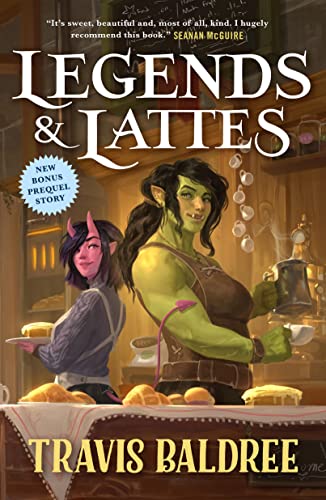
Legends & Lattes follows Viv, an orc who leaves adventuring behind to open a coffee shop in Thune. Her first challenge is wonderfully specific: the city doesn't know what coffee is. She needs to build a business and find people who can help her make this unfamiliar idea work.
That setup changes what counts as a satisfying fantasy achievement. Instead of asking how much stronger the hero can become, you can root for a place to take shape and for its owner to learn a different way of living. The fantasy is partly the chance to use your energy on something you actually want to make.
Baldree has described the novel's beginnings in terms of missing cafés, human connection and hope during the pandemic. That author perspective offers a useful clue to its appeal: the company matters as much as the coffee. If you finished the book wanting another welcoming place to spend time, rather than another adventure with the same characters, Durst's island is a promising next stop.
The Spellshop trades a chosen retirement for a hurried escape
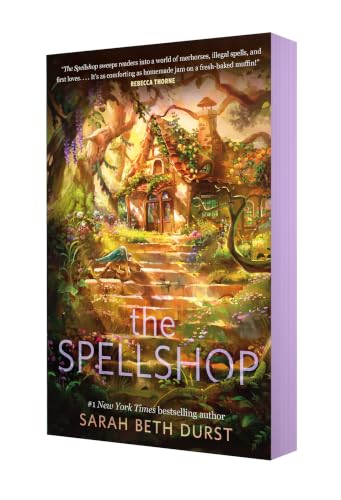
The Spellshop starts with Kiela, a librarian whose comfortable world revolves around books. When revolution reaches the Great Library of Alyssium, she flees with rescued spellbooks and Caz, her assistant and a magically sentient spider plant. They take shelter on the island where she grew up.
Kiela needs a living, so she begins making jam. The spellbooks can help her garden grow, but using their knowledge comes with consequences: this magic isn't freely available for anyone to practice. A small enterprise becomes a question about what she can offer the people around her, and what it costs to keep those abilities hidden. The publisher's description and opening excerpt establish both the cottage setting and the danger behind her arrival.
The distinction matters when choosing your next book. Viv has a project she wants to begin. Kiela first needs somewhere to land. If the idea of making a home after an unwanted upheaval speaks to you, the island premise may be especially appealing. If you're mainly looking for the pleasure of a business plan becoming real, expect that interest to share space with recovery and getting to know the neighbors.
Coffee and jam give the community a reason to gather
Both premises give friendship something practical to grow around. A shop makes repeated encounters possible: people can offer help, become familiar faces and gradually stop feeling like strangers. That can be more inviting than a story in which everyone is immediately declared a found family.
The settings offer different versions of that invitation. Thune gives you a new café inside an existing city. Kiela's island brings the prospect of a cottage garden and a smaller circle of neighbors. You might choose between them the way you'd choose an afternoon out: a lively counter with something warm to drink, or a place where you can notice what's growing outside.
In a 2024 interview, Durst describes kindness and starting over as central to the book she wanted to write. She also connects its cottagecore appeal with a seaside retreat. That's a stronger reason to try it than simply putting both novels under the same genre label. You're following a particular pleasure: ordinary work becoming a way to connect.
Romance is part of the comparison, too
If Viv and Tandri's relationship was a major reason you loved Legends & Lattes, be specific about what you hope to find again. Publishers Weekly's review describes their growing affection alongside Viv's business. The warmth of that relationship and its sapphic pairing may matter to you for different reasons.
The Spellshop pairs Kiela with a helpful male neighbor, Larran. Its publisher presents the book as a standalone romance as well as a small-town fantasy. That makes it a reasonable choice if you're drawn to a love story growing alongside a new home and community. It doesn't make it an equivalent choice if you specifically want another sapphic romance.
You don't have to treat those preferences as interchangeable. Wanting familiar emotional warmth is one reading mood; wanting a particular kind of romantic relationship is another. Name the part you're looking for before choosing from a shelf of similarly inviting covers.
Cozy still leaves room for something to go wrong
Neither premise promises an entirely uneventful life. Viv has rivals and a past that can interfere with her plans. Kiela escapes a burning library, and her use of magic is illegal. Those are meaningful pressures even when a story is centered on a smaller, gentler life.
If you want absolutely no danger tonight, the label alone won't settle the decision. Read the opening sample first. It can tell you more about your response to the voice and immediate tension than a list of pastries, plants or charming side characters can.
For readers comfortable with some trouble on the way to connection, The Spellshop offers a clear reason to leave the café: a bookish heroine has to turn knowledge into something useful outside the library. Try it if the garden, the island neighbors and the possibility of belonging sound like the parts you'd linger over. You can explore The Spellshop on TextbookNova and decide whether that's the fresh start you want next.