What to Read After Project Hail Mary: Choose by Science, Survival, or First Contact
The best book to read after Project Hail Mary depends on the part you want more of. For practical problems solved with science and a stubborn sense of humor, start with The Martian. For the engineering challenge of keeping humanity alive, try Seveneves. For the possibility of understanding a very different civilization, choose Children of Time.
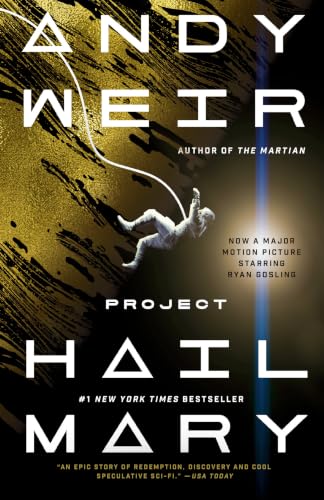
Those are three different recommendations, even though all three belong on a science-fiction shelf. Andy Weir’s Project Hail Mary brings several pleasures together: Ryland Grace wakes with gaps in his memory, has a mission tied to Earth’s survival, and must learn enough about an unfamiliar situation to act. The publisher’s reading guide establishes that premise; the discoveries are better left to the novel.
Think about what kept you turning pages. Was it watching someone test an idea? The pressure of having no safe backup plan? Or the challenge of meeting an intelligence with different assumptions? Use that answer to pick your next book. None of these needs to reproduce every part of Weir’s novel to be a good follow-up.
For practical science: The Martian by Andy Weir
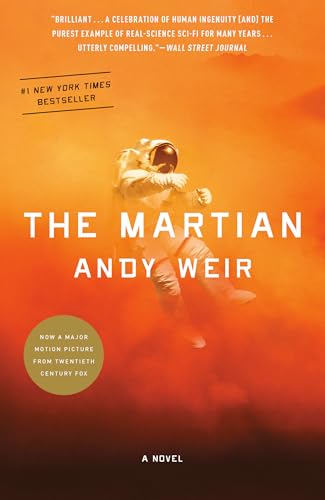
The Martian is the most straightforward choice if you want another Andy Weir novel built around an extremely difficult problem. Astronaut Mark Watney is stranded on Mars after a storm leaves his crew believing he is dead. He has limited supplies and no easy way to announce that he is still alive. The publisher’s description makes the central appeal clear: scientific knowledge and improvisation become everyday survival tools.
The useful comparison is the scale of the immediate task. You can approach this book looking for the satisfaction of turning a terrifying situation into something that can be worked on. What is available? What is missing? What might fail next? The stakes are enormous for Watney, but his predicament gives the reader a concrete person and place to follow. That makes it a strong pick when the process of finding an answer mattered as much as the answer itself in Project Hail Mary.
Weir also talks about breaking large problems into smaller pieces in his publisher Q&A. That provides a helpful way to choose between these recommendations. If you want a story where reasoning can feel like forward motion, keep this one at the top of your list. You don’t need to turn your reading into homework; the pleasure is following the effort and seeing why the next attempt matters.
The tradeoff is the kind of connection you’re seeking. Watney’s predicament is human survival on Mars. Choose it for ingenuity, pressure and the author’s comic sensibility, rather than expecting the same first-contact relationship as Project Hail Mary. If the unfamiliar intelligence was your favorite element, skip ahead to Children of Time. If you’ve already read The Martian, that preference still helps: move toward Seveneves for a bigger engineering problem, or toward Tchaikovsky for a different perspective.
For humanity’s survival: Seveneves by Neal Stephenson
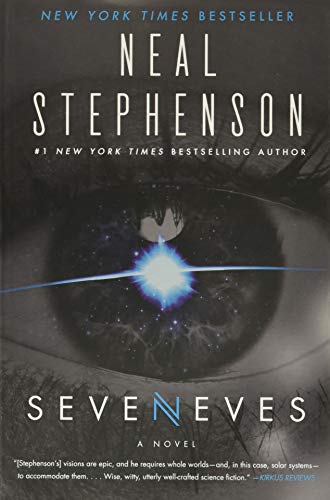
Seveneves starts with the destruction of the moon. Its debris threatens to make Earth uninhabitable, and people must work out how a human future could continue. One response involves habitats around the International Space Station. That opening situation, described by publisher Subterranean Press, turns survival into a question of infrastructure and collective decisions.
This is the recommendation for the reader who finishes a space survival story and wants to keep asking practical questions. How would you expand a refuge? How would you organize the people who depend on it? What happens when a technical plan also needs agreement among people under extraordinary pressure? Those are useful interests to bring to this book. You’re moving from the appeal of one person solving the next urgent problem toward the challenge of building something many people must live with.
Stephenson’s account of the novel’s origins is revealing. He began with the space-debris problem and wanted to keep the story within the solar system, avoiding faster-than-light travel and technologies without a known physical basis. That doesn’t make fiction a scientific prediction. It does explain why the engineering premise is a good reason to choose this particular follow-up.
The main tradeoff is breadth. Seveneves includes political and social tensions, and its story eventually stretches across millennia. Go in wanting that widening view. If you mostly want an intimate companionship story, or a tight focus on one familiar voice, this is a less direct match than the phrase “books like Project Hail Mary” might suggest.
For a reading group, it offers a useful discussion angle: which challenge interests you more, designing a system or persuading people to cooperate within it? You don’t have to decide in advance. But being curious about both makes Seveneves an easier recommendation. Choose it when you want the survival problem to grow beyond the next repair and into the shape of a future society.
For first contact: Children of Time by Adrian Tchaikovsky
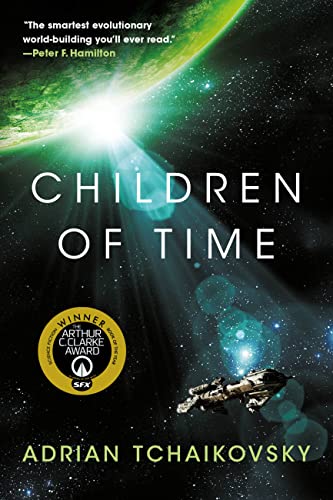
Children of Time follows human survivors searching for a home beyond a dying Earth. They find a planet prepared for human life, but it already has inhabitants and a civilization of its own. The publisher’s synopsis frames the resulting encounter around two civilizations with competing needs for survival.
That makes it the most promising choice here if your favorite part of Project Hail Mary was the need to understand an intelligence with a different view of the world. The attraction is more specific than simply having aliens in the story. A shared problem doesn’t automatically produce a shared interpretation of it. When both sides have reasons to fear losing their future, understanding becomes something consequential.
Bring your curiosity about perspective to this one. Instead of looking only for the clever solution a character can calculate, consider what each civilization thinks it is protecting. That shift gives you a different way to follow the tension. You can ask how a situation looks from each side before deciding what a reasonable response would be. It’s a useful next step for readers who want science fiction to make their familiar assumptions feel less automatic.
The tradeoff is intimacy and scale. A collision between civilizations is a different starting point from a close partnership between individuals. Don’t choose Children of Time solely because you want the same friendship or the same humor again. Choose it because you want the question of coexistence to occupy more of the story. The sense of discovery can be the connection even when the reading experience changes.
It is also the first book in Tchaikovsky’s Children of Time series, so start here rather than jumping to a later title. There’s no need to commit to the whole series now. Let the premise of this first encounter decide whether it belongs on your immediate reading list.
Pick the part you want to carry forward
If you’re still torn, imagine choosing tonight’s first chapter. Reach for The Martian when you want a concrete predicament and the pleasure of working through it. Reach for Seveneves when you want to think about how people could build a future under extreme constraints. Reach for Children of Time when you want human survival considered alongside another civilization’s claim to a home.
All three can suit a reader who loved Project Hail Mary, but for different reasons. You can also change your answer with your mood. After a week of complicated decisions, a familiar author and a clear central predicament might sound appealing. With more room for a longer conversation, the social questions in a civilization-scale story might be what you want.
The book pages linked above let you check each title and edition before choosing. Start with the appeal you most want to revisit, then leave room for the next author to surprise you. Finding a satisfying follow-up doesn’t require finding the same novel twice.