
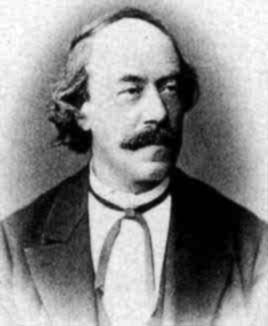
Rudolf Lipschitz
4 books
About the Author
Rudolf Lipschitz (1832–1903) was a distinguished German mathematician whose groundbreaking contributions to analysis and geometry profoundly shaped modern mathematics. Born in what is now Poland, he studied at the University of Berlin under luminaries like Dirichlet and Weierstrass, later holding professorships in Bonn and Breslau. Lipschitz's work on the Lipschitz condition, which defines a class of functions with controlled growth rates essential for proving existence and uniqueness in differential equations, remains a cornerstone of real and complex analysis. His seminal text, 'Grundlagen der Analysis,' provides a rigorous foundation for calculus, emphasizing continuity and limits. Beyond analysis, he advanced number theory and geometry, including studies on quadratic forms and the geometry of numbers, influencing fields from physics to computer science. A meticulous scholar, Lipschitz's legacy endures in the precise, elegant frameworks that underpin contemporary mathematical research.
Common genres
Writing style
rigorous
precise
foundational


