Oswald Spengler
3 books
About the Author
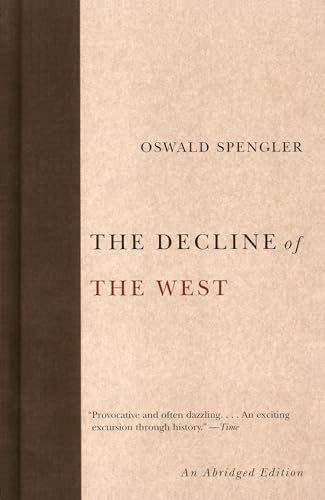
Oswald Spengler (1880-1936) was a German philosopher and historian whose profound insights into the cyclical nature of civilizations profoundly influenced 20th-century thought. Born in Blankenburg, he pursued studies in philosophy, mathematics, and natural sciences before dedicating himself to cultural morphology, a field he pioneered to analyze the rise and fall of societies as organic entities. His magnum opus, The Decline of the West, published in two volumes between 1918 and 1922, posited that Western civilization was entering a terminal phase akin to the autumn of classical antiquity, drawing parallels across global cultures. Spengler's ideas extended to political philosophy in works like Prussian Socialism and Other Essays, where he advocated for a Prussian-inspired socialism rooted in authoritarian traditions and national renewal. Despite his controversial views on destiny and decline, Spengler's bold, deterministic worldview continues to resonate with scholars and thinkers exploring modernity's trajectory.
Common genres
Writing style
philosophical
deterministic
analogical