
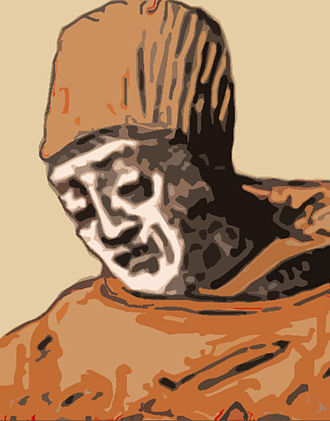
Marsilius Of Padua
2 books
About the Author
Marsilius of Padua (c. 1275–1342) was a groundbreaking Italian scholar, philosopher, and political theorist whose ideas profoundly influenced the development of secular governance and the separation of church and state in medieval Europe. Born in Padua, he studied and taught medicine and philosophy at the University of Paris, where he rose to prominence as a rector before dedicating himself to political philosophy. In his seminal work, Defensor pacis (Defender of the Peace), published in 1324, Marsilius boldly argued for the supremacy of civil authority over ecclesiastical power, advocating that the state should control religious matters and that the church's role be limited to spiritual guidance. Exiled for his controversial views, which challenged papal authority, Marsilius spent his later years in the service of Holy Roman Emperor Louis IV, continuing to defend his vision of a peaceful, rationally ordered society free from clerical dominance. His writings remain a cornerstone of early modern political thought, inspiring thinkers from the Reformation to the Enlightenment.
Common genres
Writing style
erudite
polemical
analytical

