
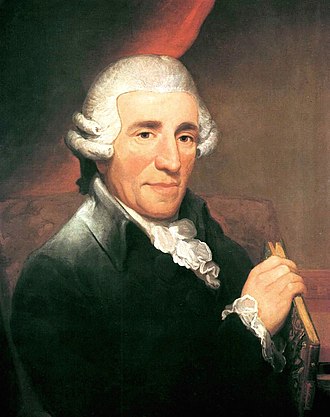
Joseph Haydn
17 books
About the Author
Joseph Haydn (1732-1809), often hailed as the 'Father of the Symphony' and the 'Father of the String Quartet,' was an Austrian composer whose prolific output profoundly shaped the Classical era of music. Born in Rohrau, Haydn displayed early musical talent, eventually serving as Kapellmeister to the powerful Esterházy family for nearly three decades, where he composed hundreds of works under somewhat isolated conditions that fostered his innovative genius. His symphonies, concertos, and chamber music exemplify structural elegance, wit, and emotional depth, bridging the Baroque and Romantic periods. Notable among his keyboard and instrumental compositions are the Concerto for Piano (Harpsichord) and Orchestra D major Hob. XVIII:11, the Concerto for Violoncello and Orchestra C Major Hob.VIIb:1, Piano Sonata E Minor Hob. XVI:34, and Piano Sonata F Major Hob. XVI:23. Haydn's enduring legacy lies in his ability to balance formal rigor with expressive charm, influencing contemporaries like Mozart and Beethoven.
Common genres
Writing style
elegant
witty
structured
Books by Joseph Haydn


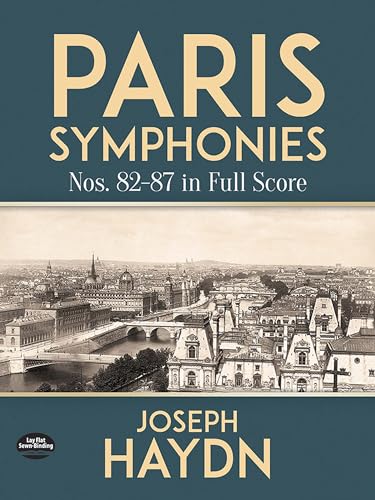


![Symphonies 88-92 in Full Score [The Haydn Society Edition]](https://m.media-amazon.com/images/I/51kk+RGCOyL._SL500_.jpg)


