
Béla Balázs
12 books
About the Author
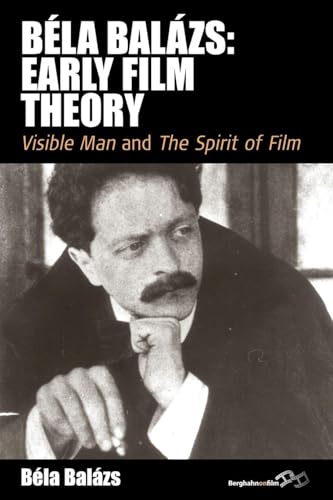
Béla Balázs (1884–1949) was a Hungarian-Jewish writer, poet, and film theorist whose innovative ideas profoundly influenced the development of cinema as an art form. Born in Szeged, he studied in Budapest and Berlin, where he immersed himself in the avant-garde circles of the early 20th century, collaborating with luminaries like Bertolt Brecht and contributing to the expressionist movement. Balázs's seminal work, 'Der sichtbare Mensch' (The Visible Man), published in 1924, revolutionized film theory by emphasizing the expressive power of the close-up and the ontology of the cinematic image, laying foundational concepts for montage and visual storytelling. Exiled during the rise of fascism, he continued his intellectual pursuits in Austria and the Soviet Union, producing poetry, screenplays, and essays that bridged literature and the emerging medium of film. His legacy endures as a pioneer who humanized the mechanical eye of the camera, inspiring generations of filmmakers and theorists worldwide.
Common genres
art criticism
art history
Chinese Folklore
cinema history
cinema studies
Cultural Studies
Drama
Essays
Fairy Tales
Fantasy
Film
film theory
Folklore
german literature
Historical Diary
Hungarian Literature
Marxist theory
Media Philosophy
Media Studies
modern classics
Opera
Philosophy
Translated Literature
war memoir
Writing style
lyrical
theoretical
expressive
Books by Béla Balázs