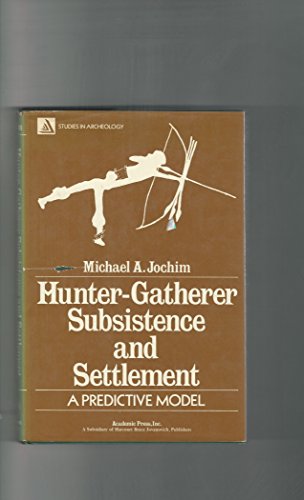
Hunter-gatherer subsistence and settlement: A predictive model (Studies in archeology)

In 'Hunter-gatherer subsistence and settlement: A predictive model,' Michael A. Jochim develops a framework to understand how ancient societies adapted to their environments. Drawing from archaeological evidence, the book models the relationships between resources, mobility, and settlement patterns, offering valuable insights for researchers in anthropology and prehistory.
About This Book
This work explores the dynamics of hunter-gatherer societies through a structured predictive model. It examines how subsistence strategies influence settlement choices in archaeological contexts.
The author analyzes factors such as resource availability and environmental adaptations that shape these patterns. The model provides a framework for interpreting evidence from past human communities.
As part of the Studies in Archaeology series, it contributes to broader understandings of prehistoric lifeways. The approach emphasizes empirical data to forecast settlement behaviors.
Readers gain tools for applying the model to various archaeological sites and regions. It highlights the interplay between ecology and human mobility in hunter-gatherer systems.
Reviews
No reviews yet. Be the first to review this book!