Tag: reading tips

  • Freida McFadden Books in Order: The Housemaid Series, Standalones, and Where to Start

    Freida McFadden Books in Order: The Housemaid Series, Standalones, and Where to Start

    You don’t need to read every Freida McFadden book in publication order. If you want the Housemaid story, start with The Housemaid, continue with The Housemaid’s Secret, and finish the main novels with The Housemaid Is Watching. The Housemaid’s Wedding is an optional short story that fits between the second and third novels—or works as a flashback afterward.

    If you’d rather try one book before committing to a series, choose a standalone such as Never Lie. You won’t need to catch up on Millie’s story first. Here’s how to sort the series, choose a starting point, and use the publication-year list without treating a new edition as a new story.

    Checked October 16, 2026. This guide follows the author’s current catalog and keeps forthcoming books separate.

    The Housemaid books in reading order

    The sequence below follows the author’s Housemaid reading-order advice. McFadden says the novels can be read out of order, but later books may reveal developments from earlier ones. Starting at the beginning is the better choice if you’re trying to protect the surprises.

    Reading position Title What it is
    1 The Housemaid (2022) First novel
    2 The Housemaid’s Secret (2023) Second novel
    Optional, here or after book 3 The Housemaid’s Wedding (2024) Bonus short story
    3 The Housemaid Is Watching (2024) Third novel

    1. The Housemaid

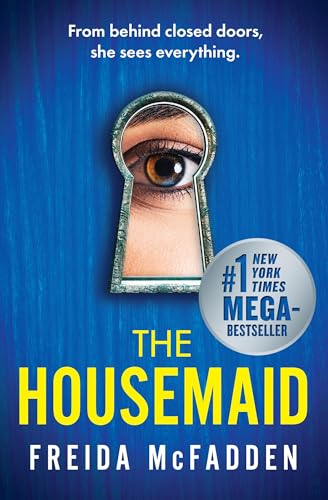
    The Housemaid by Freida McFadden

    Millie’s new job offers a place to live as well as a paycheck. She works in the Winchester family’s home, where the arrangement soon feels much less comfortable than it looks from outside. The official synopsis establishes the uneasy household and a bedroom door that locks from the outside. You don’t need to know more before starting.

    Choose The Housemaid if you want domestic suspense built around the question of whom to trust inside someone else’s home. It’s also the most straightforward introduction if friends keep mentioning Millie. Begin here before browsing detailed descriptions of the sequels: even ordinary setup information can tell you where a character ends up.

    2. The Housemaid’s Secret
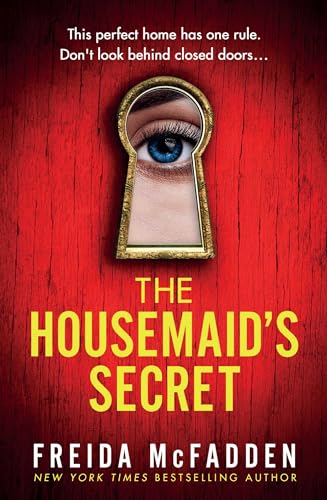
    The Housemaid's Secret by Freida McFadden

    The next novel moves Millie into another job, this time in the Garricks’ penthouse. Her employer’s wife remains behind a closed door, and Millie is told to leave her alone. That instruction supplies the immediate tension in the author’s description.

    Read The Housemaid’s Secret second for continuity, rather than treating the new household as a reason to skip ahead. A fresh employer gives the book a new central problem, while returning to Millie means you’re still following a character whose circumstances have developed. If you’ve only finished the first novel, this is your next main installment.

    The optional stop: The Housemaid’s Wedding
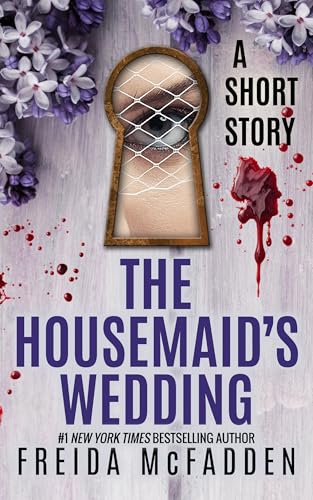
    The Housemaid's Wedding by Freida McFadden

    This is where reading lists can look more complicated than they are. The Housemaid’s Wedding is a short story, not a fourth full-length Housemaid novel. The author describes it as a bonus scene in the gap between the second and third books and explicitly allows either reading position.

    For a first trip through the series, put it after The Housemaid’s Secret if you enjoy keeping events in chronological order. If you’ve already read The Housemaid Is Watching, there’s no reason to restart: read the story afterward. You also don’t have to postpone the third novel while waiting to borrow this shorter installment.

    3. The Housemaid Is Watching
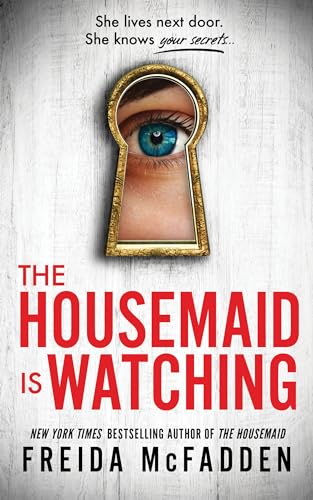
    The Housemaid Is Watching by Freida McFadden

    The third novel shifts the setting toward suburban family life and unsettling neighbors. That change is enough to explain why we recommend saving it for this point; spelling out the character’s new circumstances would give away more than a reading-order guide needs to. See the official book page if you want the fuller premise.

    The Housemaid Is Watching was published in June 2024, before Wedding appeared that November. That’s why a publication-order list places the short story last, while a chronological reading list puts it between novels two and three. Both lists can be correct; they’re answering different questions.

    Where to start if you want a standalone

    A standalone is a useful choice when you want one complete central mystery without planning several books ahead. Pick the setting that appeals to you, rather than searching for a prerequisite. Two options make the distinction especially easy.

    Never Lie: a snowbound house and recorded secrets
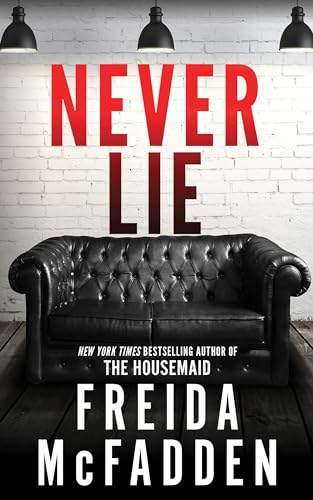
    Never Lie by Freida McFadden

    In Never Lie, newlyweds Tricia and Ethan visit a remote house once owned by a missing psychiatrist. A winter storm traps them there, and recordings of the doctor’s sessions become part of the mystery. Those details come from the author’s synopsis, without revealing what the recordings uncover.

    Choose this if the appeal of The Housemaid is the suspicious house, but you want to start and finish a separate story. The practical difference is simple: you can read Never Lie now and return to the Housemaid sequence later. It isn’t a Housemaid prequel, sequel, or required detour.

    Ward D: an overnight hospital mystery
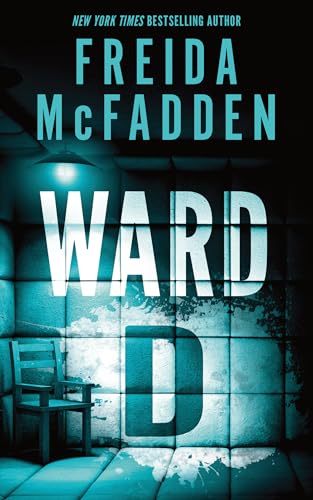
    Ward D by Freida McFadden

    Ward D follows medical student Amy Brenner during an overnight rotation on a locked psychiatric ward. The official premise centers on her growing fear that something is wrong as the night progresses.

    This is the alternative if you’d prefer a hospital setting to a troubled household. The attraction is the concentrated overnight situation and Amy’s uncertainty about what’s happening around her. There’s no Housemaid homework to do before opening it.

    Freida McFadden’s standalone thrillers by publication year

    If you enjoy working through a backlist, use this as a checklist. The years below come from the author’s individual book records, linked by title. They aren’t a required reading sequence. Where several titles share a year, they appear in the order listed by their publication dates.

    The edition to check before buying twice: Dead Med was previously published as Suicide Med. The author identifies Dead Med as a revision with 20% new material and dates the revised title to June 24, 2024. Keep those names together on your reading checklist. The revision may interest an existing reader, but the new title doesn’t make it an unrelated story.

    Forthcoming: The Sleepwalker is listed for March 23, 2027. As of this guide’s October 2026 check, it belongs on a future-reading list. Publication dates can change, so check the author page before planning a release-day read.

    The other series and shorter fiction

    McFadden’s catalog also includes medical comedy. The Dr. Jane McGill books are The Devil Wears Scrubs (2013), followed by The Devil You Know (2017). Baby City (2015), co-written with Kelley Stoddard, is listed separately. These aren’t extra Housemaid installments; look at their premises if you want a different side of the author’s work.

    For shorter fiction, the current catalog lists The Gift (2022), The Widow’s Husband’s Secret Lie (2024), Death Row (2025), and The Dinner Party (2026). The Widow’s Husband’s Secret Lie is described as a satirical novella, while The Dinner Party uses a choose-your-path format. Keep them on a separate part of your checklist rather than assuming every title represents another full-length thriller.

    Pick the reading plan that suits you

    If you’re borrowing through a library, search by the exact title and author before joining a hold queue. A paperback, ebook, and audiobook can have different release dates or cover designs while presenting the same story. Those differences don’t add another step to the reading order. A box set can also contain several titles already on your checklist, so compare its contents before counting it as something new.

    When a listing uses a series label you don’t recognize, check which books it contains against the author’s current categories. This guide uses those categories to separate connected characters from a collection of otherwise independent titles. You can still choose a standalone for its premise without committing to everything packaged beside it.

    For Millie’s story, follow the three Housemaid novels and add Wedding wherever the optional stop fits. For a one-book introduction, choose Never Lie for the remote-house mystery or Ward D for the overnight hospital setup. For a longer project, work through the standalone checklist at your own pace; an unavailable title doesn’t need to stop you moving to the next one.

    Once you’ve chosen your starting point, browse Freida McFadden on TextbookNova to find the matching book and compare available editions. Check the title and format before adding a bundle or a new cover to your list. A different package is useful only if it’s the story you meant to read next.

  • How to Annotate Books Without Ruining Them

    How to Annotate Books Without Ruining Them

    If you want to annotate a book without ruining it, start with one question: do I own this copy, and do I need it to stay clean? Your answer decides everything. A paperback you bought used for yourself can handle more margin notes than a rented textbook, a library book, a borrowed novel, or a collectible edition you may resell later.

    The goal is not to make the page look busy. Good annotation helps you find the idea again, explain why it mattered, and remember what you were thinking when you read it. The best system is usually lighter than people expect: a few meaningful marks, a few useful notes, and a way to retrieve them later.

    First decide what kind of book you are holding

    Treat annotation as a condition decision before it becomes a reading decision. If the book is rented, borrowed, from the library, brand-new, collectible, or likely to be resold, do not write in it unless the owner or seller clearly allows it. Even when a rental policy allows “normal” highlighting, heavy marks can make the book harder for the next reader and may reduce resale or return value.

    For library and borrowed books, keep the rule simple: no ink, no highlighter, no folded corners, and no sticky tabs that could tear or leave residue. The Library of Congress’ paper-care guidance warns against using folded corners, paper clips, and other fasteners to mark or organize pages, and the American Museum of Natural History Research Library gives similar proper-care advice for library books, including avoiding paper clips and rubber bands on library materials.

    For books you own and plan to keep, you have more freedom. You can underline, write in the margins, use symbols, or highlight. Still, it helps to be selective. If every paragraph is highlighted, nothing is highlighted.

    A practical rule:

    • Borrowed, rented, library, or collectible copy: use removable notes or separate notes.
    • Owned copy you may resell: use light pencil or removable tabs only if you can tolerate lower condition.
    • Owned copy you plan to keep: annotate directly, but use a consistent system.
    • Digital copy: use built-in highlights and notes, then export or summarize the important ones.

    Use fewer marks with clearer meaning

    The fastest way to ruin a useful annotation system is to mark everything that sounds important. Harvard’s Academic Resource Center frames reading as a strategic process: different texts need different approaches, and marking text should keep you focused rather than replace understanding. Cornell’s Learning Strategies Center makes a similar point about learning from digital materials: highlighting without knowing why you are marking something can make you overestimate how well you understand it.

    Instead of using three highlighters, six symbols, and a color code you will forget by next week, start with four signals:

    • Underline the central claim, definition, or turning point.
    • Star the one idea you may want to quote, discuss, or review.
    • Question mark anything confusing, doubtful, or worth checking.
    • Arrow connections to another chapter, class topic, book, or real example.

    That is enough for most reading. You can always add more later, but you do not need a museum of colors on page one. If you are annotating for class, focus on what helps you answer prompts, prepare discussion points, or study for an exam. If you are annotating for pleasure, mark the lines that made you think, laugh, argue, or want to come back.

    The Open University’s active-reading advice is useful here because it treats reading as a cycle of questioning, marking, summarizing, and checking memory. A good annotation should create a next action: ask this in class, add this to notes, compare this with another idea, or reread this before the test.

    Try the no-damage sticky-note system

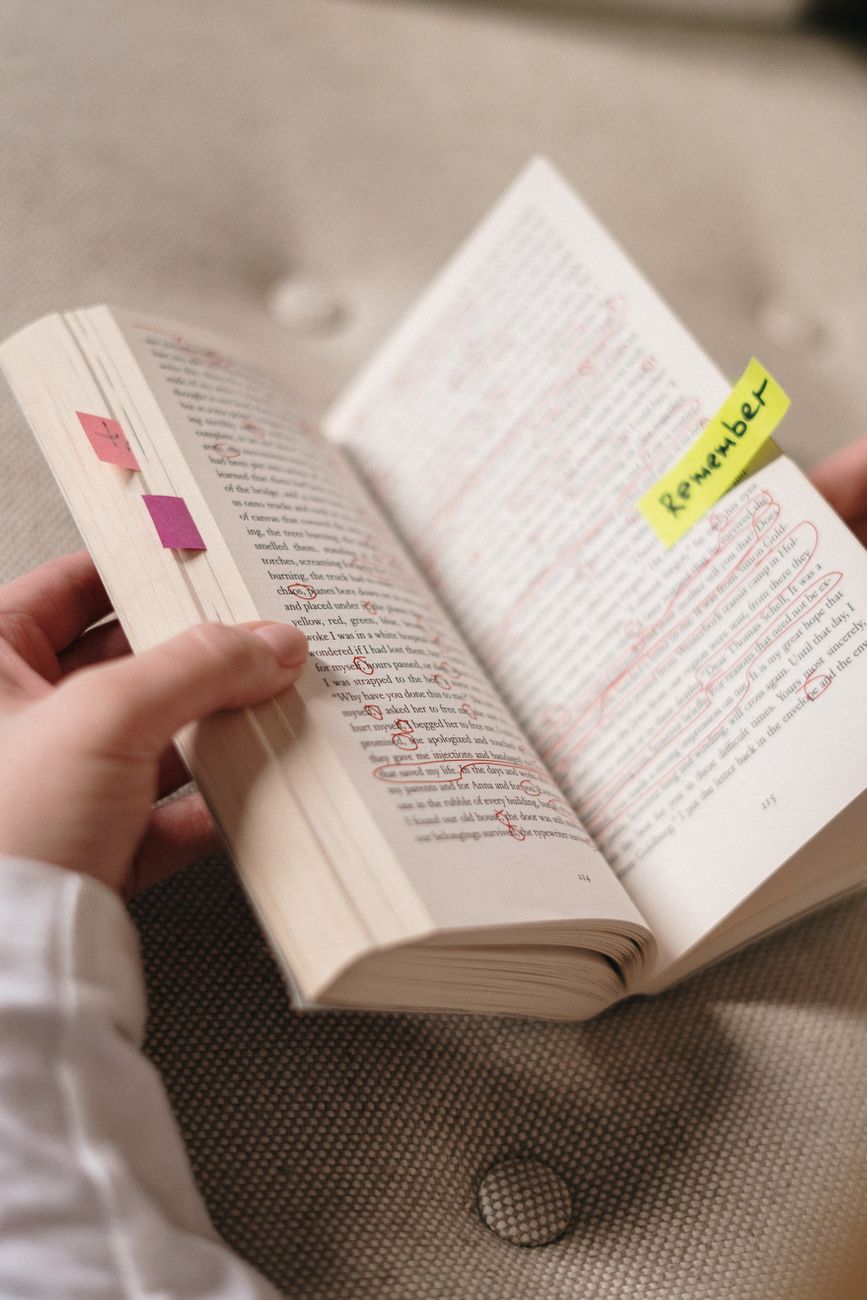
    Sticky notes are the easiest way to annotate a book you cannot mark directly, but use them carefully. Choose thin, removable flags or small notes, place them so they do not cover important text, and remove them slowly. Avoid leaving adhesive notes in a book for months, especially in valuable or fragile copies.

    Use one note per job:

    • Tab only: mark the page so you can find it again.
    • Tiny note: write a keyword, question, or one-sentence reaction.
    • Larger note: summarize a paragraph, scene, argument, or formula.
    • Endpaper index: if you own the book, list key pages on a blank page or separate bookmark.

    If you do not own the book, keep the index somewhere separate: a notebook, phone note, spreadsheet, or document. Write the page number, a short label, and the reason you marked it. For example: “p. 87 — author defines opportunity cost — use for econ quiz” is much more useful than “important.”

    Here is a simple sticky-note code that works for both novels and textbooks:

    • Blue: confusing or needs review.
    • Yellow: main idea or key evidence.
    • Pink: quote, scene, or example worth discussing.
    • Green: action item, assignment clue, or possible essay point.

    Do not feel locked into colors. The point is to make your future self faster, not to create a craft project.

    Notebook and reading notes used for a separate annotation workflow.
    Keep separate notes when you cannot or should not mark the book directly.

    Keep separate notes when the book cannot be marked

    Separate notes are not a downgrade. For students, they are often better than page marks because they force you to translate the reading into your own words. Cornell’s note-taking guidance is built around separating cues, notes, and summaries, which makes it a natural fit when you need to preserve a rented or borrowed book.

    For textbook chapters, use three columns or sections:

    • Page or section: where the idea came from.
    • What it says: the claim, definition, process, formula, or example.
    • Why it matters: how it connects to lecture, homework, discussion, or a test.

    For fiction or nonfiction reading, use a lighter version:

    • Page: where the moment appears.
    • Moment: a short phrase, scene, argument, or quote label.
    • Reaction: your question, interpretation, or connection.

    This keeps the physical book cleaner and makes your notes more searchable. It also helps if you read across formats. You might borrow the audiobook, own a paperback, and check an ebook sample. A separate note file lets all of those observations live in one place.

    When you need a personal copy you can mark freely, search the exact title or ISBN on Textbook Nova before buying. A cheap used copy can be the right choice when you know you will underline, dog-ear, revisit, and keep the book for years.

    Make annotations easy to find later

    Annotation only pays off if you can use it later. Before you close the book, spend two minutes turning marks into a mini index.

    For a study book, write:

    • three terms or concepts you need to remember,
    • one question you still have,
    • one page to review before class or a quiz,
    • one example that could help with homework or discussion.

    For a novel or nonfiction book, write:

    • one theme or argument you noticed,
    • one page worth returning to,
    • one quote or scene label,
    • one question for a book club, class, or review.

    This step matters because page flags alone get stale. A month later, a sticky note on page 143 tells you almost nothing unless you know why you cared. A tiny index turns scattered marks into something you can study, discuss, or write from.

    Student study desk with book, laptop, and notes for organizing annotations.
    A simple note index makes annotations easier to use later.

    Quick annotation rules by book type

    Use this checklist before you mark anything:

    • Library book: do not write, highlight, fold corners, or attach anything that could tear or leave residue. Use a bookmark and separate notes.
    • Borrowed book: ask first. If you do not have clear permission, treat it like a library book.
    • Rented textbook: read the rental rules before marking. When in doubt, use removable tabs and separate notes.
    • Used book you may resell: keep marks light, preferably pencil or removable tabs, and expect heavy annotation to affect condition.
    • Used book you plan to keep: annotate directly if it helps you read better. Use a simple symbol system.
    • New hardcover or collectible edition: avoid direct marks. Use a reading journal, bookmark index, or removable notes only for short-term use.
    • Digital book or PDF: use highlights and comments, then export or summarize the important notes so they do not get trapped in the app.

    The best annotation method is the one that fits the copy in your hands. Mark owned books boldly if that makes them more useful to you. Protect borrowed and resale-worthy books with removable tabs and separate notes. Above all, annotate with a purpose: fewer marks, clearer meaning, and notes you can actually find again.