Tag: college study tips

  • How to Use Study-With-Me Videos Without Spending the Session Watching

    How to Use Study-With-Me Videos Without Spending the Session Watching

    Before you choose a study-with-me video, choose the work you want to finish. Write down one task, pick a stopping point, and put your notes or assignment in front of you. Then let the video provide whatever background company you find useful. You don’t need to match the person on screen, copy their desk, or stay until their timer ends.

    That’s easy to forget when finding the right rainy window, library view, or playlist becomes its own project. A useful session should leave you with something from your course: attempted problems, a clearer paragraph, or a question to take to class. Here’s a simple way to set that up without making your study routine more complicated.

    Decide what job the video has

    A study-with-me video generally shows someone working while viewers do their own work. Some are recorded; others are livestreams. The attraction might be a shared start, a visible timer, background sound, or the feeling that someone else is at a desk too.

    That sense of company appears in Ge Wang and Yanxiang Zhang’s 2021 research on Bilibili study-with-me livestreams. Their observations and interviews explored motivations including companionship and accountability. That’s useful context for the format, but it doesn’t establish that watching any particular video will improve your grades.

    Give your video one modest job. Maybe it marks the beginning of a work period. Maybe quiet room sounds make your desk feel less empty. If you want someone to explain a problem, you need an instructional resource instead. A person silently taking notes on screen can’t tell you why your answer is wrong.

    Write a task you can actually check

    “Study biology” leaves a lot undecided. “Answer the three review questions about cell membranes, then check my explanations” tells you what to open and what to do. Make that decision before searching, while your attention is still on the assignment.

    Try a task sized for the time you have. You could outline one section of an essay, attempt a small set of practice problems, or prepare two questions about a reading. These are examples, not a required formula. Choose the version that matches what your course is asking you to learn.

    The UNC Learning Center’s study guidance recommends active engagement, such as explaining ideas or working problems, and reducing distractions. Keep that distinction in view when setting your task. The amount of video you finish isn’t a useful substitute for checking the work you did.

    If your assignment involves a dense chapter, our guide to reading a college textbook covers the reading itself. Choose your section and question there, then come back to setting up the video.
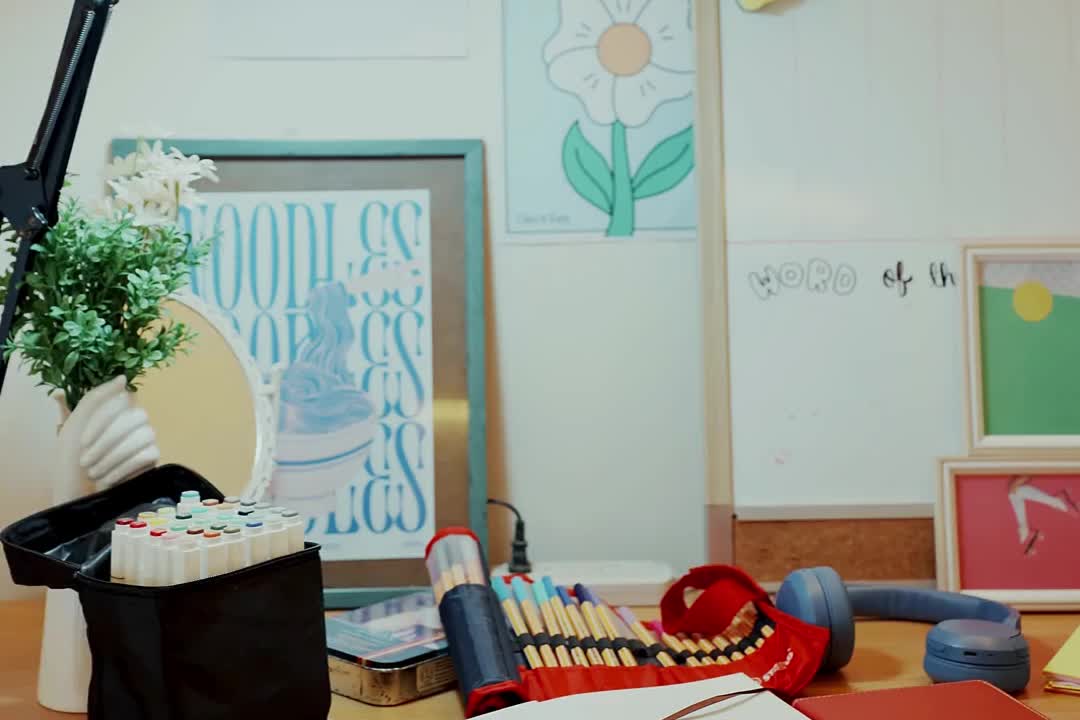
    Notebook, lamp and study materials arranged on a working desk

    Choose a workable video, then stop browsing

    You don’t need the best study-with-me video on the internet. You need one whose setup won’t keep asking for your attention. Check a few details before committing:

    • Sound: Does it contain conversation, lyrics, keyboard noise, or silence? Pick what you want for this particular task.
    • Movement: Are there frequent cuts, changing views, or things you know you’ll keep looking at?
    • Timing: Can you stop where you planned, regardless of the video’s length or break schedule?
    • Interaction: Will a live chat, comments, or recommendations pull you into another activity?

    Use a small browsing limit you can remember: for example, preview two options and choose one. That’s a practical boundary to try, not a research-tested optimum. If neither works, use your own timer or work without a video. You haven’t failed the session because the background wasn’t right.

    A livestream can be appealing if you want to begin alongside other people. A recording may be simpler when you want to start and stop on your own schedule. Neither needs to become a commitment to stay for hours. Your available time and your assignment get to decide.

    Put your own work in the main position

    Arrange the screen so your assignment is the easiest thing to see. If you’re writing on a laptop, give the document the main window and keep the video smaller or out of view. If you’re using paper, put the notebook in front of you and the player to the side. Keep the sound low enough that you can comfortably think through your task, or mute it.

    Close the comments or chat if you’re tempted to follow them. Put unrelated tabs away. Have the materials you need within reach before pressing play, including the answer key if you’ll use it afterward. The aim is to avoid turning every small obstacle into another trip through the browser.

    You can also decide in advance what to do when the video interrupts you. If an ad, sudden sound, or scene change breaks your concentration, pause or close it and continue with your task. There’s no need to spend the next ten minutes finding a replacement while your half-finished work waits.

    Try one short session before planning a marathon

    Here’s an example for a half-hour gap between classes. Spend a couple of minutes opening the materials and writing the task. Work on it for about twenty minutes. Use the remaining time to check what you produced, note a sticking point, and pack up. Those timings are an example you can change, not a promise that one interval suits everyone.

    Suppose your task is three practice questions. Work through them in order and mark where you get stuck. If the video reaches a break while you’re finishing a thought, you can pause the player. If your own stopping time arrives first, stop there. You don’t owe the video another round.

    For an essay, your result might be a rough paragraph and a note about the evidence it still needs. For a reading, it might be a brief explanation of one idea. Keep the result small enough that you can look at it and say what you actually did.
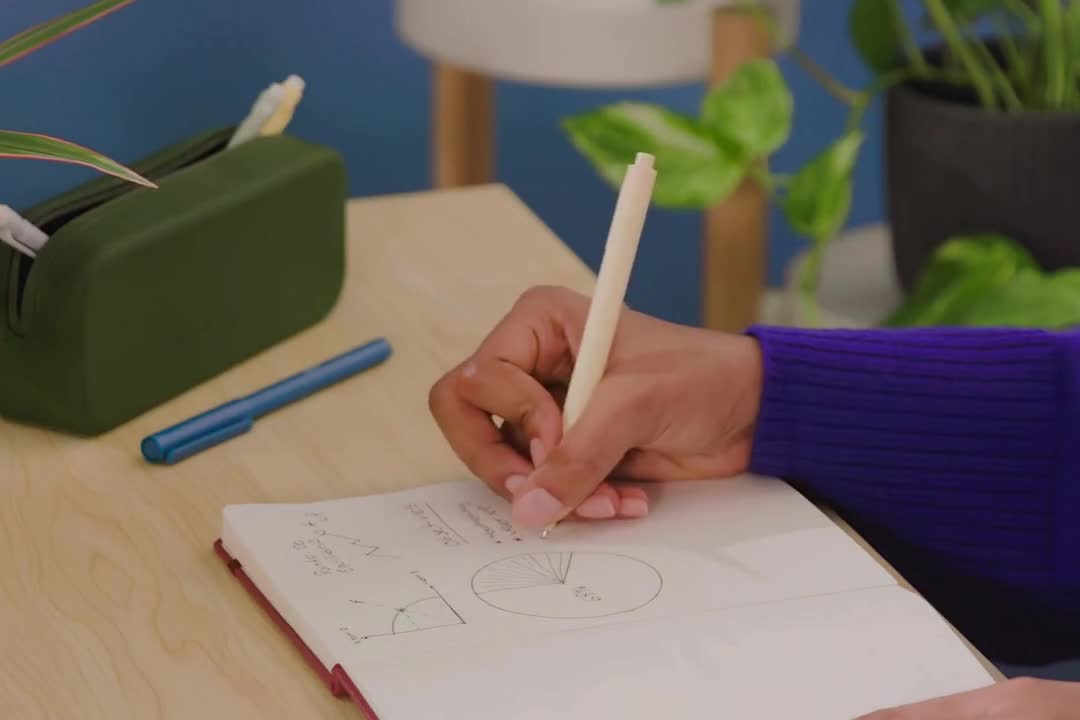
    A hand writing notes beside study materials

    Finish with an answer, not just an elapsed timer

    Before opening another video, check one part of your work. Explain an idea without looking at your notes, attempt a related problem, or reread your paragraph against the assignment question. Then consult your materials and correct what you missed. A gap gives you something specific to work on next.

    Finally, ask whether the video helped you begin and stay with the task, or whether you spent the session noticing the screen. Keep the parts of the setup that were useful. Change or remove the rest next time. You can like the atmosphere of a video and still decide it belongs in your leisure time.

    For your next session, write three lines: my task, my stopping point, my end check. Get those onto the page before you press play. The video can keep you company; your own work gives the session its purpose.


  • Proven Mid-Term Study Tips That Work

    Proven Mid-Term Study Tips That Work

    Got a few exam or assignment deadlines coming up soon? Check out the following list of proven mid-term study tips to help you make the most of your study time this fall.

    Preparing for mid-terms or exams is always a difficult time for students. And you can usually see this just by looking at them.

    You know, that college look of stress, panic, and edge, all tied into that typically frazzled dress and appearance.

    woman biting pencil while sitting on chair in front of computer during daytime

    But with exams and mid-terms contributing to so much of their grades, it’s no wonder why students feel this way.

    So in light of that, below are some tips that I’ve put together that won’t only help you with studying for your upcoming exams. But that will also help relieve that emotional turmoil of surviving the school year.

    Find Affordable Textbooks At TextBookNova.

    Ask Questions

    The first thing to remember is that most of your teachers are there to see you succeed in their class.

    As such, they’re going to be offering a helping hand. The catch, though, is that you need to approach them and ask the right questions.

    While some may have already been answered in the weeks leading to the exam, it’s still worth asking these questions. Doing this is pretty much guaranteed to help better prepare for the rest of your upcoming coursework, and your mid-terms as well.

    In the end, the more prepared you are, the better off you’ll be.

    woman writing on notebook

    Create A Study Schedule

    Because you’re going to be juggling several classes, you need to organize your time for studying.

    And one of the best ways to organize your time is to set up a study schedule, and I can’t stress this enough: to follow it!

    By having a schedule, you’ll effectively reduce the amount of time you’re studying on every subject.

    So instead of trying to cram all of your coursework knowledge into a single study sesh, you can use each pre-scheduled study period to focus on a single subject, spacing it all out on a schedule that works best for you!

    woman using computer sitting on black chair

    Consult Your Notes And Past Tests

    A good start for any study session is to go back through your own notes.

    Broadly speaking, your notes should cover the most important points of discussion. And they may even include other important details that you’ve noted but have forgotten.

    Additionally, it never hurts to review any previous tests you may have had so far this semester.

    In most situations, your mid-terms are going to cover everything you learned from the start of the term up to this point.

    Therefore, the tests or quizzes you’ve had will give you a rough indication of your upcoming mid-terms will be about.

    woman flipping book page

    Find Or Create A Study Group

    Whether you’re good at studying or not, it’s always smart to partner up with a few classmates for a study session every couple of weeks.

    Study groups can help you study more efficiently since you’ll be able to cover more topics. Plus, you might even be able to learn a thing or two by listening to other people’s perspectives.

    Furthermore, being in a group can allow you to educate others around you, which will help you feel even better about studying.

    Switch Up Your Scenery

    Whether you’re studying or taking a well-deserved break from studying, it’s important to switch up your environment from time to time.

    The fact is that our environments can heavily influence our behavior and directly impact our mood and focus.

    woman reading book while sitting on chair

    Many people have their go-to study spot, but I’d encourage you to mix it up. Go to a coffee shop, a public library, or the school’s library and see how you feel there.

    In the end, switching things can give you that boost of energy you need to prepare for your next exam!

    Don’t Skimp On The Sleep

    Sleep is just as important as studying, and you shouldn’t ever sacrifice it.

    While many students think it’s worth it to pull an all-nighter, it’s not going to be doing much for you in terms of helping you pass.

    Sleep allows you to process information and to organize it in your mind.

    Therefore, by getting less sleep, you’re not going to be able to retain as much information as you’d like to.

    woman sleeping on bed under blankets

    So instead of pulling an all-nighter, prioritize your life to include a stable sleep schedule throughout the school year.

    Find Affordable Textbooks At TextBookNova.

    Pace Yourself

    The final midterm study tip I have for you is to take it one test at a time.

    One of the biggest challenges with mid-terms is that you’re bombarded with many tests or assignments spread out over the same few weeks.

    It can be hectic during that time, but to help you keep a level head, here are a few more tips to help your prep:

    • Remember the dates your midterms are scheduled for, and use them to create a proper study schedule for these times.
    • Note how much time you have in between each mid-term. This can give you a good window of opportunity for how to prepare for each midterm study-wise.
    woman writing on book

    How To Beat Midterm Madness

    Although college and university are often one of the most exciting parts of a young person’s life, studying is not the most exciting or glamorous part of being a student.

    But through these specific methods, I believe you’ll have a better grasp at studying efficiently, which will help prepare for anything your mid-terms might throw your way!

    Find Affordable Textbooks At TextBookNova.

  • 3 Tips On Preparing For College Or University

    3 Tips On Preparing For College Or University

    Preparing for college or university this fall? With the start of the school year just around the corner, it’s important to make the most of your remaining time off. And start getting your life in order for first semester.

    There’s no doubting the fact that summer break does a lot of good for students, physically, mentally, and spiritually.

    But that doesn’t mean that all school responsibilities should be thrown to the wind. You should never wait until the day before your first class to start getting your life ready school.

    Therefore, I thought it would be a good idea to focus today’s blog post on preparing for the upcoming school year.

    Whether you’re a freshman, sophomore, or senior, you can easily benefit from getting things in order in advance. Then, when your first day of class rolls around, you’ll already be prepared to seize the day to its fullest potential!

    Gather Your School Supplies Early

    Before you actually begin attending your classes, you probably won’t actually know everything you’ll need for first the course. However, gathering a few essential supplies before school starts is a great step towards making sure you’re ready for your first day

    Think about it!

    You’re in school.

    So things like notepads, pens, pencils, binders, graph paper are things that you can almost never have too much of. And you’re almost guaranteed to need them on your first few days of school.

    assorted pen and colored papers in organizer case

    Therefore, it’s a good idea to sit down a few week before school starts and write a list of all the basic school supplies you think you might need.

    Depending on the type of courses you’re taking, you might also need a few extra tools too. So, especially if you’re studying math or science, don’t forget to add tools calculators geometry sets to your list.

    Do A Bit Of Research

    Obvious, you shouldn’t spend your summer hitting the books and studying every day. In fact, your summer break should be used for giving yourself a bit of time to relax and temporarily forget about your course load.

    However, with the school year just around the corner, it’s never a bad idea to do a bit of research. Read up on some of the topics that you’ll soon be learning about in school.

    For instance, maybe you’re taking a course is English literature.

    In this case, it wouldn’t be a bad idea to brush up on a few classic authors from throughout history. Maybe read a couple plays by Shakespeare or anything else you’re sure to touch on in class.

    person reading book sitting with cross legs preparing for college

    Taking a course in physics?

    Why not pick up a copy of Stephen Hawking’s A Brief History Of Time, which gives a broad overview of universal physics, written in an easy-to-understand tone.

    Of course, you don’t have to bored yourself and spend your entire summer break studying for your course. After all, that’s what your classes are far.

    But the point is that if you know you’re going to be learning about something in class. It’s not a bad idea to spend a bit of time learning about it in advance.

    Then, when you do touch on these subjects in your classes, you’ll already be pre-acquainted with the topic matter. And more than ready to challenge any quizzes or tests that might get thrown your way.

    Review Old Notes And Coursework

    Especially if you’re a sophomore or senior, it’s always a good idea to review your old school notes from the previous year or any text books that you might still have.

    It’s truly astounding how many things we forget over the course of a single year.

    So if you’re hoping to maintain good grades throughout the year, and obtain a solid understanding of whatever it is you’re studying, it’s crucial to regularly review the things you’ve learned in the past.

    person flipping book preparing for college

    Even if you’re only leaving high school, and heading into college as a freshman, it’s still a good idea to review some of your previous year’s coursework and reading material.

    Again, just to help you brush up on some of your knowledge.

    In the end, the more you know and understand about your studies, the more likely you’ll be to succeed and maintain a good GPA.

    Make The Most Of Your Time

    As I mentioned, I’m not suggesting that you spend your entire summer break studying and getting ready for next semester. But the fact is that being prepared can go a long way in helping you have an enjoyable, successful year of school.

    So, make sure to enjoy your summer, but don’t waste it or let it slip you by.

    Remember, it’s always important to make the most of your time.

    So have fun with your time away from school.

    But don’t forget to plan ahead, pick up a few essential school supplies in advance, brush up on your studying and review your old notes, and you’ll be well on your way to started your first semester of the year on the right foot.