You don't have to read every Agatha Christie book in order. Most cases give you a new mystery to solve, so you can choose a detective or setting that appeals to you. Publication order is useful if you want to follow a series carefully, though: characters return, and a few later books discuss earlier cases.
For a straightforward first pick, start with The Mysterious Affair at Styles for Hercule Poirot, The Murder at the Vicarage for Miss Marple, or And Then There Were None for a standalone. Those three choices let you try different kinds of Christie without turning your reading into a completion challenge.
Below, you'll find all 33 of Christie's Poirot novels and all 12 of her Marple novels in publication order, followed by guidance on short stories, alternate titles, and a few exceptions worth knowing. These are Christie's own books; adaptations and later novels by other authors are separate reading projects.
Choose your first Christie by the kind of mystery you want
Poirot: start with The Mysterious Affair at Styles
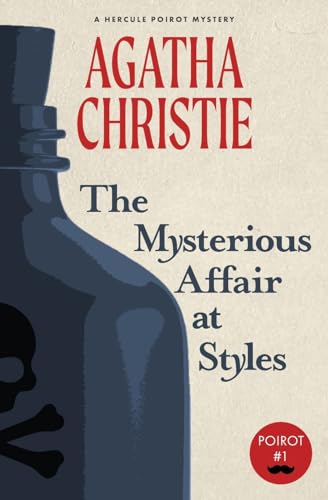
If you'd like to meet the detective at the beginning, choose The Mysterious Affair at Styles. Published in 1920, Christie's first novel introduces Poirot through Hastings, who is recovering from a wartime injury at an English country house. A poisoning turns the household into a collection of suspects. The official story page confirms that starting point and premise.
This is a useful route if your favorite part of a mystery is comparing accounts, noticing details, and wondering which apparently ordinary fact will matter later. You get a contained setting and an introduction to Poirot's approach before following him into other cases. Keep a short list of names if you enjoy solving along; you don't need a notebook full of theory to enjoy the reveal.
Starting here also removes the familiar hesitation of wondering whether you're missing an introduction. Afterward, continue with The Murder on the Links, or use the list below to plan a longer Poirot read. You can take breaks between cases without needing to remember an unfinished central plot.
Miss Marple: start with The Murder at the Vicarage
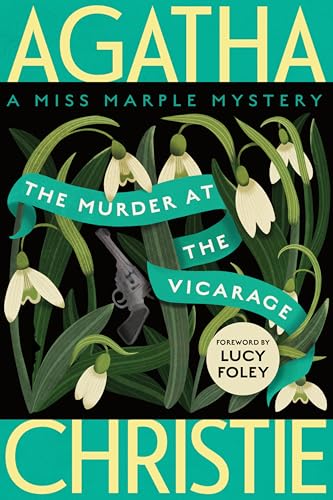
The Murder at the Vicarage, published in 1930, is Miss Marple's first novel. Colonel Protheroe is found dead in the vicar's study, and the village supplies plenty of people who might have wanted him gone. Marple's attention to people's behavior makes everyday conversation worth watching closely. See the official introduction to the novel for its place in the series.
Pick this route if you like a mystery woven through a community: people know one another, reputations carry weight, and a polite exchange can have more going on beneath it. St Mary Mead is an appealing place to begin because it introduces Marple's surroundings as well as her investigative instincts. Her experience of ordinary human behavior is part of the attraction.
The village setting doesn't make the crime trivial or guarantee a cuddly story. It gives you a smaller social world to examine. If you prefer watching relationships and motives emerge to following a famous professional detective, Marple may be the better first choice. Her short stories are another option for busy weeks, discussed below.
A standalone: start with And Then There Were None
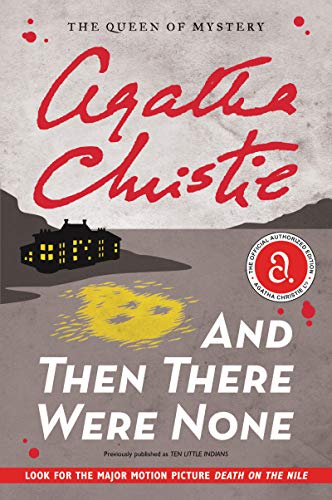
Choose And Then There Were None if you want to try Christie without committing to a returning sleuth. Ten strangers arrive on an isolated island, their hosts are absent, and a death makes the invitation feel very different. The official synopsis establishes the 1939 novel's enclosed setting and growing suspicion.
Here, your attention goes to the group and its predicament rather than a familiar detective's method. That makes it a strong option for readers drawn to isolation, distrust, and the pressure of being unable to leave. If you're choosing a book-club read, the standalone structure also means nobody has to catch up on a series first.
You can read this before, between, or after either detective series. There is no Poirot or Marple prerequisite. Go in with the premise rather than a detailed plot summary; a recommendation that tells you every turn has taken away part of the reason to read it.
Hercule Poirot novels in publication order
Use this list for a sustained Poirot read. It includes novels, not short-story collections. Years refer to the earliest UK or US book publication, so a UK-only list can show a later year for some titles. The official Poirot reading guide also provides an optional order based on Poirot's lifetime; that is a different organizing choice.
- The Mysterious Affair at Styles — 1920
- The Murder on the Links — 1923
- The Murder of Roger Ackroyd — 1926
- The Big Four — 1927
- The Mystery of the Blue Train — 1928
- Peril at End House — 1932
- Lord Edgware Dies — 1933
- Murder on the Orient Express — 1934
- Three Act Tragedy — 1934
- Death in the Clouds — 1935
- The ABC Murders — 1936
- Murder in Mesopotamia — 1936
- Cards on the Table — 1936
- Dumb Witness — 1937
- Death on the Nile — 1937
- Appointment with Death — 1938
- Hercule Poirot's Christmas — 1938
- Sad Cypress — 1940
- One, Two, Buckle My Shoe — 1940
- Evil Under the Sun — 1941
- Five Little Pigs — 1942
- The Hollow — 1946
- Taken at the Flood — 1948
- Mrs McGinty's Dead — 1952
- After the Funeral — 1953
- Hickory Dickory Dock — 1955
- Dead Man's Folly — 1956
- Cat Among the Pigeons — 1959
- The Clocks — 1963
- Third Girl — 1966
- Hallowe'en Party — 1969
- Elephants Can Remember — 1972
- Curtain: Poirot's Last Case — 1975
Two dates often cause confusion. Three Act Tragedy first appeared in the US in 1934 and in the UK in 1935. Five Little Pigs first appeared in the US in 1942 as Murder in Retrospect. And Taken at the Flood belongs in 1948, as confirmed by its individual story entry.
Which Poirot books should wait?
Save Curtain until the end of your Poirot reading. For other known references, the official guide recommends these pairs and groups:
- Murder on the Orient Express before Cards on the Table.
- Three Act Tragedy before Hercule Poirot's Christmas.
- Mrs McGinty's Dead before Hallowe'en Party.
- Five Little Pigs, Mrs McGinty's Dead, and Hallowe'en Party before Elephants Can Remember.
These are useful precautions from the official checklist, not a promise that every other book contains no references. The Dumb Witness entry, for example, also notes references to earlier cases. If even a passing reference bothers you, publication order is the practical default.
Miss Marple novels in publication order
Marple offers a shorter novel sequence. The official Marple reading list mixes novels and short stories in its suggested lifetime order. For publication order of the novels alone, use this list:
- The Murder at the Vicarage — 1930
- The Body in the Library — 1942
- The Moving Finger — 1942
- A Murder Is Announced — 1950
- They Do It with Mirrors — 1952
- A Pocket Full of Rye — 1953
- 4.50 from Paddington — 1957
- The Mirror Crack'd from Side to Side — 1962
- A Caribbean Mystery — 1964
- At Bertram's Hotel — 1965
- Nemesis — 1971
- Sleeping Murder — 1976
The Moving Finger uses its earliest publication year here; UK editions followed in 1943. Read A Caribbean Mystery before Nemesis if you'd like to meet a returning character in the earlier book. The official Nemesis page explains that connection without making the two a conventional continuous story.
Sleeping Murder was the last Marple novel published, but that doesn't make it the last event in Marple's life. The official reading list places it earlier in its suggested chronology. Its writing history is debated, so publication order is a clearer system than trying to reconstruct exactly when every manuscript was written.
Where short stories and Tommy and Tuppence fit
You don't need to buy every collection before beginning the novels. Poirot Investigates and Marple's The Thirteen Problems are useful choices when you'd prefer a complete case in a shorter sitting. Check a collection's contents before buying another edition: UK and US volumes can group the same stories differently. The official publication checklist identifies collections and their contents.
Tommy and Tuppence are a different proposition. The official character guide emphasizes that they age across their adventures. If that continuing relationship appeals to you, follow this sequence: The Secret Adversary (1922), Partners in Crime (1929, short stories), N or M? (1941), By the Pricking of My Thumbs (1968), and Postern of Fate (1973).
Check alternate titles before buying a second copy
An unfamiliar title may be a book you already own. Lord Edgware Dies also appeared as Thirteen at Dinner, as its official page explains. Five Little Pigs is also Murder in Retrospect, and Taken at the Flood is also There Is a Tide. The publication checklist above records further regional titles, including The Tuesday Club Murders for The Thirteen Problems.
Compare author, contents, format, and ISBN rather than assuming a new cover means a new story. A play, graphic adaptation, abridgment, and original novel can share a title. Later continuation novels can feature familiar detectives while being written by someone else; keep those separate if your aim is to read Christie's own work first.
Make the next choice small
Start with the route that sounds most enjoyable this week: Poirot's country-house debut, Marple's village investigation, or the standalone island mystery. Read one book before deciding whether you want a complete series. A checklist is useful when it helps you choose; it doesn't have to become an obligation.
You can explore Agatha Christie's books on Textbook Nova or browse classic mysteries when you're ready for another case.