Tag: access codes

  • Can You Use an Older Edition of a Textbook? A Student Checklist Before You Buy

    Can You Use an Older Edition of a Textbook? A Student Checklist Before You Buy

    An older textbook edition can be a smart buy, but only if it still matches the way your class is actually taught. Before you order the cheaper copy, check four things: the ISBN and edition, any required access code or homework platform, the assigned chapters and problem numbers, and whether your instructor will accept the older version.

    That quick check matters because “close enough” can still cost you money. A previous edition might explain the same concepts, but the page numbers, case studies, problem sets, online homework, or bundled digital access can be different. If the older copy fails one of those checks, the savings may disappear fast.
    Older edition decision checklist

    Use this as a go/no-go checklist before you buy.

    Use the older edition only if all four checks pass

    • The ISBN or edition is close enough for the assignment.
    • No required access code or courseware is missing.
    • Chapter order and problem numbers still line up.
    • Your instructor says yes, or the syllabus leaves room for it.
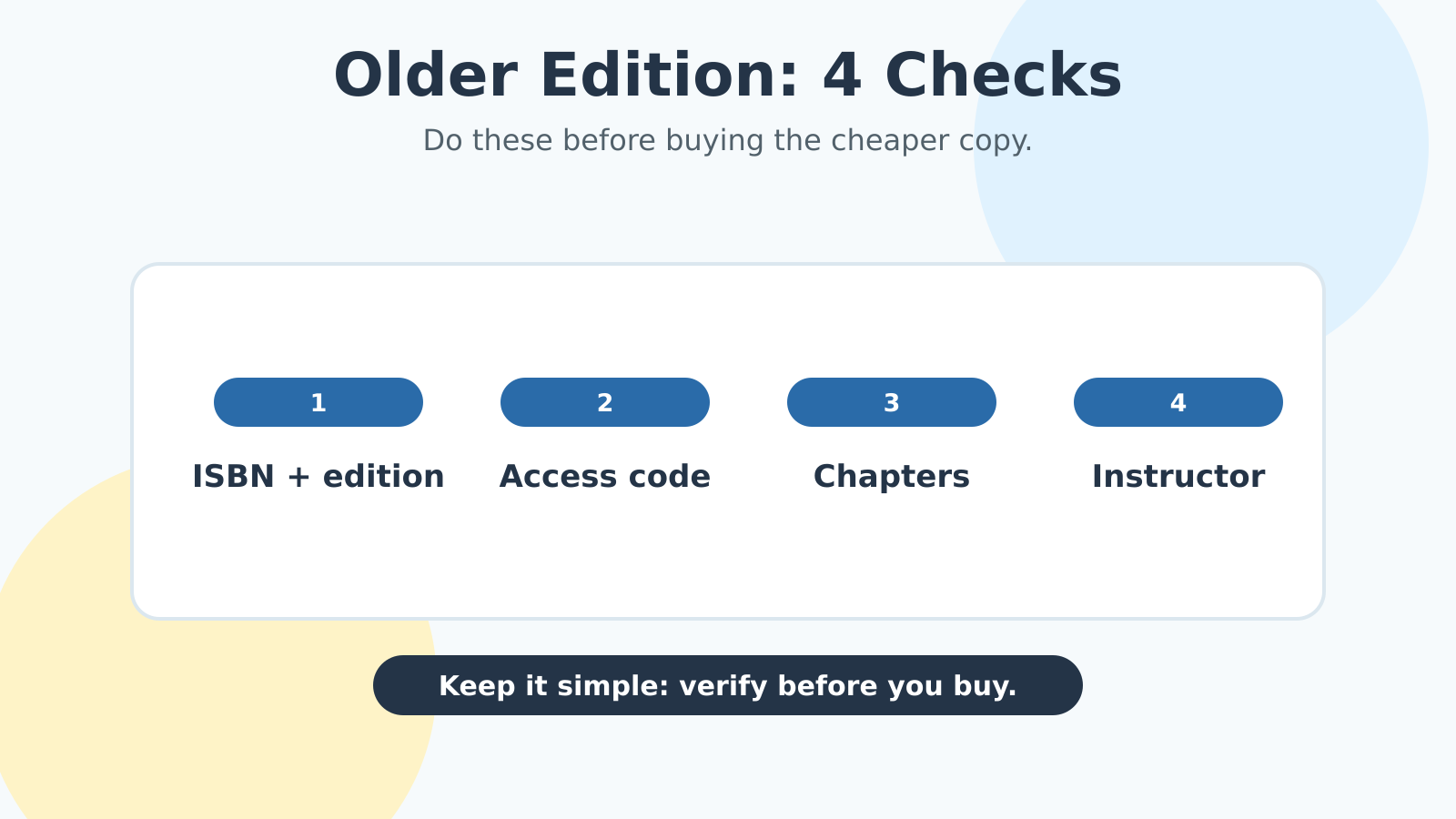
    Four checks for deciding whether an older textbook edition will work for class.
    Older editions are safest when the ISBN, access requirements, chapters, and instructor expectations line up.

    Quick answer: older editions can work, but only after four checks

    A used older edition is usually worth considering when the course uses the textbook mainly for reading, concepts, definitions, or optional practice. It is riskier when your grade depends on assigned page numbers, exact problem sets, current legal or medical information, publisher homework, quizzes inside a course platform, or a one-time access code.

    Here is the short version:

    1. Match the assigned title, author, edition, format, and ISBN.
    2. Confirm whether an access code, courseware subscription, or course ID is required.
    3. Compare the table of contents, chapter order, and assigned questions.
    4. Ask the instructor one specific question before you rely on the older copy.

    If you are using an older edition to save money on textbooks, do these checks before the return window closes. The goal is the cheapest version that will not break your class workflow.

    Check 1: match the ISBN, edition, author, and format

    Start with the course listing or syllabus. Write down the exact title, authors, edition number, publisher, publication year, format, and ISBN. The University of Portland’s student textbook guidance specifically tells students to check the ISBN, edition, and access-code requirement before buying, which is exactly the information you need for this decision.

    The ISBN is especially useful because an ISBN identifies a specific edition and format. A hardcover, paperback, ebook, loose-leaf copy, international edition, or custom campus edition can have a different ISBN even when the title looks nearly identical.

    A different ISBN is not automatically unusable, but it does mean you should slow down. Search the required ISBN and title on the bookstore page, publisher page, library catalog, and marketplaces. You can also search by ISBN on Textbook Nova to compare the assigned book against cheaper used or rental options. Treat the older edition as a candidate, not a confirmed match.

    Red flags in the listing

    Be careful if the cheaper copy says any of these:

    • “Instructor’s edition”
    • “International edition”
    • “Custom edition”
    • “Volume 1 only” or “Volume 2 only”
    • “Access code not included”
    • “May not include supplemental materials”
    • “Loose-leaf pages only”

    Check 2: look for access codes, homework platforms, and course IDs

    This is where many older-edition savings plans fail.

    If your course uses MyLab, Mastering, Connect, MindTap, Achieve, WebAssign, WileyPLUS, or another publisher platform, the physical book may not be the main purchase. Your grade may depend on online homework, quizzes, an ebook, or a course-specific enrollment link.

    Pearson’s support page notes that used textbooks may not include usable access codes, and McGraw Hill’s support documentation explains that publisher access may need to be purchased separately if a registration code did not come with the book. In plain English: a used copy with a scratched-off or missing code may not save you anything if you still have to buy platform access.

    Before buying the older edition, answer these questions:

    • Does the syllabus require online homework or quizzes?
    • Does the bookstore listing say “access code required”?
    • Is the code bundled only with a new book or digital package?
    • Can you buy access separately, and what does that include?
    • Does standalone access include the ebook, making the print book optional?

    If the class is already charging a digital course-material fee, read the details before buying another copy. This is where inclusive access textbooks can get confusing: you may already be billed for digital access unless you opt out by the deadline.

    Check 3: compare chapters, problem numbers, and assigned readings

    If there is no access-code issue, compare the content itself. Do not just compare titles. Open the table of contents for both editions if previews are available, or use library copies, bookstore screenshots, publisher samples, or classmates’ books.

    Look for:

    • chapter titles and order
    • missing or added chapters
    • page-number changes
    • end-of-chapter problem numbers
    • case studies, datasets, readings, or examples
    • lab manuals, appendices, charts, or online supplements

    For a history, literature, philosophy, or general education class, a previous edition may be fine if your instructor assigns broad chapter topics and lecture fills in the details. For accounting, chemistry, math, engineering, statistics, law, health sciences, or courses with graded problem sets, the exact edition matters more because question numbers and examples can shift.

    The problem-number test

    Here is the fastest practical test: find one week of assigned homework and compare those exact problems in both editions.

    If “Chapter 4, problems 12, 18, 24, and 31” are the same in both books, the older edition may work. If problem 18 is completely different, you will spend the semester translating assignments. That is possible, but it is not free.

    The current-information test

    Some subjects age faster than others. An older edition of a calculus text may still teach derivatives, but an older edition of a tax, nursing, computer security, legal, or public policy text may miss important updates. OpenStax’s explanation of textbook revisions and updates notes that updates can range from small corrections to more substantial edition-level changes, which is a useful reminder that “new edition” does not always mean the same amount of change.

    Ask whether the course depends on current rules, current data, or recent research. If yes, be more conservative.

    Check 4: use reserves or scans legally while you verify

    If you are not sure yet, do not panic-buy the expensive copy on day one. Check whether the library has a reserve copy, ebook access, or a short-term loan. George Mason University Libraries notes that course reserves can help while you verify the right edition, though reserve copies may have limited checkout windows and may not match every assigned version.

    A reserve copy can help you compare the required edition before spending money and can cover the first week while you wait for a used copy, rental, or instructor answer. Stay inside your school’s rules: use library reserves, legitimate ebooks, bookstore previews, or legally shared excerpts, not pirated PDFs.

    When an older edition is usually low risk

    An older edition is usually safer when most of these are true:

    • The instructor says older editions are okay.
    • The book is used mainly for concepts, not exact homework problems.
    • There is no required access code or platform.
    • The table of contents is mostly the same.
    • Assigned readings use chapter topics instead of exact page numbers.
    • The subject is not heavily dependent on current rules or recent data.
    • You can borrow the current edition if you need to compare a few assignments.

    In that situation, the older copy can be a reasonable way to cut costs, especially if the price difference is large and the return policy gives you a safety net.

    When you should buy or rent the required edition instead

    Buy, rent, or use the assigned version when your grade depends on exact alignment. The required edition is usually the safer choice if:

    • online homework access is required
    • the older copy does not include a usable code
    • problem numbers differ
    • page-specific readings are assigned every week
    • the instructor uses a custom campus edition
    • the class relies on current laws, standards, or clinical guidance
    • the professor says older editions are not acceptable

    You may still be able to rent the correct edition, buy used with access separately, use an ebook, borrow from the library, or compare prices across sellers. In these cases, “older” is not the first filter. “Correct” is.

    A short email to ask your professor before you buy

    If the checklist is still unclear, ask one specific question. Do not send a vague “Can I use an older edition?” message with no details. Make it easy for the instructor to say yes, no, or “yes, but watch out for Chapter 8.”

    Try this:

    Hi Professor [Name],

    I found a cheaper copy of [Book Title], [Older Edition], ISBN [older ISBN]. The syllabus lists [Required Edition], ISBN [required ISBN]. I checked that the chapters look similar, but I wanted to confirm before buying: will the older edition work for readings and assignments in this course, or do we need the exact required edition because of page numbers, problem sets, or online access?

    Thank you,

    [Your Name]

    That email gives your professor the information they need. If they approve the older edition, save the reply. If they warn you about access codes or mismatched assignments, you just avoided a bad purchase.

    The best textbook deal is the one that actually works for the course. Check the ISBN, access, assignments, and instructor expectations first; then buy the cheapest acceptable option with a return window you can live with.
  • How to Save Money on Textbooks in 2026: A Practical Student Checklist

    How to Save Money on Textbooks in 2026: A Practical Student Checklist

    If you want to spend less on textbooks in 2026, the fastest path is not a random coupon search. Start by comparing the exact ISBN, questioning whether you truly need the newest edition, and checking whether the class uses an access code or automatic billing. Those three decisions usually matter more than any one marketplace price.

    That advice is even more important now than it used to be. In its 2026 report, Student PIRGs says students are still dealing with access codes, automatic textbook billing, and other course-material traps even as open educational resources become more common. And the College Board’s 2025 Trends in College Pricing and Student Aid report reminds us that books and supplies are still part of the overall cost of attendance, including hardcopy textbooks, online textbooks, rentals, and other supplies.

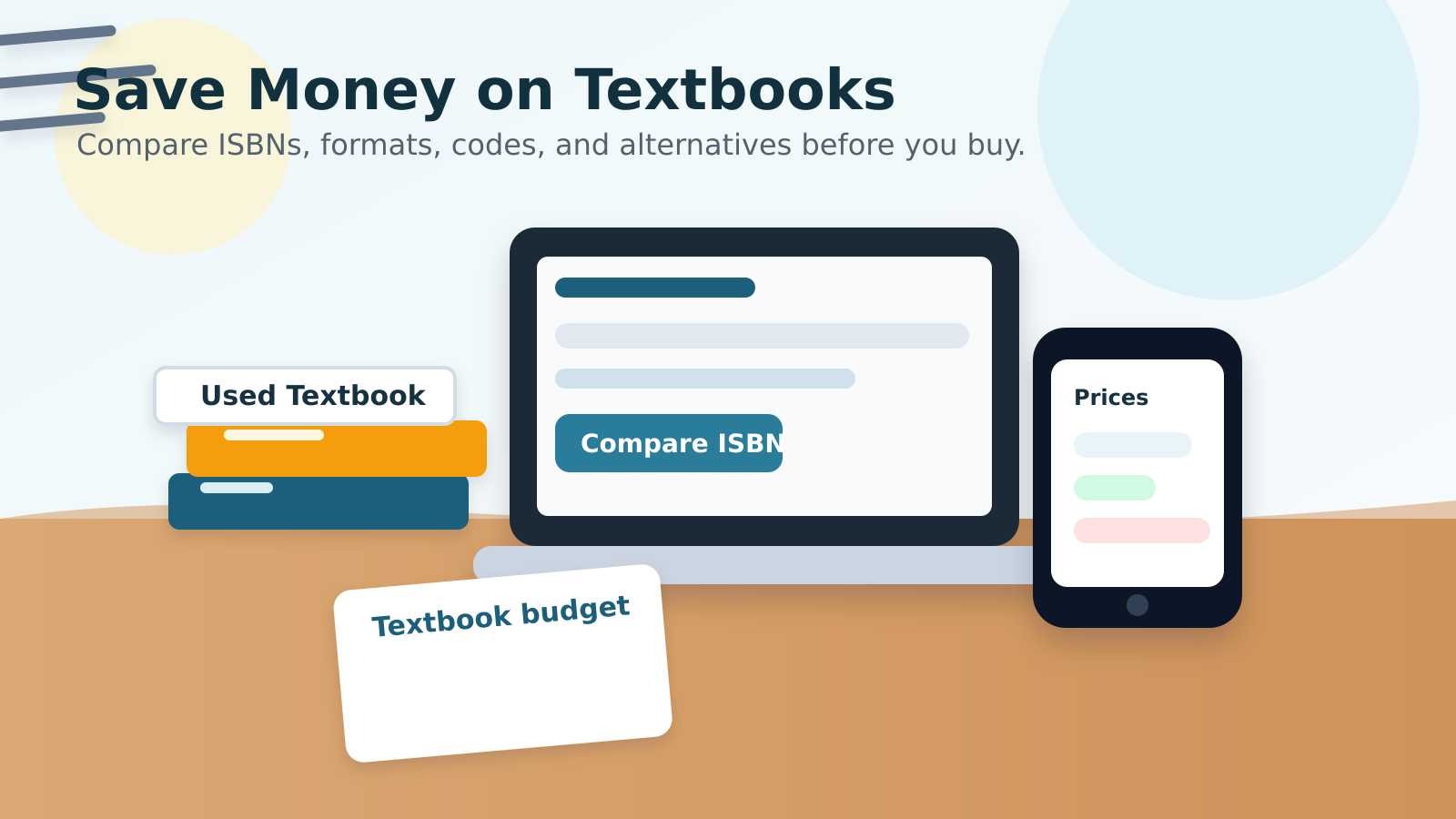
    Student desk with textbooks, laptop, notebook budget checklist, and phone price comparison for saving money on textbooks in 2026.
    A practical textbook plan starts before checkout: compare the ISBN, format, access-code rules, and total cost.

    So here’s the practical version: save where you actually have control, and don’t overpay for features you don’t need.

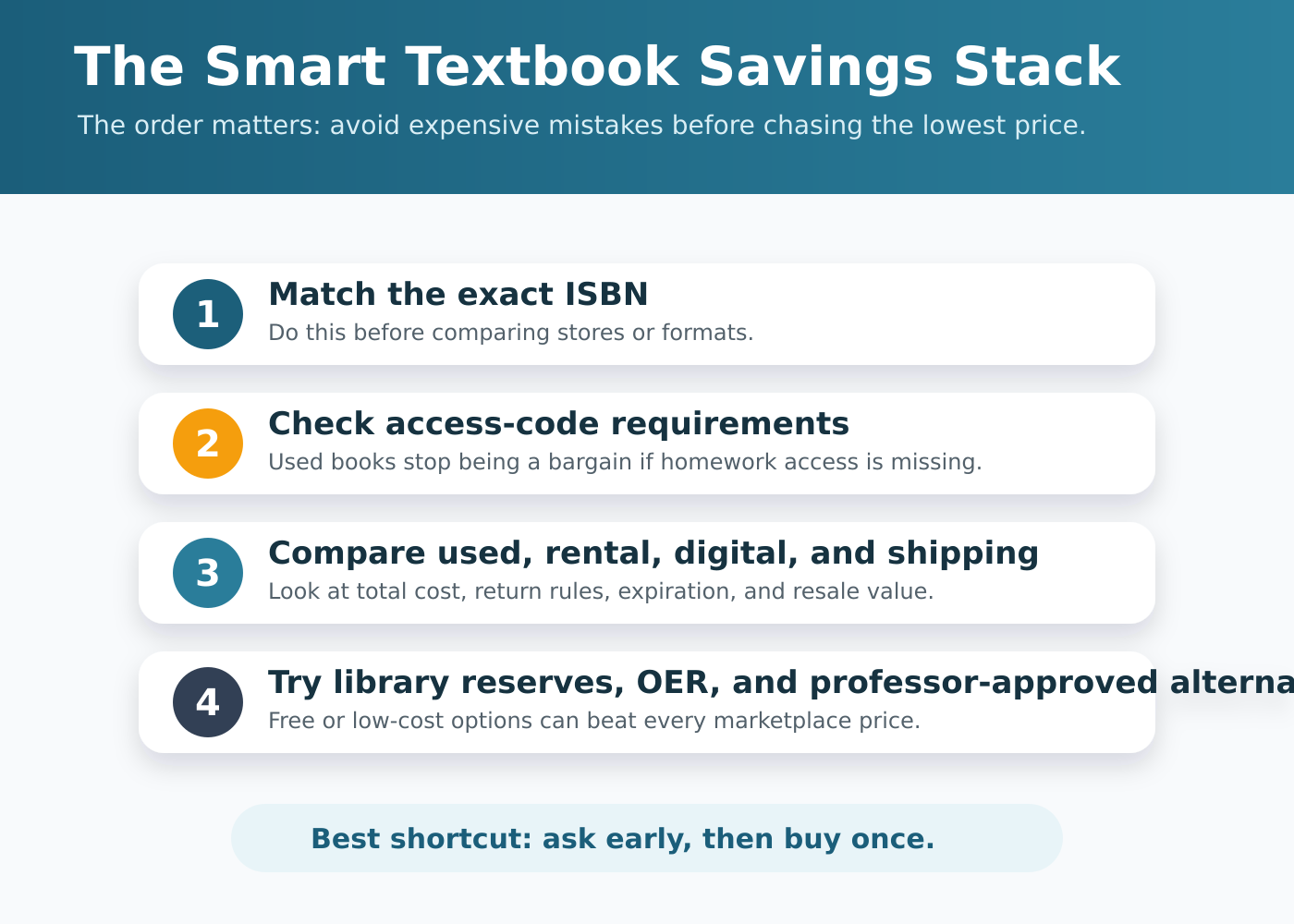
    Polished infographic showing a textbook savings stack: ISBN match, access-code check, format comparison, library and OER alternatives, and resale value.
    Use the savings stack in order: verify requirements first, then compare formats and free alternatives before buying.

    1) Start with the ISBN, not the bookstore listing

    The first step is boring, but it works. Search by ISBN, not just by title. A textbook title can hide multiple editions, bundled versions, and digital packages that look similar until checkout.

    Use this order:

    1. Copy the ISBN from the syllabus.
    2. Search that exact ISBN through Textbook Nova, your campus bookstore, used-book sellers, rental listings, and other marketplaces.
    3. Compare the total price, including shipping.
    4. Check whether the copy includes any online code or access portal.

    This matters because a “cheap” book can stop being cheap the second you learn it doesn’t include the code your class requires. If the professor only needs the text, you have more options. If the grade depends on the platform, the format matters more than the sticker price.

    If you want a broader strategy for this kind of comparison, our older guide on how to save money on textbooks still covers the basics. This update just adds the 2026 reality: the digital add-ons are often the trap.

    2) Don’t pay extra for the exact edition unless you have to

    Students get burned here all the time. A professor may say “latest edition required” when they really mean “the course will follow this text closely.” Those are not the same thing.

    Before you buy the newest version, ask:

    • Does the syllabus say the latest edition is required, or just recommended?
    • Are chapter numbers or page numbers used in assignments?
    • Will an older edition still match the homework well enough?
    • Is there a course pack or instructor notes that make the edition less important?

    If the answer is “recent edition is fine,” shop the used market first. Older editions are often dramatically cheaper, and they can be perfectly workable when the core concepts haven’t changed.

    This is one of the simplest ways to reduce costs without giving up the book itself.

    3) Buy used when the book is just a book

    Used textbooks still make sense when there’s no required code attached. That sounds obvious, but the fine print matters. A used copy is only a win if you can actually use it for the class.

    Used is usually your best move when:

    • the class uses the book for reading only,
    • homework is not tied to an online portal,
    • the professor allows an older edition,
    • and you plan to keep the book or resell it later.

    Used is a bad deal when:

    • the required access code is single-use,
    • the course is built around a digital homework system,
    • or the seller’s listing is vague about what’s included.

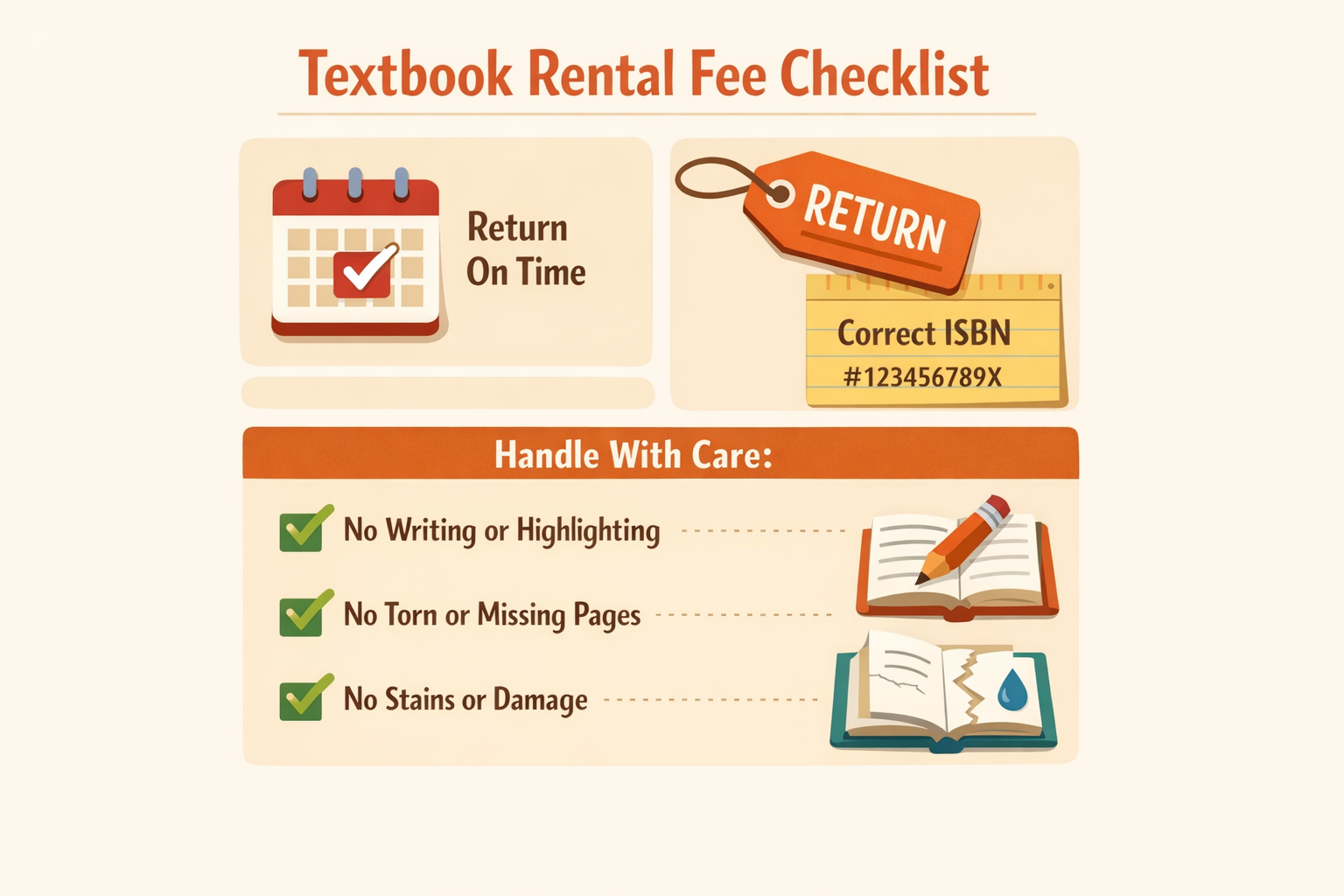
    If you buy used, check the condition notes carefully. “Good enough” can be fine for a reading-heavy class, but not if the pages are missing, highlighted to the point of distraction, or water-damaged.

    4) Choose rental or digital only when the math actually works

    Renting and digital access are not automatically cheaper. Sometimes they are. Sometimes they just move the cost around.

    Rent when:

    • you need the book for one term only,
    • you don’t care about keeping it,
    • and the rental total is clearly lower than used + resale risk.

    Choose digital when:

    • the class already requires a digital platform,
    • you prefer carrying less weight,
    • and the ebook price is meaningfully below print.

    But watch the hidden catches. A digital package might look cheaper until you realize it expires, locks you into a single device, or still requires a separate access code. That’s why the College Board’s 2025 report is useful here: it treats books and supplies as a budget category that can include hardcopy textbooks, online textbooks, rentals, and other supplies. In other words, your “book” cost may show up in more than one form.

    Rule of thumb: if you can resell a print book, include that in the comparison. If you can’t resell a rental or digital license, don’t pretend the up-front price tells the whole story.

    5) Watch for access codes and automatic billing before you click buy

    This is the biggest 2026 trap.

    Student PIRGs reports that access codes have become common in required coursework, and that many campuses now use automatic textbook billing. That means the cost can appear by default, not by choice.

    Before you pay, ask three questions:

    • Is the access code required for homework, quizzes, or grading?
    • Can I opt out of automatic billing?
    • Can I buy the material somewhere else and still complete the class?

    If the answer to the first question is yes, a used copy may not help unless it includes the code. If the answer to the second question is unclear, don’t assume the default charge is your only option. And if the bookstore or LMS is pushing an “inclusive access” style package, compare the real total before accepting it.

    A lot of students lose money here because they shop for the book first and discover the code problem later. Reverse that order.

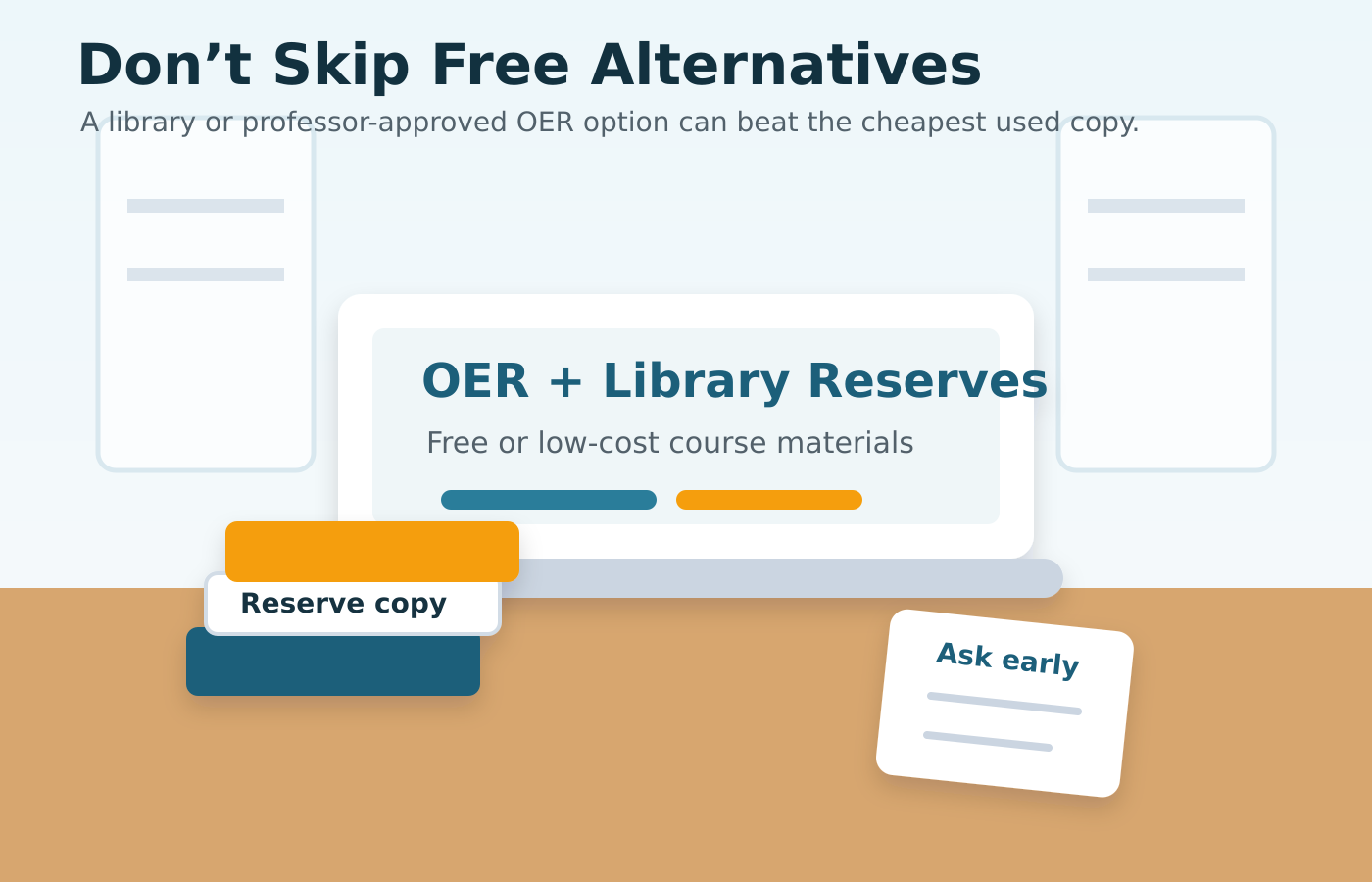
    Campus library study table with open educational resources on a laptop, reserve books, and course notes as textbook alternatives.
    Library reserves, ebooks, and OER can be just as important as used-book marketplaces when you are trying to lower course-material costs.

    6) Use library reserves, OER, and professor-approved alternatives

    This is where students can sometimes save the most.

    Start with your campus library. Some schools keep course reserves, ebook access, or short-term lending copies for high-demand classes. Those options are easy to miss, and they are often free.

    Next, look for open educational resources, or OER. Student PIRGs notes that growing awareness of open textbooks and other free materials has expanded access, even while the market has gotten more complicated. That means more courses may already have cheaper or free alternatives available.

    Here’s what to ask:

    • Does the library have a reserve copy or ebook license?
    • Is there an open textbook option for this course?
    • Will the professor accept a previous edition or alternate source?
    • Is the “required” book really required, or just recommended?

    If you’re stuck, ask early. Professors are usually much more flexible before the semester starts than after assignments are already underway.

    For context on why this problem keeps coming back, our post on why college textbooks are so expensive goes deeper on the publisher and bundling side.

    7) End the semester by deciding whether to resell, keep, or donate

    Saving money on textbooks does not end when you buy them. It ends when you decide what they’re worth to you after the class.

    Resell when:

    • the book is still current,
    • it’s a common title,
    • and you don’t need it for a later course.

    Keep when:

    • it’s a major reference for your field,
    • the content will matter in later classes,
    • or it’s a book you actually want on your shelf.

    Donate when:

    • resale value is basically gone,
    • another student can use it,
    • or your campus has a reuse program.

    Even a modest resale return changes the math on the next purchase. A $90 book that sells for $30 later is not the same as a $90 book that goes in the closet forever.

    The short version

    If you want the biggest savings, do these five things in order:

    1. Compare by ISBN.
    2. Verify whether the exact edition matters.
    3. Check for access codes before buying used.
    4. Compare rental, print, and digital on total cost.
    5. Use library reserves and OER whenever you can.

    That’s the 2026 textbook-saving playbook. The market is still messy, but students do have leverage when they shop in the right order.

    If you want more textbook-buying tips and learning-cost advice, start at Textbook Nova and work outward from there.