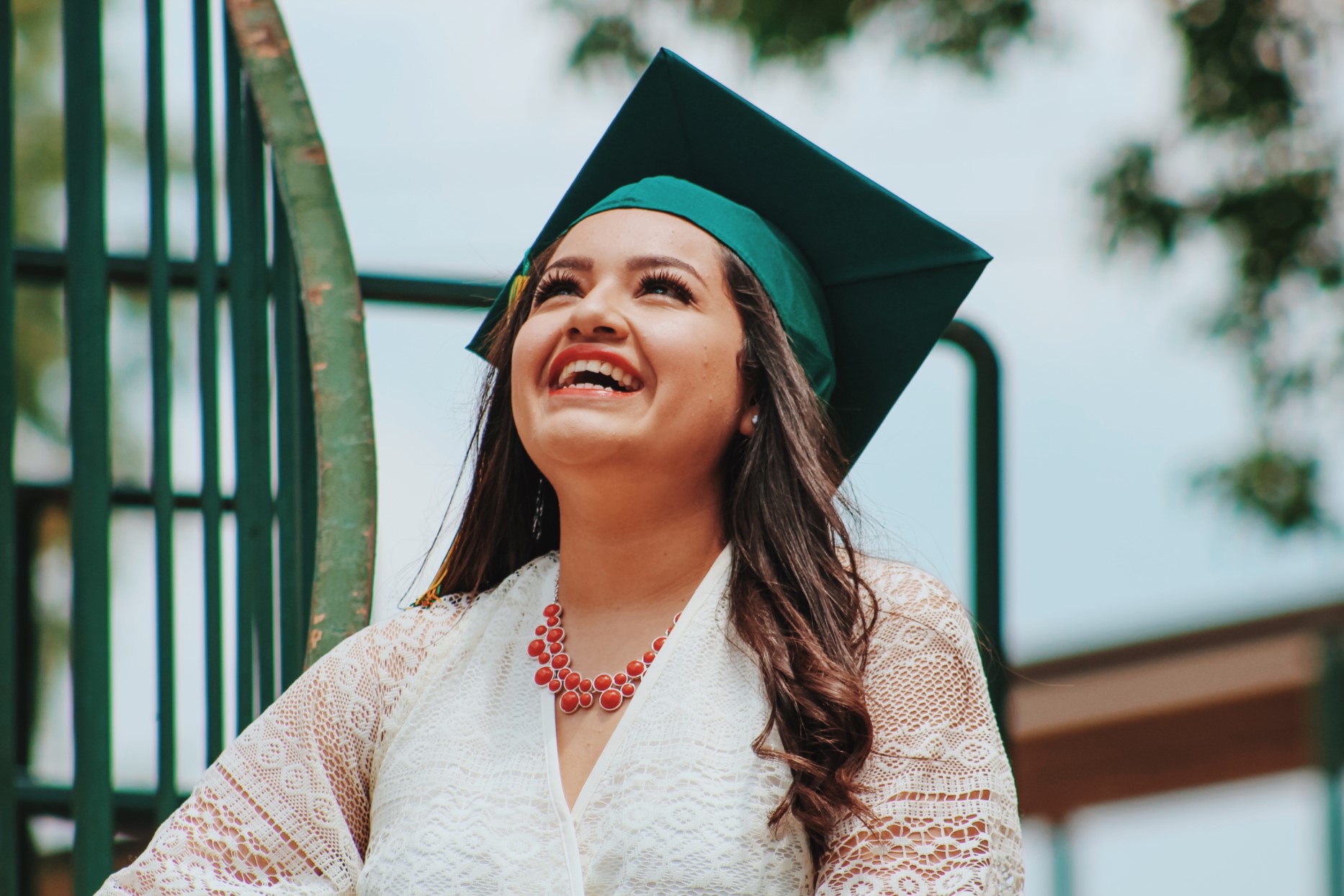
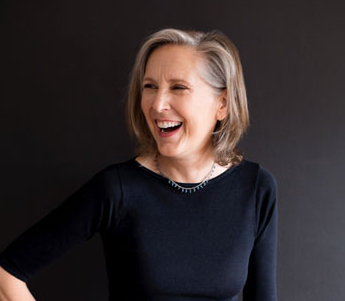
Congratulations to Lauren Menke of Case Western ReserveUniversity for winning the Textbook Nova 2021 Scholarship!
Lauren wrote a fantastic essay about her favorite author, Mary Roach.
Lauren is a very talented writer pursuing a degree in Human Nutrition & Pre-medicine at CWRU. She submitted an excellent essay that expresses her appreciation for the scientific writings of Mary Roach.
This year we received a number of amazing submissions from other great institutions like Oregon State, University of Cincinnati, and University of Houston; among many others! We’d like to express our appreciation and thank everyone who participated in our scholarship this year.
Congratulations to Sophia Rasura of Sarah Lawrence College for winning the Textbook Nova 2020 Scholarship!
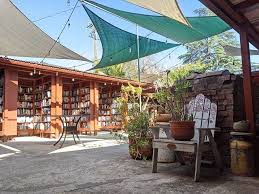
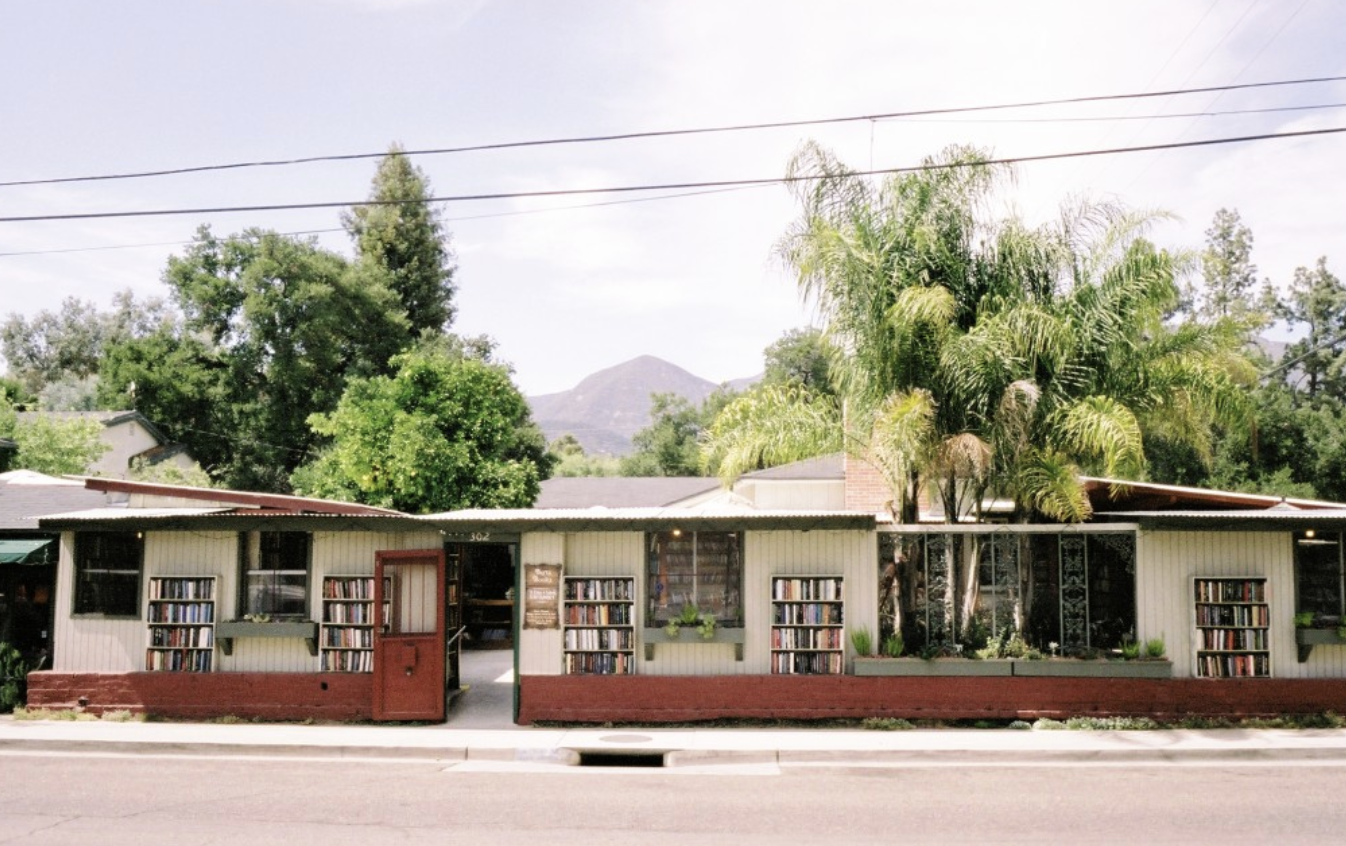
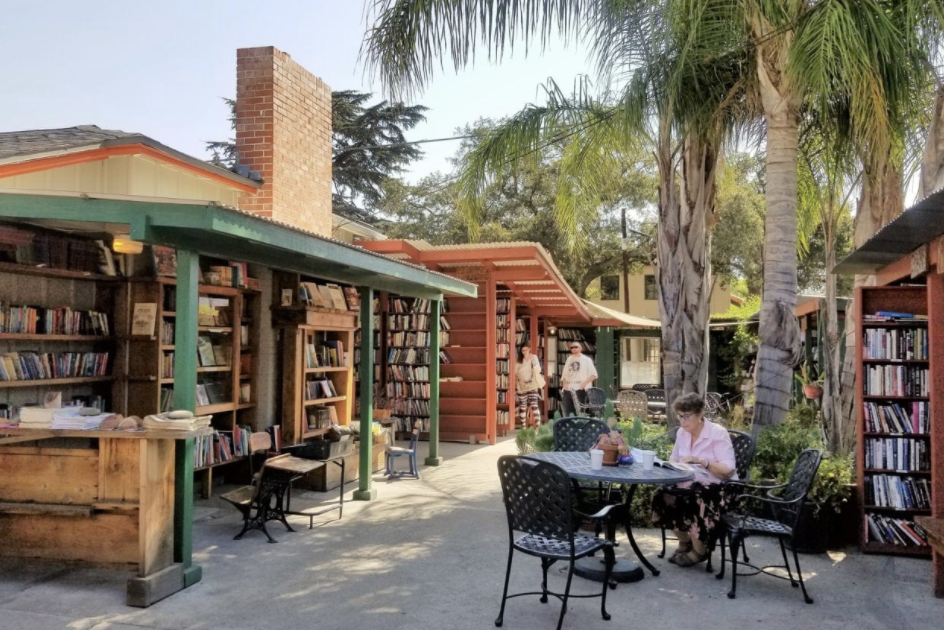
Sophia wrote and amazing essay about a book store in her home town Bart’s Books in Ojai, California.
Her passion for reading and writing is very evident in her submitted essay, and her admiration for Bart’s Books is inspiring.
We received a number of great submissions this year from other great institutions like University of Arizona, Houston, and Pittsburg; among many others! We’d like to express our appreciation and thank everyone who participated in our scholarship this year.
Congratulations to the winner of the Textbook Nova 2019 Scholarship, Austin Malberg!
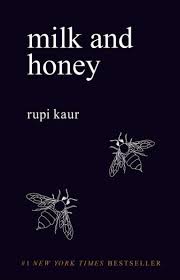
Austin wrote a wonderful and creative essay on the book Milk and Honey, a poetry book written by Rupi Kaur.
Austin is an exceptionally talented writer and has a very bright future ahead of her in her pursuit of a degree in Creative Writing. You can take a look at the work she submitted here, titled My First Love.
Congratulations to the winner of Textbook Nova’s 2022 Scholarship award, Jesus Lopez Hernandez!
Jesus wrote an essay about his personal connection to the famous book How to Win Friends and Influence People by Dale Carnegie. He is currently studying Pre-Economics and Accounting at the University of California Santa Barbara.
In his essay he writes about how he was able to use some of the methods taught in this book to avoid a conflict and confrontation, and ultimately found a much better outcome that resulted in some more quality time with his family.
We would like to thank all the students who submitted excellent work from schools all across the nation, including: Brigham Young University, Purdue University, Utah Valley University, Wichita State University, among many others. Good luck to all the students enrolled this semester and keep an eye out for when we will be announcing the 2023 Scholarship award!
Textbook Nova is a textbook search engine with the one of the largest databases of academic media and educational material online. We offer college students options to find the least expensive way to purchase the textbooks required by your courses to complete your education.
Our mission statement is to help students pay for college and this year we would like to help even more. Textbook Nova welcomes college students with a knack for writing to apply for our 2021 Scholarship. Our goal is to help provide financial aid for students, and the winner will be awarded with a $1000 scholarship. All currently enrolled and incoming students of the 2021 Fall school year are encouraged to apply.
REQUIREMENTS You must write an essay response between 1,000 to 1,500 words on one of the topics listed below. Your content should be unique, compelling, and informative and will be judged on these merits to determine the winner of the scholarship. After you’ve finished the essay, submit your work as a shareable link to a Google document by completing the entry form.
TOPIC
What book have you read that had the largest impact on your life and why?
What is one important skill you have learned from a book and how has it helped you?
What is one book you would recommend to a friend or teacher and why?
Where is your favorite place to find new books and what books do you find there?
When did you first realize how important books are and what book was it that enlightened you?
Who is your favorite author and why?
ELIGIBILITY
Applicants must be currently enrolled or incoming students to an accredited educational institution within the United States as a full time student during the 2021 academic year
Undergraduate students of all majors are encouraged to apply
One student will be selected to receive $1,000 in scholarship funds based on their winning essay response
Scholarship funds must be used to pay for qualified educational expenses, including tuition or fees for enrollment, books, supplies, or equipment required for courses for the following year.
To enter, applicants are to complete the entry form which will ask students to provide their name, email address, college or university along with institution’s mailing address, proof of enrollment status (see below), intended major, and a phone number to be reached at if they are selected to win the scholarship. Additionally, the student’s written submission should be submitted as a shareable link to a Google document using this form.
Please also submit proof of enrollment or an acceptance letter in an accredited university in the email. We will also accept a recent transcript, acceptance letter, or tuition bill.
Please see additional eligibility, legal and privacy details below.
DEADLINE FOR SUBMISSIONS September 1, 2022
WINNER WILL BE ANNOUNCED September 10, 2022
PRIVACY, TERMS AND CONDITIONS, AND LEGAL INFORMATION Eligible students must be a candidate for a degree at an educational institution within the United States of America that maintains a regular faculty and curriculum and normally has a regularly enrolled body of students in attendance at the place where it carries on its educational activities. The amounts received by the student must be used to pay for tuition and fees required for enrollment or attendance at the educational institution, or for fees, books, supplies, and equipment required for courses at the educational institution. By submitting an application to this scholarship you are confirming the above is true and you assume all liability for any misuse of funding or misrepresentation of yourself.
By submitting an application in accordance with Textbook Nova’s Privacy Policy, the applicant automatically grants Textbook Nova permission to publicly post the applicant’s name, college, photo (if submitted), and essay on textbooknova.com, on any Textbook Nova social media page, or in any other marketing communications. We are also granted permission to send you information regarding your application status. Once a winner has been selected and announced, we will destroy all sensitive information relating to the applicant. We will also remove any information pertaining to the student at the student’s request.
When a winner has been selected we will attempt to contact the institution’s financial aid office to request information on the disbursement policy. If the institution has no disbursement policy, or the financial aid office does not respond within 30 days of the initial contact, the funds will be disbursed in a check directly to the applicant.
All submitted photos, and essays must be original work of the applicant. Only one submission may be entered per student, per year. Duplicate entries will be disqualified. All scholarships are non-renewable. By submitting an application to the Textbook Nova Scholarship, you certify that all the information you have provided is original, accurate, and complete. The applicant automatically grants Textbook Nova, its agents and/or representatives permission to: Use their name, photo, essay response, and award amount, if any, in announcements or articles (i.e. social media, newsletter, etc) issued by Textbook Nova; post the applicant’s name, college or university, and essay on textbooknova.com website; and call and/or send information to the applicant regarding their application. Winners will be notified via email, and announced publicly, as well as on the Textbook Nova social media pages.
By submitting and entry to this scholarship you are agreeing to these terms and conditions. Any additional questions about this scholarship can be sent directly to info@textbooknova.com. When you send email communications to Textbook Nova and/or any of its representatives, you grant permission that the recipient may retain those communications in order to process or respond to your inquiries or application as related to the scholarship. Textbook Nova and its representatives will not knowingly sell, share, rent or otherwise transfer your information other than in accordance with the terms set forth in this Privacy Policy. By participating in this scholarship, you give us your express consent to confirm your admission and attendance at the college or university by contacting the institution for verification.
Congratulations to Lauren Menke of Case Western ReserveUniversity for winning the Textbook Nova 2021 Scholarship!
Lauren wrote a fantastic essay about her favorite author, Mary Roach.
Lauren is a very talented writer pursuing a degree in Human Nutrition & Pre-medicine at CWRU. She submitted an excellent essay that expresses her appreciation for the scientific writings of Mary Roach.
This year we received a number of amazing submissions from other great institutions like Oregon State, University of Arizona, and University of Houston; among many others! We’d like to express our appreciation and thank everyone who participated in our scholarship this year.
Please take a look at our our past scholarship winners to learn more about them and read their winning essay submissions from previous years.
It is a common scene: a student sits slumped over a science textbook, lulled to sleep by its dull writing. While the book may detail the marvels of the human body, space exploration, or the deep ocean, the colorless text fails to excite. Often, science books are boring, but science is not. Many popular science authors have attempted to revive science with mixed success. Enter author Mary Roach, ready to revive science writing with wit and humor. While textbooks are dry, her writing is an inviting oasis for science lovers and the general population. When I first read one of her books, I felt like I had struck gold; Roach makes science fun again.
Since my first page-turning experience, I have many of Roach’s books. Three I particularly enjoyed: Gulp: Adventures on the Alimentary Canal, Stiff: The Curious Lives of Human Cadavers, and Packing for Mars: The Curious Science of Life in the Void. In Gulp, Roach describes the digestive system, starting with the mouth. Along the way, she answers many questions that everyone wonders but no one dares to ask aloud. She tackles taboo topics bravely and envelops her delivery with humor. Her jokes are well-timed, and she steers clear of over-doing the humor. Instead, one-liners are carefully implanted among the fascinating facts. Also, it is evident that Roach does her homework; her lengthy bibliographies cite real research and experts. She proves that science does not have to be sensational to be entertaining.
Before the publication of Gulp, she advertised the book in a unique way. Like other authors, she made a television appearance (for Roach, this was the Daily Show with Jon Stewart) (1). Then, she went a step further. She had a book trailer crafted which featured bright colors, puppets, and, of course, her characteristic humor. Once again, she did not fail to step outside of the box of traditional authorship. In an interview with Standford Medicine, Roach was questioned about her unusual topic choices. She replied, “Everybody has a certain amount of where they’re both drawn to something and repelled by it. And I’ll find a way, as a writer, to take them by the hand and say, ‘OK, yeah, this is a little repellent, a little grotesque, but come with me.’” (2). As a reader, I am always willing to cling to Roach’s hand as she guides me through the scientific topics she has unearthed.
I believe that Roach can make any subject matter entertaining. Most people view death negatively and avoid discussing it. In contrast, Roach focusses on cadavers in Stiff. What could be a morid, depressing book is transformed by Roach’s approach. She brings details and dignity to her writing as she explains how cadavers benefit the living. Unlike many authors who sit back and record the details, Roach becomes involved in her writing process. She observed a cadaver lab in which a cosmetic surgeon demonstrated techniques to students. It is a sight that would cause many to faint, but Roach values the quality of her writing over her comfort level. This dedication to uncovering the full story draws me to Roach’s books again and again.
When I read Packing for Mars, I became more appreciative of Roach’s writing style. While space travel would not normally pique my interest, this book gave me a new appreciation for space studies. In attempting to land a man on the moon, humans learned a lot about themselves such as that we can swallow and digest food while upside down or in zero-gravity. Roach includes a hilarious history of early space missions which were lead by monkeys, not men. During the process of writing this book, Roach participated in a parabolic flight, so she could fully describe it to her readers. Her first-hand experience makes readers feel as if they are beside her, doing loop-de-loops in a jet plane. By the end of the book, she begins discussing areas of future study that just might convince someone to become an astronaut. As with every one of Roach’s books that I read, Packing for Mars left me laughing, admiring, and pondering.
I am not the only one to praise her work. She has published six New York Times bestsellers with a new book, Fuzz: When Nature Breaks the Law, on the horizon (1). Furthermore, she has written for Wired, National Geographic, The New York Times Magazine, and more (1). She even gave a TED talk with a snapshot of one of her books, and the video now ranks in the TED 20 Most-Watched List (1). However, she was not always making appearances at a national level. In fact, she began by working as a freelance editor before working part-time at the San Francisco Zoo (1). Eventually, she switched to writing science books and truly found her niche (1). By browsing her website, one can tell that Roach is not a typical author. When she is not writing, she enjoys “that late-night Animal Planet show about horrific animals such as the parasitic worm that attaches itself to fishes’ eyeballs but makes up for it by leading the fish around” (1). As I read Roach’s books, I feel a bit like the fish- I become sucked in on the first page and can hardly her books down. Fortunately, as I read, I am guided through a world in which science is wondrous. Like other readers, I giggle, gawk, and grasp new concepts in every chapter.
If the world had more authors like Mary Roach, we would no longer see sleepy students drooling over science textbooks. Alternatively, readers of all ages would leap towards the science section, ready to fill their minds with the wonders of the world. In contrast to other pop-sci books, Roach’s work finds a way to perfectly balance humor and facts. She takes risks in her writing process and in advertising for her books. Then, she breaks the boundaries of typical science writing on every page. Though I may have read some of her books read ago, her delivery ensures that the facts stick in my mind like a textbook never can. Her success is evident in her books’ rankings and her multiple appearances. Needless to say, Mary Roach is my favorite author and the favorite author of many.
My favorite place to find new books is one of the most fascinating places filled with light and wonder that has always inspired discovery. When I am not in New York studying psychology, I am at home in Ojai, California with my younger sister, parents, two goldens, and a picket fence. Nestled between two side streets off the main avenue in our town of under 10,000 people is Bart’s Books, what I think of as my heart in this valley. Founded in 1964, it is almost entirely outdoors with books lining the inside by author last name and genre: my favorite being an undivided section nestled into the vines and wall of the history of hypnosis. It feels like yesterday that I was seventeen and there on a 70 degree day, reading Lost Horizon by James Hilton and its allusions to Ojai. The staff there consists of a twenty-year old hippie girl who reads in the back room and two Danish brothers in their mid-40s who seem to have the whole store memorized and take me on adventures & scavenger hunts for just-in first copies from Isabel Allende or Borges. When a book I’m looking for isn’t there, those two scour the whole world-wide internet to find a copy and give it to me, severely discounted, because I’ve been a bookworm in those forest green walls since middle school.
Bart’s has this open courtyard area amidst the masses of fiction authors categorized by last name letter with these black iron chairs and tables that somehow repel heat in a way that just seems ominous. I could sit there for hours reading books and roaming around the shaded areas and sections. My favorite memory is going in their small art book room, where they sort the art books chronologically by movement. The dusty smell of an old library archival section fills the tiny room and I become immersed in the moment. With a soft pencil stroke, I imagine the Dutch brothers & hippie woman receiving book donations and trades and writing the little number at the top of the inside page with a little line, over and over again in a kind of meditative way. The saggy plant next to the door in somehow has survived since I was a freshman in high school; I personally created a whole narrative that it had a depressive episode because it was so close to the gallery of art books but could never go inside. My first love, my best friend who emanated an artistic aura, bought me my first colossal book: aptly named Love. It was simply a collection of black and white photos of intimacy & touch. I read The Glass Castle by Jeanette Walls in a small school desk from the 60s in a patch of shade during my eighth grade summer, one I remember incredibly clearly because of my obsession with memoirs at the time. I kept a Five Star brand red college-ruled, spiral-bound notebook of every single day that summer, every little event that I thought would change my life (from a CPR training at junior lifeguard camp or an inspiring takeaway and insight on symbolism) with a mechanical pencil. When I interviewed for an advanced English course over the summer before the beginning of high school, I still think about how much I felt like a snow cone on that 100-degree day, as my fears melted so quickly, meeting with my future teacher at Bart’s Books by the Ojai pottery and discussing Jeanette’s life and my perspective on sexual assault and her development. I recollect that memory now and it makes me so grateful to have that space where so much learning has been fostered over the years.
During this quarantine and heavy isolation from social interaction, Bart’s Books as a space is closed to the public and there is no sitting inside, trading in books for new ones, fascinating chats where I discover books and authors I have never heard of. The Instagram stories are always blossoming with hope: the bookshelves that line the walls outside Bart’s are utilized with the honor system and everyone is being truthful and paying in quarters, local artists are selling totes and donating the money to Bart’s, the hippie woman will post stacks of books (from sex and love guides to Kant’s works) and offer drop-off or contactless pick up. Although the physical entity of the space is temporarily gone, the ideology of Bart’s and its values live on and continue to influence my life and literacy, which is, to say this completely lax, so cool!!! In a time where my own education feels detached and all work needs a giant push of motivation from deep in my brain, my love of reading for fun remains constant due to the enthusiasm and joy I feel at Bart’s and with the people who make it special to me. The excitement I felt when I drive up next to that red door and see one of my favorite book-recommenders walking up to my passenger seat with the just-arrived copy of Aphrodite by Isabel Allende felt similar to the feeling of just sipping a lavender lemonade on a summer afternoon reading it inside. As we do the ceremonial glove-to-glove, mask-wearing hand-off of the books, I get a boost of eagerness: I can’t wait to sit down and immerse myself into this! I capitalize off that feeling and apply it to my education: “I can’t wait to read Professor Johnston’s choice of paper on memory transformation & the senses!”
Learning at Sarah Lawrence gives me many of the same emotions as I get when I am sitting at Bart’s Books. The unique pedagogy of the school requires seminars of less than 16 students, meeting with professors once bi-weekly to work on an individual project adjacent to the class (usually around 20 pages on your topic of choice) for two credits. As an avid reader and literature-lover, the opportunity to take a tiny class in a topic like Neuroscientific Perspectives on Mindfulness or Language and Capitalism (both real, both courses I have taken) gives me the uncommon potential that most students dream of: to read a whole bunch of articles, books, and information on a specific topic you love inside a larger topic you love. To illustrate this, I did my conference project on trauma held in the body during my fall mindfulness psychology course. I read a book by James van der Kolk, The Body Keeps the Score, that was both incredibly interesting to me in a literature-for-fun context, but a reading that I could analyze and receive credit for. There is a sparkle in my eye of pure possibility that Sarah Lawrence nurtures. I am able to pursue my passions and have conversations with the experts, my professors, which in turn recommend more and more books to read. Before Sarah Lawrence, I found out that what makes me feel most like myself is discussing literature with others and gaining insight about the world through reading. Without the encouragement of the booksellers at Bart’s, the personalized recommendations by professors and friends, I would not appreciate the world the way I am accustomed to now.
In my biased eyes, books are the best present. After a brunch with my faculty advisor Elizabeth Johnston and our advisory group, we sat in her mid-century modern living room amidst her gigantic selection of books of all genres. I felt the same warmth radiating from the walls, the same curiosity that I feel at Bart’s. Interested to learn more, my first question was: “Do you see a person and know a book to recommend to them?” Her answer? “Yes, sometimes I get to know someone, even a little bit, and know a great book for them!” One aspiration I have for completing my college degree is to be able to reach this same level of knowledge of books and their benefits and affect on the reader. My most recent experience with this occurred right before I left New York, sitting in the Artichoke Pizza restaurant in Chelsea with my friend Erica. We both are dedicated bookworms, carrying around books in our bags at all times like Rory from Gilmore Girls. As we wait for our margherita pizza to arrive and discuss maintaining healthy relationships and fundamentals of caring in light of COVID-19, she reads a passage of Bell Hooks’ All About Love to me. Hooks outlines what constitutes love and what separates it from dependency and caring, a concept I have always understood but never verbalized. When I am at Bart’s Books, my heart fills with that same intimacy from receiving a book hand-selected from a loved one with me in mind. By receiving this scholarship, I will have the resources to continue to learn through literature and grow this passion.
In the last few leisurely days of August, before the start of my first year of high school, I had a desire to pick up a new book before classes started. I decided on a book based on the outburst of reviews it had received from my peers. Milk and Honey, by Rupi Kaur, was the first poetry book I ever read. I finished it in under an hour and then I read it again that very same day. I fell in love with the way the words danced on the page to create melodies, seemingly crafted for my ears alone.
I tore out page sixty-two and hung it on my wall, but not before highlighting,
“what drives you crazy / what keeps you up at night / i tell him i write” (6-8).
I spent more time on this page than I did reading the book to its entirety. I was caught off guard because when I read those lines, I was reminded of a time when I used to feel the same. A time when my heartbeat raced when given the chance to expose myself. When my breathing quicken at the very idea of fashioning my thoughts on a page in order to make sense of them. A time when I was in love with the art of writing.
I tried to place a finger on when the passion had evaded me, leaving agony in place of adoration. I found myself blaming the classrooms I grew up in. I remembered back to my elementary school years, when I was always proud of that fact that writing was my favorite time of the day. But as I grew, I realized they stripped me of the childish whims that used to inspire me. Where as I grew, it became less and less acceptable to speak my mind and act boldly with my words. I was taught to forget my voice and rely solely on the structure they provided. The classroom stole my passion from me, took away the first thing I loved, and I resented it for that.
I wish my education would’ve been fueled by the fragments of knowledge I gained from the people I met and allowed me to show how perspectives I encountered had shaped me. I wish I would’ve been told to take risks and learn as I go, instead of being told what my voice should sound like. With every generic five paragraph essay I was asked to complete, I became more frustrated. However, I wrote them because it became about appeasing the teachers and being found traditionally successful. Writing what they wanted to see, in order to get a grade I was satisfied with.
My frustration lead me to rebel outside the boundaries of typical school writing and I was amazed when the feedback came back positive. It was the first time I realized that my teachers were waiting for me to forget the rules of a five paragraph essay and give them something that shocked them. The five paragraph wouldn’t get me a bad grade, but a creative approach would get me a better one along with eagerness from my teachers for more. After that, I noticed myself getting excited for papers that were assigned because I was always looking for the next way I was going to leave people with something unexpected.
With the spark of my new found curiosity, I took advantage of a creative writing workshop offered at a university and forced myself to write at a time when I was unsure if I could ever love it again. Still however, I did everything in my power to respark my passion. I channeled my grief and heartache and poured it into poetry for the first time. I showcased my interpretation of love and life in stories that I wrote throughout the stretching hours of the night. I took as many risks as possible throughout each essay, no longer letting structure hold me back. I reconstructed the foundation of what writing meant to me.
Now, as a first year undergraduate student at Hamline University, I currently have around fourteen thousand words of poetry, along with an assortment of short stories, personal narratives, screenplays, and creative essays. I am loading my schedule full of different writing classes with the intention to get my Bachelor of Fine Arts Degree in Creative Writing. I am planning to perform at our campus’ monthly poetry slams. I own more books of poetry than what can be found stocked in bookstores. And I finally remembered why I loved it all to begin with. I have never found myself more, than in the times I’ve let my pen hit the page.
Page sixty-two, the ripped out page from Milk and Honey, by Rupi Kaur, now hangs pinned to my desk in Osborn Hall at Hamline. Every morning, I reglance over the page and am thankful that I came across it so many years ago. I strongly believe that if I never would have read Milk and Honey that I would not be planning to major in creative writing, and maybe wouldn’t even be attending Hamline University. Milk and Honey had the largest impact on my life by giving me back my first love, inspiring me to carry that love with me into my future aspirations.
I won’t ever be done spilling my words on a page and seeking new experiences that let me share my voice with others. I won’t ever give up on my dream of publication. I want to travel, to let the cultures I’m immersed in bleed into me and shape new perspectives and stories into my work and to let those experiences fuel my writing. I want to be bold with my education by writing for myself, even when others tell me it’s a foolish plan to mold my education around an art. To prove to everyone that asked what my “back-up plan” is, that a “back-up plan” is not necessary for my success. To stick with my passion because my heart and soul fuel my work, to allow myself to expose myself in script.